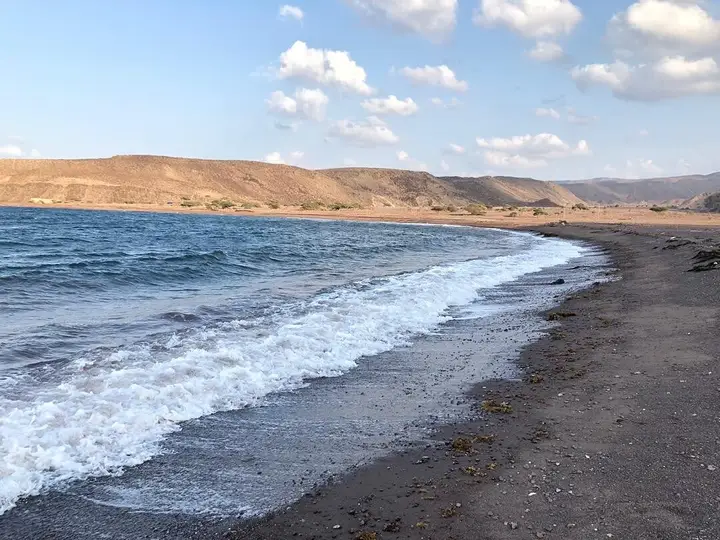
Assamo: the protected area of the beira antelope
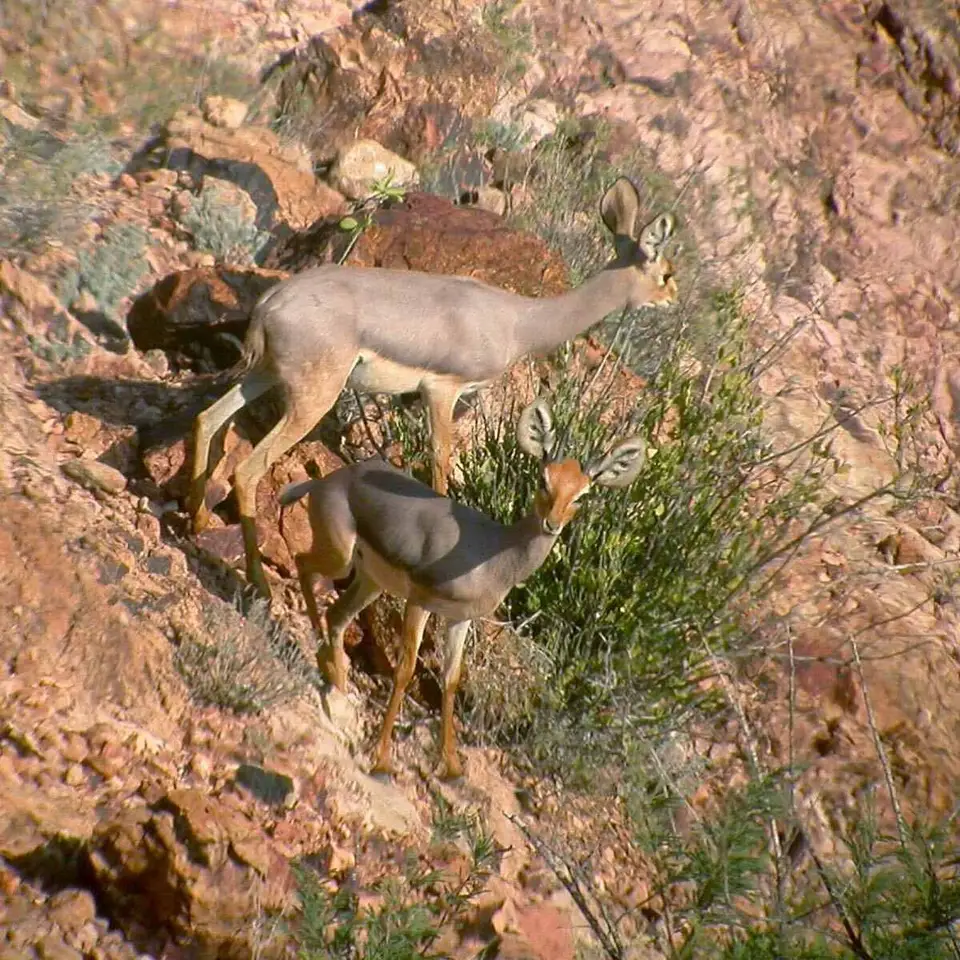
Assamo is a protected terrestrial natural area in the Ali-Sabieh region, in south-east Djibouti, covering 15 square kilometres. It forms the habitat of the beira antelope (Dorcatragus megalotis), a species endemic to the Horn of Africa, a small antelope with large ears of which only the males carry horns. An ecotourism camp allows you to sleep there. The visit is made with a local guide, as part of an organised stay from Djibouti City.
What is the Assamo protected area?
Assamo is a protected terrestrial natural area in south-east Djibouti, in the Ali-Sabieh region, covering 15 square kilometres. The Dalmar catalogue describes it as an essential biotope for the survival of one species: the beira.
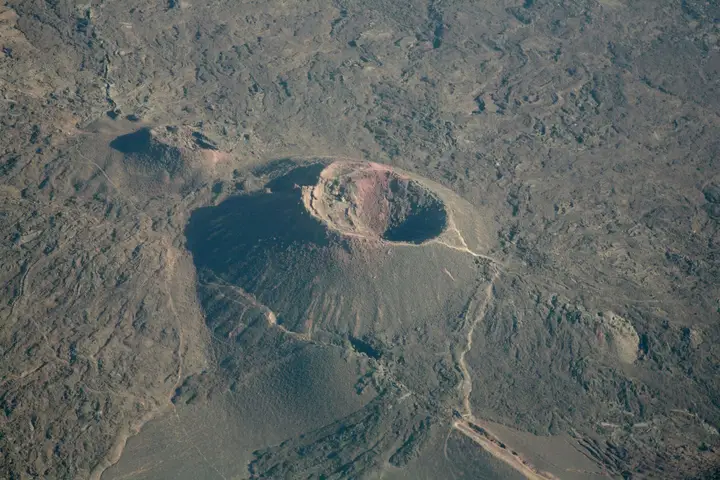
The environment is that of an arid mountain: rocky relief and plateaux dotted with bushes, varied plant associations linked to the dry context, white sand wadis crossing ancient rocks, limestones, sandstones and volcanic rhyolites. The name of the place comes from there: in Afar, Assamo means “red hair”, referring to the colour of the mountains.
The protected area borders a zone shared with Ethiopia and Somalia, which explains the composition of its fauna, a mix of species from both countries.
Why is Assamo protected?
Because it shelters the beira, an antelope endemic to the Horn of Africa found only in Djibouti, Somalia and Ethiopia. The area is its natural habitat, and the distribution of plant species within the site forms a close association with it.
The catalogue notes that the site has kept its authenticity and integrity despite the effects of climate and human actions, notably the felling of shrubs. The situation remains fragile: the species is in an endemic situation, with a small number of groups, and threatened by poaching and hunting.
Official status came in 2011: that year the Djiboutian government classed Assamo as a “protected terrestrial natural area”, on the initiative of the Décan association and Beauval Nature. Hunting, gathering and the pulling up of plants are forbidden there.
What does the beira antelope look like?
It is a small antelope: 80 to 86 centimetres tall, of the bovid family. It is the only member of the genus Dorcatragus.
Its most visible features are its large, leaf-shaped ears. The head is reddish-yellow, underlined with black eyelids and white rings around the eyes. The neck, back and short tufted tail are grey-red with a silvery sheen. Only the males carry horns.
| Reference | Data | Source |
|---|---|---|
| Region | Ali-Sabieh, south-east Djibouti | Dalmar catalogue |
| Surface of the protected area | 15 km² | Dalmar catalogue |
| Emblematic species | Beira antelope (Dorcatragus megalotis) | Dalmar catalogue |
| Size of the beira | 80 to 86 cm | Dalmar catalogue |
| Status of the site | Protected terrestrial natural area since 2011 | Beauval Nature |
| Field management | Décan association, with the support of Beauval Nature | Beauval Nature |
| Distance from Djibouti City | About 120 km | Djibouti Nature |
| Capacity of the camp | 28 people, 5 rooms, 3 showers | Dalmar catalogue |
Can you stay at Assamo?
Yes. An ecotourism camp has been laid out on the edge of the protected area, at a place called Addaoua-Bouralé, away from the roads. It has five rooms, six barbecue hearths and three showers, with a capacity of twenty-eight people, and solar lighting.
The project has a clear economic counterpart: it was built by volunteers from the Décan association, hiring only local labour, and all the revenue is reinvested in protecting the sites managed by the association, notably to pay the guards’ wages. The camp was opened by the Minister of the Environment on 10 January 2016.
In practice, this is an old-fashioned camp: full immersion in the environment, simple materials, reduced comfort. Book in advance, confirm what is included (meals, transfer, sheets, mosquito net) and bring cash. The page camps and ecolodges explains how these structures work and on what terms they are booked.
How do you visit Assamo?
The site lies about 120 kilometres from Djibouti City, in a border zone, and the camp is set far from any road. We publish no journey time: the sources consulted do not document one, and it depends on the vehicle, the state of the tracks and the departure point.
Three principles beat an improvised itinerary:
- Go through an organised stay or an operator who knows the area. The Dalmar catalogue offers an Assamo package built around the camp.
- Take a local guide. They know where to look for the beira, but also which areas to avoid so as not to disturb an already pressured habitat.
- Set off early in the morning. That is the window when wildlife is active and the heat remains bearable.
On the season side, the comfortable window in this part of the country is the cool season: the month-by-month detail appears in when to go to Djibouti.
What threats weigh on the site?
Field monitoring describes constant pressure. The main documented threat to the beira is the degradation of its habitat through overgrazing. Added to that, according to the conservation programmes, are industrial sand and gravel extraction, deforestation for charcoal and illegal camps.
The responses are concrete but limited: an eco-guard was recruited and trained in 2022 to raise awareness among herders and protect the mountain steppes of the protected area, and camera traps have certified the presence of discreet species — caracal, honey badger, striped polecat — and a higher proportion of carnivores than expected, particularly striped hyenas.
For the visitor, that translates into simple rules: stay on the tracks, pick or pull up no plants, do not feed or chase animals, and report any suspicious observation to the eco-guard or the guide.
What else can you observe at Assamo?
The area is above all remarkable for its birds. The site’s border position, between Ethiopia and Somalia, produces a mix of species found nowhere else in the country: acacia wadis hold the mouse-coloured penduline tit, the Arabian warbler, the eastern olivaceous warbler and the black-throated barbet, while tamarisk zones shelter nightjars.
It is also the only area in Djibouti where the scimitar-billed wood hoopoe, the Kenya violet-backed sunbird and the singing goshawk have been observed. On the mammal side, the zone holds two globally threatened species: the beira, vulnerable, and the leopard, endangered.
The story of the beira at Assamo is one of rediscovery: the species was found there again in 1993 by Alain Laurent, as part of a European research programme, after years of field survey. It is that rediscovery that gave the protection of the site its current momentum.
To extend the discovery of the south of the country, the page Grand Bara covers the neighbouring plain and its rock engravings, and the one on Djibouti City gives the starting points towards the interior.
Frequently asked questions
What is the beira antelope?
The beira (Dorcatragus megalotis) is a small antelope of the bovid family, the only member of its genus. It measures 80 to 86 centimetres and is recognisable by its large, leaf-shaped ears. Its head is reddish-yellow, underlined with black eyelids and white rings around the eyes; the neck, back and short tufted tail are grey-red with a silvery sheen. Only the males carry horns.
Is the beira easy to see at Assamo?
No, and it is better to know that before setting off. The beira is a discreet antelope, small, living in arid and rocky relief where it blends into the terrain. Knowledge of its population has in fact advanced through camera traps rather than direct observations. An early morning trip, with a guide, improves your chances without guaranteeing them.
Where can you stay at Assamo?
An ecotourism camp has been laid out at Addaoua-Bouralé, away from the roads and on the edge of the protected area. It has five rooms, six barbecue hearths and three showers, with a capacity of twenty-eight people, and solar lighting. Revenue is reinvested in protecting the sites managed by the Décan association, which built it with volunteers and local labour.
How do you get to Assamo?
Assamo lies in the south-east of the country, about 120 kilometres from Djibouti City, in an area bordering Ethiopia and Somalia. The camp is set far from any road: the visit therefore assumes a suitable vehicle, a guide and prepared logistics. This is typically the kind of site reached as part of an organised stay rather than independently.
Which other species can you observe at Assamo?
The area is above all remarkable for its birds: acacia wadis and tamarisk zones hold a fauna mixing Ethiopian and Somali species, including the mouse-coloured penduline tit, the Arabian warbler, the eastern olivaceous warbler and the black-throated barbet. Camera traps have also confirmed the presence of caracal, honey badger and striped polecat, and a high proportion of striped hyenas.
Sources
Location
Lat. 10.99963Lng. 42.85457
Destinations
Read next
Abourma: the rock engravings of the Makarrassou massif
Ali-Sabieh: the south-east region, sites and camps
Allols depression: salt, hot springs and caravans
Ardoukoba: the most recent volcano in Djibouti
Arta: the cool of the interior and whale sharks
Balho: rock art and the northern border post
Bankoualé: the oasis at the foot of the Goda massif
Daasbiyo cave: rock paintings and burial mounds