Diving in Djibouti: the three-day itinerary
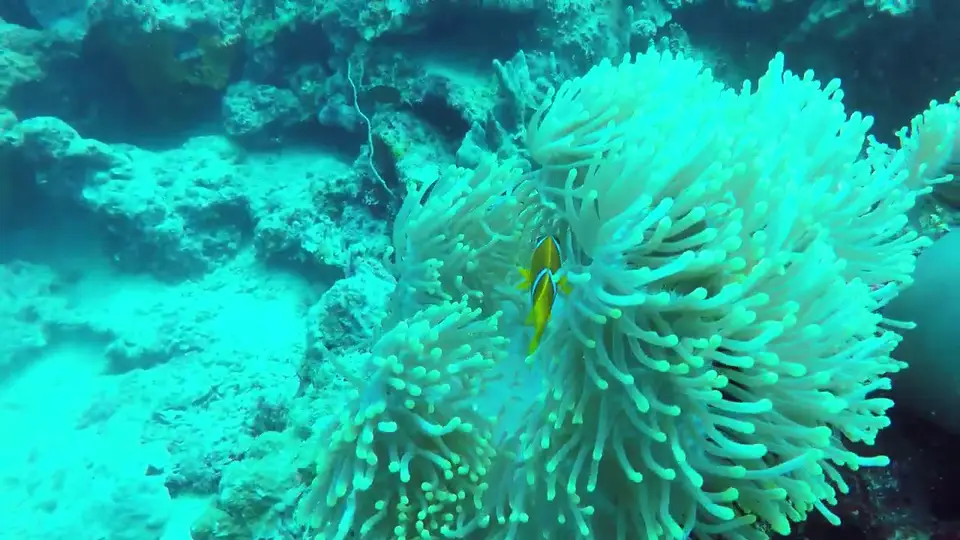
This 3-day itinerary divides Djiboutian diving into three basins: the gulf sites from Djibouti City, the Arta and Ras Korali sector, then the northern drop-offs towards Tadjourah. The nine sites and their useful depths are documented. The operators, for their part, number only two, and neither publishes its resources.
Why does a diving itinerary in Djibouti come down to three days?
Because Djiboutian diving is not a single terrain. It divides into three distinct basins, separated by real navigations, and a single day covers only one of them.
The first basin is that of the gulf, off Djibouti City and the Moucha and Maskali islands: coral, rocky heads, sheltered conditions. It is the most accessible, and it is where most of the dives sold in the country take place.
The second is the Arta and Ras Korali sector: the coral Dôme, the Ras Eiro drop-off, the wall of La Vierge Rouge. Two of those sites are neighbours, which allows two dives on the same outing.
The third is the north, towards Tadjourah: the Sables Blancs drop-offs and the fissure of The Crack, an extension of the Goubet fissure.
Three basins, therefore three days if you want to dive properly rather than stack sites. The constraint is not the number of spots — nine are documented — but the boat time between them.
What is the programme, day by day?
| Day | Basin | Sites of the day | Published depth | Recommended level | Overnight |
|---|---|---|---|---|---|
| Day 1 | Gulf, from Djibouti City | Canyon, Bouée Air France, Patates Air France | 5 – 25 m for all three | Beginner to intermediate | Djibouti City |
| Day 2 | Arta and Ras Korali sector | Korali in the morning, then Le Dôme or Ras Eiro | 5 – 25 m (Korali), 14 – 45 m (Le Dôme), 10 – 40 m (Ras Eiro) | All levels for Korali; intermediate for the other two | Djibouti City |
| Day 3 | North, towards Tadjourah | Sables Blancs, then The Crack | 5 – 30 m (Sables Blancs), 12 – 50 m (The Crack) | All levels for the Sables Blancs; intermediate for The Crack | Tadjourah or return to town |
Two clarifications that decide whether day 3 is feasible.
Outings leave early, often before seven o’clock. That is the rhythm of the centres, documented on our diving page: the water is flatter and the light lovelier below the surface. A late departure is paid for on both of the day’s dives, not only on the first.
The third day assumes an operator whose navigation area reaches Tadjourah. That is the weak point of this programme, and we would rather write it: neither Dolphin Excursions nor Aqua Club publishes its navigation area. The question to ask is therefore not “do you dive at Tadjourah” but “with which boat, from which port, and at what time back”.
Where are the sites, and at what depth?
The depths below are the published useful depths, those on which a guide builds a dive, and not the records reachable by letting the line out. They come from our two reference pages and are reproduced without modification.
| Site | Sector | Published depth | Recommended level | Character of the site |
|---|---|---|---|---|
| Canyon | Djibouti City | 5 – 25 m | Beginner | Two tongues of coral rock in a canyon; one of the rare sites sheltered from strong winds |
| Bouée Air France | Djibouti City | 5 – 25 m | Beginner to intermediate | Sandy bottoms, 25 m drop-off, a boat wreck, slight current |
| Patates Air France | Djibouti City | 5 – 25 m | All levels | Rocky heads, groupers, napoleon fish, stingrays, whitetip sharks |
| Korali | Arta | 5 – 25 m | All levels | Reefs and colourful fish, excellent visibility; departure point for whale shark outings |
| Le Dôme | Arta | 14 – 45 m | Intermediate | Multicoloured coral dome, wildlife concentrated down to 30 m, morays and reef sharks |
| Ras Eiro | Arta | 10 – 40 m | Intermediate | Large boulders and an immense drop-off; whale shark reported in November-December |
| La Vierge Rouge | Arta | 20 – 60 m | Intermediate to advanced | An almost vertical wall beneath a red rock virgin; real depth |
| Sables Blancs | Tadjourah | 5 – 30 m | All levels | Small drop-offs covered in brain coral, green and hawksbill turtles; weak current |
| The Crack | Tadjourah | 12 – 50 m | Intermediate | Fissure, caves and tunnels in the extension of the Goubet fissure; torch essential |
Two field remarks, taken from the same source. The Canyon and the Sables Blancs are the two most “weather-proof” sites: when the wind gets up, they are the ones that save the outing. And the two sites called Air France, like Le Dôme and Ras Eiro, combine naturally within a single day.
How much does a three-day diving itinerary cost?
Each amount below is the displayed price of the offer cited. None is a rate we would apply to this assembly.
| Item | Published amount | Offer |
|---|---|---|
| Supervised dive at Moucha island | ≈ 12,000 Fdj per person | diving-at-moucha-land |
| Exploration dive at Moucha | ≈ 10,000 Fdj per person | exploration-diving-at-moucha |
| Discovery of the sea beds, Raysali reef | ≈ 6,000 Fdj per person | decouverte-fonds-marins-djibouti-raysali |
| Introduction to swimming in the sea | ≈ 3,000 Fdj per person | swimming-initiation-heron-beach |
| Whale shark outing from Arta Plage | 25,000 Fdj per person | whale-shark-encounter-arta-beach |
| Full-day excursion to the Moucha and Maskali islands | 8,000 Fdj per person | full-day-excursion-to-moucha-and-maskali-islands |
| Rate of the two established operators | Not published | Dolphin Excursions, Aqua Club |
We do not total those items into a stay budget, and the refusal is deliberate. First because our offers bear on the Moucha and Raysali sector, not on the three basins described above: adding them would amount to billing a programme nobody sells. Then because the number of dives included in an outing is not published for either operator: a “two dives” day and a “one dive” day cannot be compared, and a total would be more precise than reality.
How many operators can you actually compare?
Two, and that is the most important point of this page. A broad survey of diving in Djibouti does not turn up ten centres: it turns up travel agencies, whose title designates the agency and not the centre, as well as place names and destination pages.
| Operator | Google score, September 2026 survey | Public telephone |
|---|---|---|
| Dolphin Excursions Djibouti | 4.5/5 over 31 reviews | +253 77 36 79 46 |
| Aqua Club Diving Center Djibouti | 4.0/5 over 22 reviews | +253 77 82 31 50 |
| Aqua Diving Center Boat — listing attached to the club, not a competitor | 4/5 over 4 reviews | +253 77 82 31 50, the same number |
The first two lines total 53 reviews. The third carries exactly the same number as the second: it is the club’s boat, presented as a separate listing. We therefore count neither three centres, nor ten.
What those two structures do not document covers most of what decides a dive: fleet and boat capacity, number of instructors and certifications held, supervision ratio per outing, equipment provided or hired, sites served, outing duration, weather and cancellation policy, online booking, rate. None of that information is published by either. A half-point gap between 4.5/5 over 31 reviews and 4.0/5 over 22 reviews throws light on none of them.
The detail of the survey, the scores and the questions to ask is in our comparison of diving centres in Djibouti.
What should you have clarified before paying for an outing?
Eight questions, and a serious centre answers them without difficulty. They are asked before the deposit, not after boarding.
- The number of dives actually included and the sites planned, in writing.
- The supervision ratio and the instructors’ certifications: it is the first safety criterion, and neither operator publishes it.
- What is included: tank, weights, wetsuit, regulator, jacket, water, meals. Equipment hired as an extra changes the final bill.
- The weather cancellation policy, in writing. A centre that cancels rather than going out in an uncomfortable swell applies a serious policy; you still need to know what you lose in that case.
- Insurance and the operator’s liability, as well as any medical certificate required.
- Access permission if the outing enters a marine protected area.
- The departure time and the boarding port, which determine the return.
- The briefing language, if you speak neither French nor the local languages.
For the rest of the preparation, two pages of this site complete this one: diving in Djibouti for the page on the nine sites, and when to go to Djibouti to settle the October to April window.
Which sites should be left out of this itinerary, and why?
An itinerary is judged by what it leaves aside. Three exclusions deserve an explanation.
The Seven Brothers archipelago. The sites exist and are documented: an “aquarium” announced between 5 and 10 metres at the East island, a coral garden at 4 metres at the Red island, dives down to 50 metres at the South island, and the underwater “Arch” of Tolka, in full current, reserved for seasoned divers. But the archipelago belongs to another journey: there is no regular service, it is reached by boat most often from Obock, and the inventory of key biodiversity areas notes that diving there remains little practised. The details are on the page for the Seven Brothers archipelago and on that of Ras Siyan.
Diving outside the two operators. No centre established outside Djibouti City is documented in our survey. That does not mean none exists: it means none carries a title and a category designating the activity. A diving stay in the north is therefore built with an operator from the capital, or not at all.
A third day in the gulf. Rescheduling Moucha after a day cancelled because of swell is the only real safety margin in this programme. If you have only two days, keep the gulf sites and give up the north: it is the outing to the Moucha and Maskali islands that offers the best ratio between accessible depths and boat time.
Frequently asked questions
How many diving operators are actually established in Djibouti?
Only two: Dolphin Excursions Djibouti, 4.5/5 over 31 Google reviews, and Aqua Club Diving Center Djibouti, 4.0/5 over 22 reviews, September 2026 survey. A third listing, Aqua Diving Center Boat, carries the same number as the club: it is its boat, not a third competitor. Neither publishes its fleet, the sites it serves, its supervision ratio, its equipment or its weather policy.
Which dive sites can you chain in a single day?
Le Dôme and Ras Eiro are neighbours, which allows two dives without lengthening the navigation. The two sites called Air France combine in the same way from Djibouti City. The Canyon and Les Sables Blancs are the most sheltered: when the wind gets up, they are the ones that save the outing. Everywhere else, navigation consumes a real part of the day.
Do you need a certification to follow this itinerary?
It all depends on the site, not on your wish. The introductory dive requires no certification: you dive supervised, at shallow depth, on a sheltered site. The level one or Open Water opens most of the gulf's sites down to twenty metres. Advanced level becomes necessary beyond thirty metres, as at La Vierge Rouge, Ras Eiro and the lower part of Le Dôme.
How much does a supervised dive in Djibouti cost?
The outings sold by our catalogue give the published marker: about 12,000 Djiboutian francs for a supervised dive at Moucha island, boat, tank, weights and supervision included, and about 10,000 francs for an exploration dive in the same sector. The two established operators publish no rate at all: ask them for their price and what it includes.
When should you plan a diving stay in Djibouti?
From October to April. The sea is calmest, visibility most stable and surface intervals bearable. From June to September, diving remains possible but requires very early departures and sites sheltered from the wind. For the whale shark, peak season runs from November to January, as surface watching and not on scuba.
Sources
Itineraries
Read next
Budget in Djibouti: backpacker, mid-range, luxury
Culture and heritage: rock art and old cities in four days
Desert and lakes: salt, rift and Lake Abbe in four days
Djibouti and Ethiopia: combining the two countries
Djibouti in 1 day: the rift or the beach?
Djibouti in 10 days: the assembly of three itineraries
Djibouti in 2 days: the rift, the salt and the sea
Djibouti in 2 weeks: what the second week adds