Boat hire in Djibouti: trips out to sea
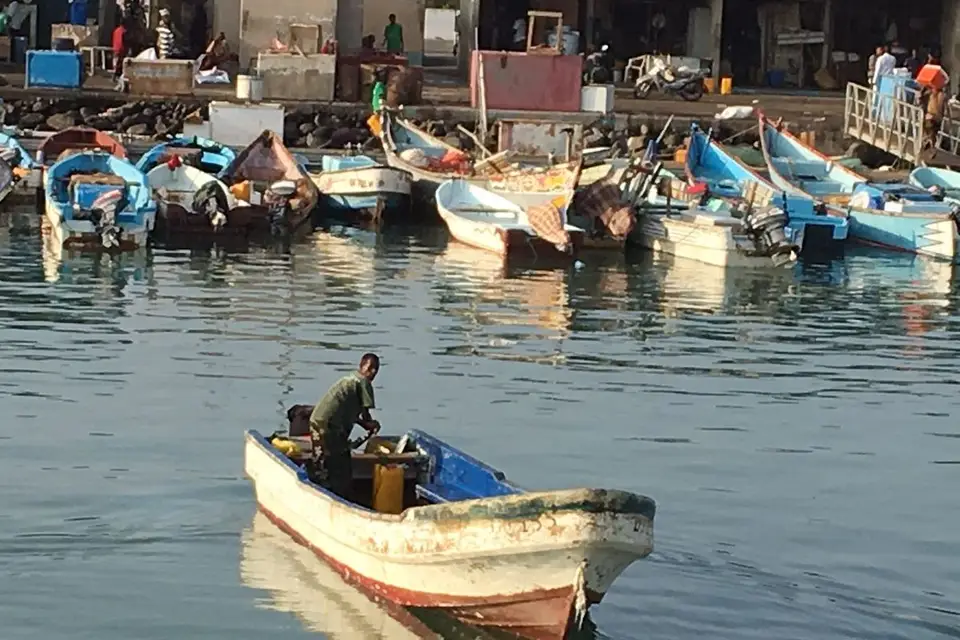
In Djibouti you do not hire a boat the way you hire a car: you charter a vessel with its pilot, through an agency or a hotel, on quotation. Trips leave from the port of Djibouti City or the Arta Plage area, towards the Moucha and Maskali islands, the reefs of the Gulf of Tadjourah or the Seven Brothers archipelago. There is no regular public link to those islands.
How do you hire a boat in Djibouti?
One image needs correcting first: in Djibouti, boat hire is not a “self-service boat” kind of service. What exists is the charter of a vessel with its pilot, sold by a local agency, a hotel or a diving operator. You do not drive, you step aboard.
Three formulas cover almost every request.
| Formula | What you book | Departure point | Where to book |
|---|---|---|---|
| Shared day trip | A place on a shared boat, often with lunch and equipment | Port of Djibouti City or Arta Plage area | Local agencies, hotels, catalogue offers |
| Full-day charter | The whole boat, with pilot, for your group | Port of Djibouti City or Arta Plage | On quotation, from an operator |
| Stay on board | Several days of sailing and nights aboard | Depending on the itinerary | Specialist offers, to book early |
| Regular crossing of the gulf | A passenger ticket to Tadjourah or Obock | Port of Djibouti City | Port counter, on the day |
That last line is not a sea trip, and the confusion is worth avoiding: the Safar Salam company’s ferry is passenger transport between two ports, not an excursion. Its crossing costs 700 Djiboutian francs per adult to Tadjourah and 800 to Obock, half fare for a child aged 2 to 12 or a student. Its dedicated page is the Tadjourah and Obock ferry.
What is the price of hiring a boat for a day?
We publish no charter rate. It is not editorial fastidiousness: those services are sold exclusively on quotation. The price depends on five variables that change from one trip to the next, and no official source publishes a reference grid.
The five variables that make the price:
- The boat. A day-trip vessel and an equipped dive boat do not have the same operating cost.
- The number of passengers. A charter is often billed per boat, which mechanically lowers the cost per person as the group grows.
- The distance. A trip to Moucha and Maskali, in the gulf, has nothing to do with a crossing to the Seven Brothers archipelago.
- The equipment on board. Tanks, regulators, wetsuits, snorkelling gear, cool boxes and lunch.
- The supervision. A pilot alone, a certified diving instructor, or both.
The only quantified reference point useful for judging is not a boat rate but an excursion price: an organised day at Lake Assal with transport sells for around 18,000 Djiboutian francs per person. That is the order of magnitude of a day’s excursion in Djibouti — useful for judging whether a sea-trip quotation is reasonable, provided you compare what is actually included.
The right method is to ask for a written quotation stating the type of boat, the capacity, the precise itinerary, the departure and return times, the equipment provided and what remains at your own cost. Two comparable quotations are worth more than a displayed range.
How many ports are there in Djibouti?
The question has no reliable quantified answer, and it is better to explain why than to put forward a number. The word “port” covers three distinct realities in Djibouti: commercial and transhipment facilities, which make the country a regional hub; the departure points of fishermen and excursions; and the northern-coast ports, which handle domestic sea traffic.
For a traveller, the only distinction that matters is this one.
| What you are looking for | Where to go |
|---|---|
| A sea trip, diving, a day to the islands | Port of Djibouti City, or the Arta Plage area |
| Reaching Tadjourah or Obock | Port of Djibouti City, ferry counter, timings confirmed on the day |
| A departure towards the north of the country and the Seven Brothers archipelago | To be arranged with an operator: longer itinerary, stronger supervision |
| Commercial freight | Outside the tourist scope |
There is no regular public sea link to Moucha, Maskali or the Seven Brothers. Those islands are reached only by chartered boat, as part of an organised excursion or a supervised trip. That is why those days have to be booked, and not decided on the quay.
Are there sharks in Djibouti?
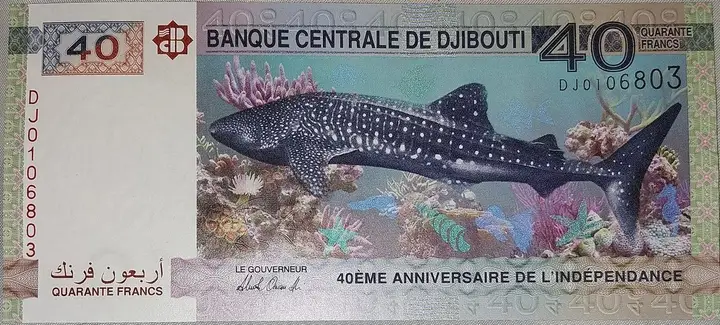
Yes, and it is one of the great reasons to come. The waters of the Gulf of Tadjourah rank among the richest in the region, and the Seven Brothers archipelago, to the north, is known for its pelagic fauna.
| Species | Where to observe it | Level of risk | Season |
|---|---|---|---|
| Whale shark | Gulf of Tadjourah, off Arta Plage and Ras Korali | None: it is a plankton eater | Peak from November to January |
| Reef sharks | Reefs of the gulf, dive sites | Low, observation from a distance | All year round |
| Whitetip sharks | Dive sites of the islands and the gulf | Low, supervised diving | All year round |
The whale shark is harmless. It feeds on plankton and small fish, and watching trips are done snorkelling, at the surface. It is an imposing and curious animal, not a predator: local operators supervise those trips precisely so that the sighting remains respectful of the animal.
Reef sharks are watched while diving, not on an improvised snorkel trip. Every trip we recommend is supervised by professionals who know the sites, the currents and the behaviour to adopt. It is the only reasonable way to observe those species.
What is whale shark season in Djibouti?
The answer fits in one window, with one nuance.
The peak of presence runs from November to January, in the Gulf of Tadjourah, off Arta Plage and Ras Korali. It is also when demand is strongest: boats sell out several weeks in advance.
The window is wider than the peak. Sources diverge on its end: some extend it into February depending on the year and the water temperature, and operators sometimes open as early as October when the animals are reported. If watching whale sharks is the reason for your trip, aim for November to January and book early.
Their presence is never guaranteed. It is a wildlife sighting, not an attraction: no serious operator promises an encounter. A trip that does not succeed is not a wasted trip, and the gulf always offers enough to fill the day — reefs, seabirds, swimming.
What is the best period for a sea trip?
The real climate normals for Djibouti City (Open-Meteo ERA5, 2015–2024, CC-BY-4.0 licence) give useful reference points for choosing the date.
| Month | Mean maximum temperature | Rain | What that implies at sea |
|---|---|---|---|
| January | 27.5 °C | 14.7 mm | The most comfortable conditions, and the whale shark peak |
| April | 30.9 °C | 41.8 mm | The wettest month: watch the sea state |
| July | 40.8 °C | 9.7 mm | Extreme heat on land and on board: a morning trip is essential |
| October | 32.4 °C | 25.1 mm | Start of the good season, the sea still warm |
Three practical conclusions.
October to April is the comfortable window. Temperatures come down, the sea stays warm, and the day on the boat does not turn into an ordeal.
July should be avoided for a whole day at sea. With a mean maximum of 40.8 °C, shade becomes scarce on a boat. If you go in that period, choose a morning trip and plan for twice as much water as you need.
April is the wettest month with 41.8 millimetres, which does not mean continuous rain — the annual total remains 240 millimetres — but justifies checking the sea state the day before. The full calendar is in when to go to Djibouti.
What should you check before boarding?
Six points, to check at the time of booking and then on the quay.
- Life jackets, for everyone. One jacket per person, on board, and accessible: ask to see them before boarding, not after departure.
- A means of communication. VHF or satellite phone on board. At sea, the mobile network does not cover every zone of the gulf.
- The pilot and their experience. Who is driving, for how long, and do they know the target site? The question is legitimate.
- The day’s weather. The sea state decides the departure. An operator who cancels on safety grounds is doing their job, not a favour.
- Safety equipment. Fire extinguisher, first-aid kit, drinking water in sufficient quantity for the length of the trip.
- The return time. Settle it in writing: the light goes quickly, and a night return lengthens the navigation.
In a medical emergency on land, dial 21 35 09 62 or 21 35 27 12 and ask for an ambulance. Those numbers are published by the official British advice. At sea, it is the pilot who raises the alert: one more reason to leave with an experienced crew.
A last word on general safety. The official British advice (updated 27 July 2026) reports a terrorist threat in the country and recommends vigilance in places frequented by foreigners. It advises against all travel to the border between Djibouti and Eritrea, in the north. Check before any trip towards the north of the country, and favour operators who know the permitted areas.
Shared trip, charter or stay on board: which to choose?
| Your profile | The formula that fits | Why |
|---|---|---|
| Travelling alone or as a couple, first stay | Shared day trip | The cost per person stays controlled, equipment is provided |
| A group of four to eight | Chartered boat | The whole boat, flexible timings, itinerary suited to the group |
| Certified divers | Supervised dive trip | Tanks, supervision and sites suited to the level |
| Whale shark watching, November to January | Supervised trip, booked early | Limited places in that very in-demand window |
| Several days of sailing | Stay on board | Allows reaching the Seven Brothers without a daily transfer |
| A simple crossing to Tadjourah or Obock | Safar Salam ferry | 700 Fdj per adult to Tadjourah, 800 to Obock |
One simple rule to finish: book before arriving on the quay. In Djibouti, boats are not numerous, whale shark season saturates the market, and an improvised sea trip often ends as a day ashore — or as an inflated quotation, for want of competition.
To complete your preparation, two useful reads: transport in Djibouti for all the modes of travel, and diving in Djibouti for the underwater sites and the levels required.
Frequently asked questions
What is the price of hiring a boat for a day?
We publish no charter rate: those trips are sold on quotation. The price depends on the boat, the number of passengers, the distance and the equipment on board. Local agencies build an offer case by case, and no official source publishes a grid. As a point of comparison, the regular crossing of the gulf costs 700 francs per adult to Tadjourah and 800 to Obock — but that is passenger transport, not an excursion.
How many ports are there in Djibouti?
There is no single official count, because the word port covers three very different realities: commercial and transhipment facilities, the departure points of fishermen and excursions, and the northern-coast ports that handle the ferry. For a traveller, the only useful distinction is this: sea trips leave from the port of Djibouti City and the Arta Plage area, while Tadjourah and Obock are reached by ferry.
Are there sharks in Djibouti?
Yes, and it is one of the reasons to come. The waters of the Gulf of Tadjourah and the Seven Brothers archipelago hold a rich marine fauna, including the whale shark, a plankton-eating giant that is completely harmless to swimmers. The reefs also host reef sharks and whitetip sharks, observed while diving. Trips supervised by local professionals remain the rule: they know the sites and the behaviour to adopt.
What is whale shark season in Djibouti?
The peak of presence runs from November to January in the Gulf of Tadjourah, off Arta Plage and Ras Korali. Sources diverge on the end of the window: some extend it into February depending on the year and the water temperature, and operators sometimes open as early as October when the animals are reported. Their presence is never guaranteed: book a supervised trip, accepting that the sighting remains uncertain.
Is Djibouti safe for a trip out to sea?
Supervised trips take place without notable incident, and the real risk is that of any coastal navigation: sea state, equipment, supervision. Check that the boat has life jackets for everyone, a means of communication and an experienced pilot. The official British advice also reports a terrorist threat and advises against all travel to the Eritrean border: check before any excursion towards the north of the country.
Sources
Practical
Read next
4×4 with a driver in Djibouti: prices and itineraries
Accessibility in Djibouti: what a demanding trip implies
Budget in Djibouti: what does a trip cost on the spot?
Buses and taxis in Djibouti: fares by zone and route
Car hire in Djibouti: 4×4, saloon or driver?
Connectivity and SIM cards in Djibouti: internet and mobile
Djibouti airport transfer: taxi, fares and arrival
Djibouti–Addis Ababa train: line, tickets and station