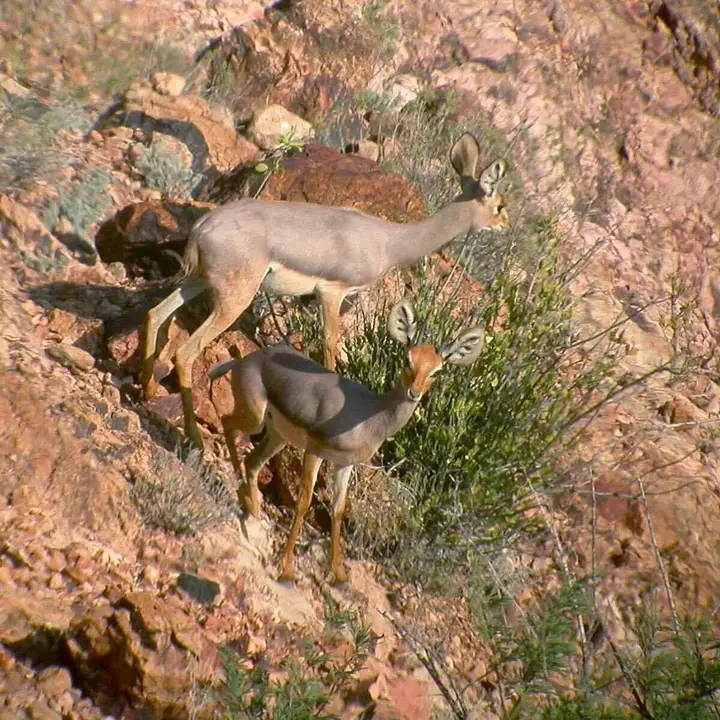
Abourma: the rock engravings of the Makarrassou massif
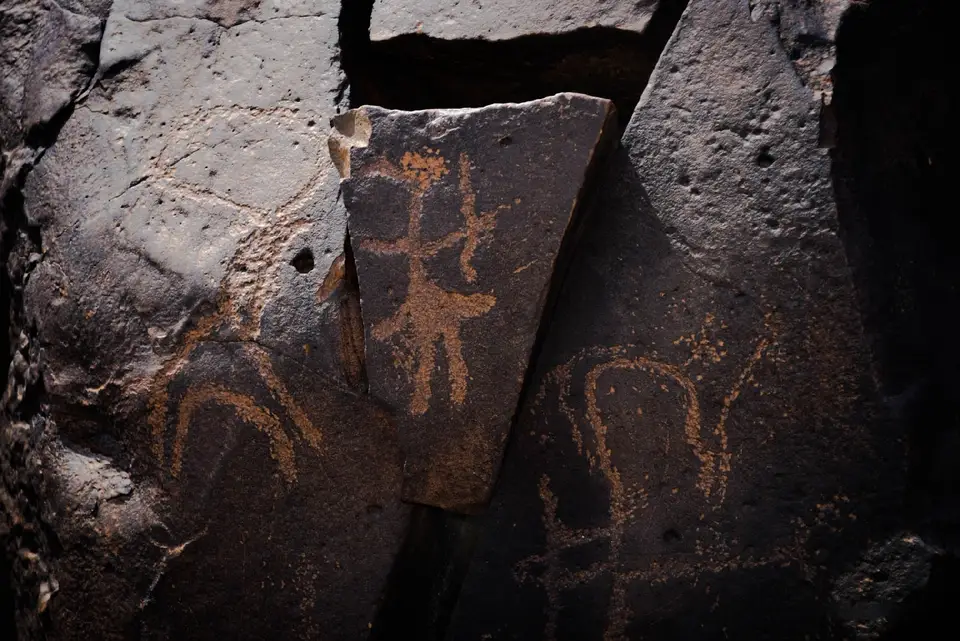
Abourma is the main rock art site in Djibouti, on the Makarrassou massif, in the Tadjourah region. Engravings line almost three kilometres of basalt boulders: human figures, wild and domestic animals, hunting and combat scenes. The site is reached only on foot and is visited with a local guide. The cool season, from October to February, is the most comfortable period. The Dalmar catalogue reports no visitor facilities on site.
Where is the Abourma site?
Abourma occupies the Makarrassou massif, in the north of Djibouti, Tadjourah region. The Dalmar catalogue ties the site to the place called Makarrassou and places its coordinates at 11.905 N and 42.482 E. The sector lies away from the main roads, towards Randa.
The site does not present itself as a single shelter visited in a quarter of an hour, but as a long route: the panels follow one another over almost three kilometres, on cliffs west of a wadi. It is that extent which explains the real duration of a serious visit, and the need to choose what you want to see.
What do you see on the rocks?
These are engravings, not paintings: the figures are cut into the basalt rock. The themes are varied. You recognise human figures in action, wild and domestic animals, hunting and combat scenes. The whole reflects the behaviour, social stratification and organisation of a pastoral life that has now disappeared.
The Dalmar catalogue insists on a point that changes how you read the landscape: the massive presence of wild and domestic animals engraved on these rocks bears witness to a wet climate at the time they were made, with wooded, green plains. What you cross today is therefore a recent landscape on the scale of human history.
The catalogue offers a comparison with the engravings of Valcamonica, in Italy, where hundreds of thousands of signs were carved over eight millennia. The comparison serves as a benchmark for what a very large rock art group is; Abourma is a site of regional dimension, but it is the most important one Djibouti has documented.
How do you get to Abourma?
The point to remember is simple: the site is not accessible by vehicle as far as the panels. The final walk is on foot, from the village of Giba Gebiley, north of Randa. You therefore need a vehicle to reach the sector, then progress on foot.
That constraint explains the second rule: you visit with a local guide. The Dalmar catalogue recommends it explicitly. The panels are scattered and nothing on site marks them; without accompaniment, you cross a jumble of rocks seeing nothing but the most obvious figures.
| Reference | Data | Source |
|---|---|---|
| Region | Tadjourah, north of Djibouti | Dalmar catalogue |
| Massif | Makarrassou | Dalmar catalogue |
| Coordinates of the site | 11.905 N — 42.482 E | Dalmar catalogue |
| Nature | Engravings on basalt boulders | Dalmar catalogue |
| Engraved extent | Almost 3 km, west of a wadi | Dalmar catalogue and ANT |
| Panels recorded | About 930, according to published documentation | Wikipedia (article “Abourma”) |
| Themes | Human figures, wild and domestic animals, hunting, combat | Dalmar catalogue |
| Access | On foot from Giba Gebiley, north of Randa | Wikipedia (article “Abourma”) |
| Recommended season | October to February | Dalmar catalogue |
| Status | On the tentative list for world heritage | Wikipedia (article “Abourma”) |
What is the best period to visit Abourma?
From October to February. The cool season is the only genuinely comfortable window for walking several hours on dark rock, without shade and without a water point.
In March and April, the heat becomes unpleasant from the morning. From May to September, the combination of basalt rock, sun and the absence of shelter makes progress gruelling. Whatever the season, set off early and allow a margin: on this kind of terrain, a visit that drags on ends badly.
Is the site protected?
Abourma appears on UNESCO’s tentative list for world heritage for Djibouti. The Dalmar catalogue notes that the site has kept its integrity despite the effect of time and climate change, and that rehabilitation and conservation actions can only help preserve the engravings.
That listing translates, on the ground, into no protection arrangement described in our sources. The elementary rules therefore remain those of the visitor:
- Do not touch the engraved rock. Friction erases the contrast between the patina and the line.
- Do not wet or rub the panels to make them stand out in a photo: that is the gesture that damages an engraving fastest.
- Do not climb on the engraved surfaces, and do not move stones.
- Take nothing away: no rock flake, no object found on site.
- Report any damage to your guide or to the ANT, rather than going around it.
What should you plan for on site?
The catalogue mentions no visitor facilities on the site: no ticket office, no water point, no shade. The visit is therefore prepared like a hike in an arid environment.
| To plan for | Why |
|---|---|
| Three litres of water per person at minimum | No documented supply point on the site |
| Closed, high-sided shoes | Sharp basalt rocks, unstable ground |
| Hat, sunglasses, sun protection | No natural shade along the route |
| A vehicle suited to the sector | The final access is on foot, but the sector remains isolated |
| A local guide | The panels are not marked on site |
| Cash | Electronic payment is very limited outside the capital |
To prepare the rest of the stay, the Tadjourah page covers the hinterland of the region, and the page camps and ecolodges lists the real accommodation in the sector. If you are looking for other rock art testimonies, the Grand Bara holds a dated group, more accessible; the Forêt du Day and its villages complete the same day in the Tadjourah hinterland. Finally, the page when to go to Djibouti details the October to February window month by month.
Frequently asked questions
How many engraved panels does the Abourma site hold?
The documentation published on the site mentions about 930 engraved panels, spread over almost three kilometres of cliffs, west of a wadi. That is an order of magnitude drawn from research work, and not an official inventory displayed on site. So allow time if you want to see more than the most accessible groups, and ask your guide to show you the most legible panels.
How do you reach the Abourma engravings?
The site is not served by road: the final access is on foot, from the village of Giba Gebiley, north of Randa. You therefore need a vehicle to reach the sector, then a walk accompanied by a guide who knows where the panels are. The Dalmar catalogue recommends that formula, and it remains the only way to understand what you are looking at on the rock.
What is the best period to visit Abourma?
The cool season, from October to February, is the most comfortable. The site is a jumble of basalt boulders without shade: in March and April the heat becomes unpleasant from the morning, and from May to September walking on the black rock is genuinely gruelling. Set off early, carry more water than planned and cover your head.
Why are the Abourma engravings important?
They document a vanished pastoral and warrior society. The variety of themes, humans in action, wild and domestic animals, hunting and combat scenes, informs us about behaviour, social stratification and the organisation of pastoral life. The presence of large wild animals engraved there indicates that at the time they were made the climate was wetter than today, with wooded plains.
Do you need a guide to visit Abourma?
Yes, that is the practical condition of the visit. The panels are scattered over several kilometres of rocks that look alike, and nothing on site marks or explains them. A local guide leads you to the most legible groups and helps you distinguish the figures. They will also remind you of the rules: do not touch the rock, do not wet it, take nothing away.
Sources
Location
Lat. 11.90506Lng. 42.48165
Destinations
Read next
Ali-Sabieh: the south-east region, sites and camps
Allols depression: salt, hot springs and caravans
Ardoukoba: the most recent volcano in Djibouti
Arta: the cool of the interior and whale sharks
Assamo: the protected area of the beira antelope
Balho: rock art and the northern border post
Bankoualé: the oasis at the foot of the Goda massif
Daasbiyo cave: rock paintings and burial mounds