Grand Bara: rock engravings and a sand plain
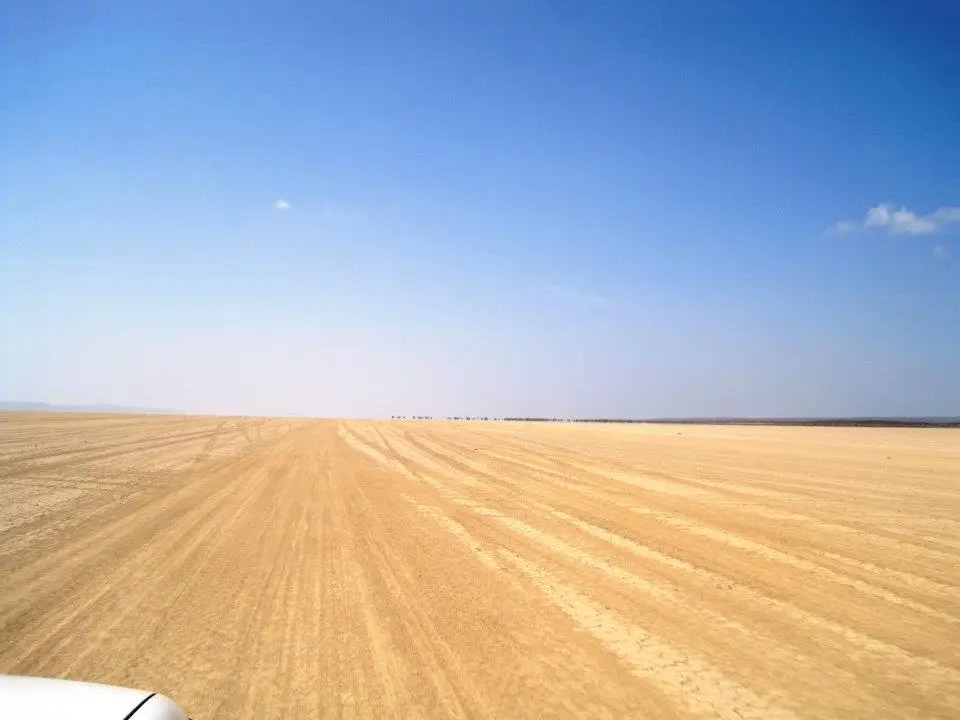
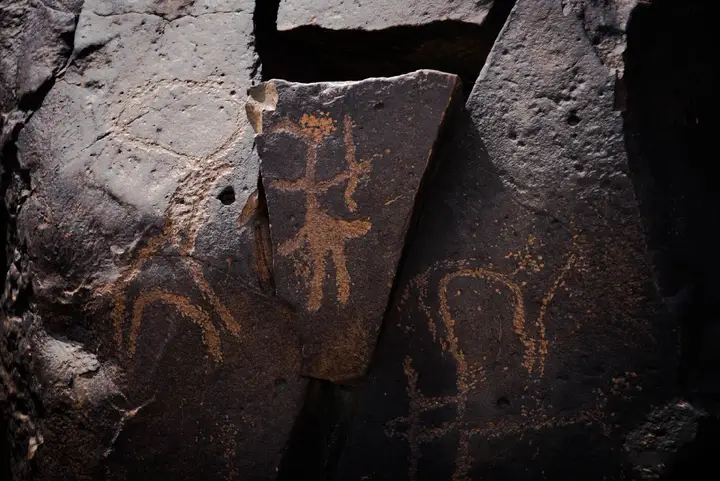
The Grand Bara is a semi-desert plain in southern Djibouti, straddling the Dikhil and Ali-Sabieh regions. Its fame rests on a rock art site: the basalt boulders of Bara carry engravings dated from 3000 to 2000 BCE, showing elephants, oryx and giraffes. The plain is crossed by 4×4, and its flat, windy surface also hosts land sailing.
Where is the Grand Bara?
The Grand Bara is a vast plain in southern Djibouti, straddling the Dikhil and Ali-Sabieh regions. It forms a natural crossing point between the capital and the south of the country: the road heading down to Ali-Sabieh crosses it from end to end.
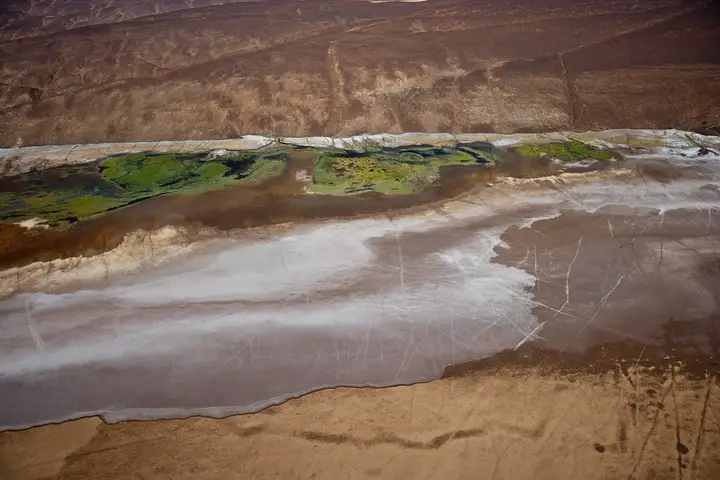
The landscape surprises by its apparent monotony. It is a semi-desert sandy plateau, covered with sparse grasses, without marked relief. That flatness is not incidental: it betrays a lacustrine origin. The Grand Bara was the bed of a large lake, now gone, and the sediments composing it form the support on which the present steppe has settled.
What justifies the detour is therefore not the plain itself, but what it hides: a group of engraved basalt boulders, known as the Bara rock paintings.
Key facts
| Reference | Data |
|---|---|
| Administrative regions | Dikhil and Ali-Sabieh |
| Coordinates | 11.240 N — 42.707 E |
| Nature of the site | Semi-desert plain, former lake bed |
| Support of the engravings | Basalt boulders |
| Dating of the engravings | 3000 to 2000 BCE |
| Main motifs | Elephants, oryx, giraffes, long-horned bovids |
| Access | Road for the crossing, track for the site |
| Recommended vehicle | 4×4 with driver |
| Associated activity | Land sailing |
| Best season | November to February |
What can you see on the Bara boulders?
The Bara rock art reads on blocks of basalt scattered across the plain. The dating retained — 3000 to 2000 BCE — makes it one of the oldest traces of human presence in the region.
The figurative repertoire is remarkably legible:
- Elephants. This is the most commented motif. One panel shows two engraved elephants, a rare depiction among the engravings recorded in Djibouti.
- Giraffes, recognisable by their silhouette and their neck.
- Oryx, whose long straight horns lend themselves well to engraving.
- Many long-horned bovids, some of them shown with doubled legs — a graphic convention found in other rock art corpora.
- Small human figures, which place these animals in a scene rather than in a simple bestiary.
Beyond aesthetics, these figures document daily life: hunting, herding, relation to the environment. The Bara boulders are not a decorative gallery, but an archive.
Why elephants in a desert?
This is the question that naturally arises at the site, and the answer is climatic. The presence of elephants, giraffes and large bovids attests that at the time these engravings were made, the climate was wetter and the fauna far more varied than today.
The Grand Bara was then covered with wooded plains and vegetation sufficient to feed large herbivores. The sandy plateau and the straw grasses you cross today are therefore not an unchanging setting: they result from progressive aridification. That palaeoclimatic reading is what gives the site its scientific as much as its heritage value.
How do you get to the Grand Bara?
Two levels of access must be distinguished.
Crossing the plain is done by car, on the road heading down to the south of the country. You travel it without even noticing: it is a driving axis, not an equipped site.
Access to the engraving site is by track. The basalt boulders blend into the plateau, there is no waymarking, and locating the panels demands knowledge of the terrain. A 4×4 with a driver-guide is therefore the realistic formula, and an organised trip remains the simplest way to combine the journey, access and a commentary on the figures.
What is there to do at the Grand Bara?
Read the engravings with a guide
Without accompaniment you will see black rocks. With a guide you will see a bestiary: the difference between the two lies in the angle of the light and in the knowledge of the person pointing out the lines. Plan the visit early in the morning or late in the afternoon, when the low sun reveals the engraved outlines.
Go land sailing
The plain is flat, open and windy over great distances: it is a natural ground for land sailing, and the activity is sold on site. It is practised supervised, with equipment provided. Given the total absence of shade, the morning and end-of-day slots are by far the pleasantest.
Cross the plain on foot
Walking on the plateau offers a particular experience: a continuous horizon, a sandy ground that cushions the step, and silence. Take care, however, not to move away from visual landmarks, as the landscape offers few reference points.
Link up with the neighbouring sites of the south
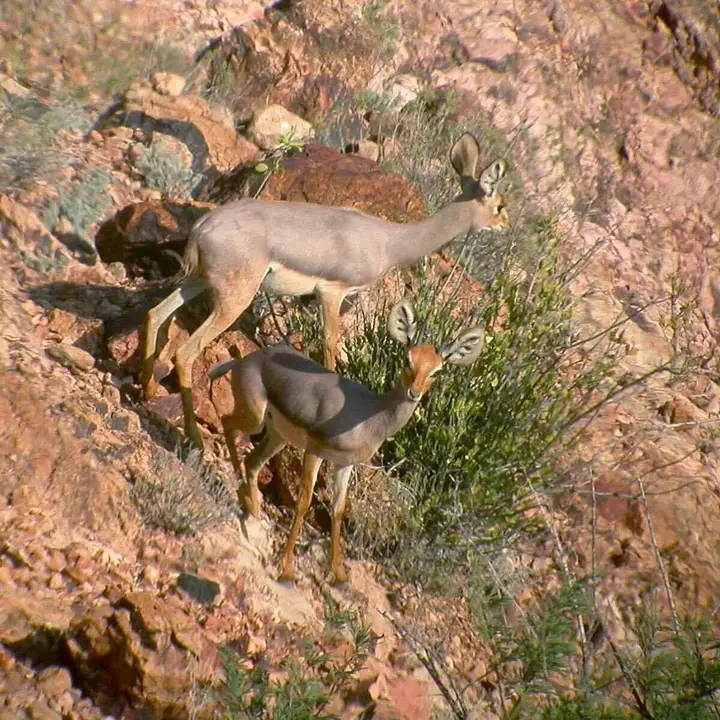
The Grand Bara combines naturally with two other stages in the south of the country: the Holl-Holl viaduct, a railway structure built for the Djibouti–Ethiopia line and opened in 1900, and the protected areas of Djalélo and Assamo, devoted to endemic and threatened antelopes.
Comparing the sites of the south
| Site | Region | Main interest | Status |
|---|---|---|---|
| Grand Bara (Bara) | Dikhil / Ali-Sabieh | Rock engravings of 3000–2000 BCE | Rock art site, open plain |
| Djalélo | Arta | Waller’s gazelle, known as the giraffe gazelle | Protected area since 2011 |
| Assamo | Ali-Sabieh | Beira antelope | Protected natural area |
| Holl-Holl | Ali-Sabieh | Railway viaduct opened in 1900 | Industrial heritage |
Those four stages fit into a single day of driving from Djibouti City if you allow only a short stop at each. For the rock art, however, allow a dedicated half-day: reading the panels takes time and favourable light.
How much does a trip to the Grand Bara cost?
| Service | Indicative price | Detail |
|---|---|---|
| Land sailing at the Grand Bara | 17,850 Fdj | Displayed rate for 1 participant |
| Assamo package | 26,691 Fdj | Group price, neighbouring protected area |
As at all sites in the south, the main expense is not the entrance but the vehicle and its driver: the cost therefore divides the better the larger the group. Conversely, the rock art itself is not monetised — there is no entrance ticket to the Bara boulders, only a cost for accompaniment.
When to go to the Grand Bara?
| Period | Felt heat | Wind | Comfort on site | Recommendation |
|---|---|---|---|---|
| November – February | Moderate | Present, useful for land sailing | Good | Ideal window |
| March – April | Rising | Moderate | Acceptable | Early morning |
| May – September | Very strong | Variable | Difficult, no shade | To be avoided |
| October – December | Falling | Present | Good | Ideal window |
Wind is an ambiguous parameter: it makes land sailing possible and the heat more bearable, but it also lifts fine sand that hampers the reading of the engravings and forces you to protect camera lenses.
What should you know before setting off?
- No shade, no water point. Carry far more water than your estimate, and something to cover your head.
- Watch out for sand and dust. Protective bags for cameras and phones: the dust of the plateau gets everywhere.
- Bring closed shoes. The basalt is sharp and the dry grasses hide uneven ground.
- Do not set off alone on the track. Tell someone your itinerary and your return time.
- Carry cash. No electronic payment is possible on site.
How do you look at the engravings without damaging them?
The Bara engravings have been exposed to the open air for millennia. They are fragile for three reasons: the basalt crumbles, wind-borne sand polishes the lines, and repeated passage abrades the rock.
A few simple rules are enough to limit your impact:
- Do not touch the figures. The gesture seems harmless, it is not: the grease of the skin fixes dust and accelerates erosion.
- Do not rub or wet the rock to see a motif better. No chalk, no water, no rubbings.
- Do not climb on the engraved blocks to change your angle.
- Do not move any stone: a turned flake may carry an engraving.
- Report any damage you notice to your guide or the operator, so that it reaches the competent authorities.
Finally, if the site interests you, note that Djiboutian rock art is not limited to Bara: in the Tadjourah region, on the Makarrassou massif, the Abourma site forms the densest group in the country, with representations spread over several kilometres of boulders. Comparing the two corpora gives the measure of the country’s heritage wealth — and reminds you that these sites are read with a guide, never at a run.
Preparing your trip
Check entry formalities in advance, particularly if you plan to continue to Ethiopia overland, and confirm the state of the track with your operator after the rainy season: it is the only parameter that can genuinely compromise a visit.
Frequently asked questions
Which engravings can you see at the Grand Bara?
The basalt boulders of Bara carry engravings dated from 3000 to 2000 BCE. Elephants, oryx, giraffes and many long-horned bovids can be recognised there, some shown with doubled legs, along with small human figures. One panel shows two engraved elephants, a rare depiction in Djiboutian rock art.
How do you get to the Grand Bara?
The Grand Bara is crossed by the road linking Djibouti City to the south of the country. The engraving site itself is reached by track: allow a 4×4 and a guide, because the boulders blend into the plateau. The simplest option remains an organised trip, combining the journey, access to the site and a reading of the engraved panels.
Can you do land sailing at the Grand Bara?
Yes, it is in fact one of the activities sold on site. The plain is vast, flat and windy, which makes it a suitable ground. A session is offered at booking from around 17,850 Djiboutian francs for one participant. Given the heat and the absence of shade, morning and late afternoon slots are markedly more comfortable.
Why are there engraved elephants in a desert?
Because the climate has not always been what you observe. The presence of elephants, giraffes and bovids on the boulders indicates that at the time they were made, the country was not arid: it received enough water to feed large herbivores and a far more varied fauna. The sandy plateau you cross today is therefore a recent landscape in human history.
Sources
Location
Lat. 11.24021Lng. 42.70694
Destinations
Read next
Abourma: the rock engravings of the Makarrassou massif
Ali-Sabieh: the south-east region, sites and camps
Allols depression: salt, hot springs and caravans
Ardoukoba: the most recent volcano in Djibouti
Arta: the cool of the interior and whale sharks
Assamo: the protected area of the beira antelope
Balho: rock art and the northern border post
Bankoualé: the oasis at the foot of the Goda massif