Djibouti in 2 weeks: what the second week adds
Two weeks in Djibouti, that is 14 days and 13 nights, are built by assembly and not by an invented programme. We take up the 10-day assembly, then propose three exclusive options for the last four days: Obock and diving in the north, the camps of the south, or the Ethiopian extension by train. The remaining days are free, because no query beyond 7 days is documented in our corpus.
Method box — to be read before the rest. Our research corpus contains no query beyond 7 days for Djibouti. This page therefore does not answer a measured demand. It offers no day-by-day programme: we have no documented material to fill fourteen distinct days. It assembles already published itineraries, names what it combines, and declares free the days that nothing fills.
Two weeks in Djibouti: why an assembly?
Fourteen days is nearly double the duration for which we have a documented demand. The risk, in writing this page, is therefore precise: filling. Adding plausible sites, inventing a stage, turning a free afternoon into “heritage discovery time”.
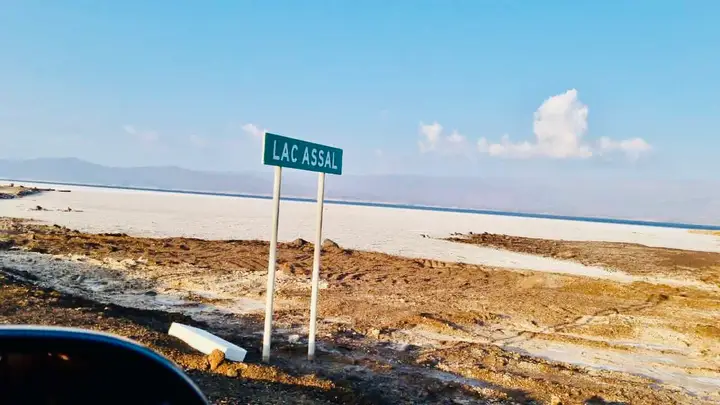
We will not do it, for a reason that lies in the available material. Our sources describe a finite number of major sites: Lake Assal, Lake Abbe, Tadjourah, Obock, the Forêt du Day, the islands of the Gulf of Tadjourah. They also describe a few second-rank ones — Assamo, the Grand Bara, Daasbiyo, the Allols depression. In total, there is not enough there to build fourteen full days without repeating.
The consequence is simple, and it is the thesis of this page: a second week in Djibouti is not bought in extra sites, it is bought in choices. Three regional tracks open up, each consuming three to four days, and one of them has to be kept.
Which itineraries are combined to last fourteen days?
The assembly takes up in full Djibouti in 10 days, which already combines three documented itineraries, then adds four days.
| Block | Days | Combined itinerary | What it brings |
|---|---|---|---|
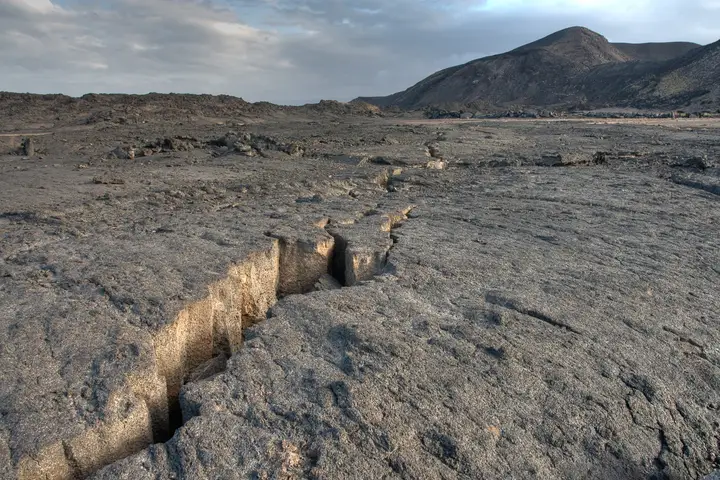
| Coastal base | 1 to 2 | Djibouti in 2 days | The rift and the salt, then the sea: Arta, Lake Assal, the Goubbet al-Kharab, a boat outing |
| Desert and north coast | 3 to 5 | A three-day tour published in the catalogue | Lake Abbe with a night on site, then Tadjourah and Les Sables Blancs |
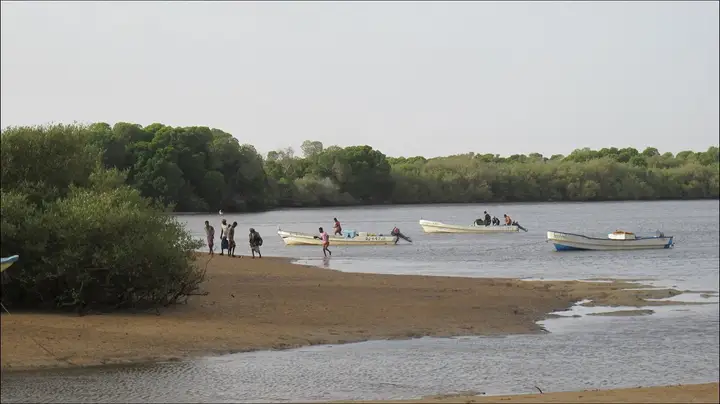
| Deep north coast | 6 to 7 | Extension towards Obock | Obock, the Godoria mangrove, the Seven Brothers marine area |
| Mountains | 8 | Day 7 of Djibouti in 7 days, taken alone | The Forêt du Day, 30 square kilometres of forest cover |
| Free days | 9 to 10 | No documented service | Nothing: we do not fill them |
| Last four days | 11 to 14 | One of the three options below | See the next section |
The assembly rules are those of the ten-day page, and they still hold: choose a single backbone — one multi-day tour only, since all of them include Lake Assal — then add only what that backbone does not contain. Never pay twice for the same journey.
How should you fill the last four days?
Three options, exclusive. Each heads in a different direction and consumes at least three full days.
| Option | Days | What it covers | What it costs, at published prices |
|---|---|---|---|
| A — the north and diving | 11 to 13 | Obock, the Godoria mangrove, and the Seven Brothers marine area for divers | Ferry to Obock at 800 Fdj per adult; nights in camps 7,800 to 17,000 Fdj; no diving rate published for the Seven Brothers — as a marker, supervised outings at Moucha are published at 10,000 and 12,000 Fdj |
| B — the camps of the south | 11 to 13 | Assamo and its protected area, the nomadic camp of Dhaydhan, the Grand Bara and the Holl-Holl viaduct | Assamo package 26,691 Fdj; land sailing at the Grand Bara 17,850 Fdj; a day of 4×4 about 44,000 Fdj per vehicle |
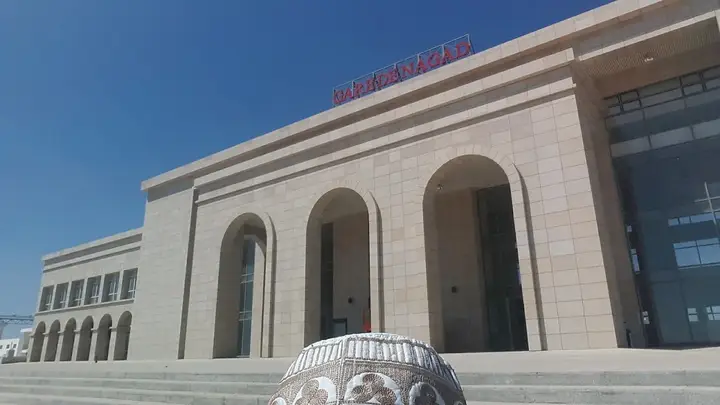
| C — the Ethiopian extension | 11 to 14 | Crossing the border by the railway line, from Nagad station | The published fares appear on our Djibouti–Addis Ababa train page; Ethiopian formalities are not documented in our sources |
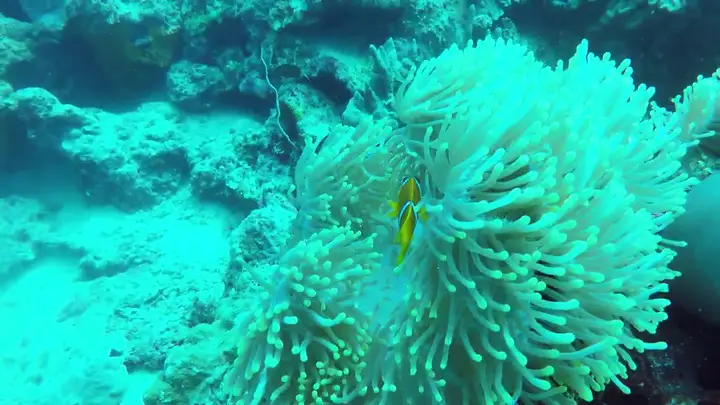
Option A — the north. It is the most natural extension, and the best documented. Obock lies about 240 kilometres by road, or about two hours by ferry and one hour by fast boat; our page on the spot advises devoting two to three days to it. The Seven Brothers marine protected area covers 447.1 square kilometres, about 27% of the country’s coastal fringe, and the biosphere reserve encompassing it was named in 2025. The dive sites there are varied, but the archipelago is less equipped than Moucha and Maskali: conditions are checked on site.
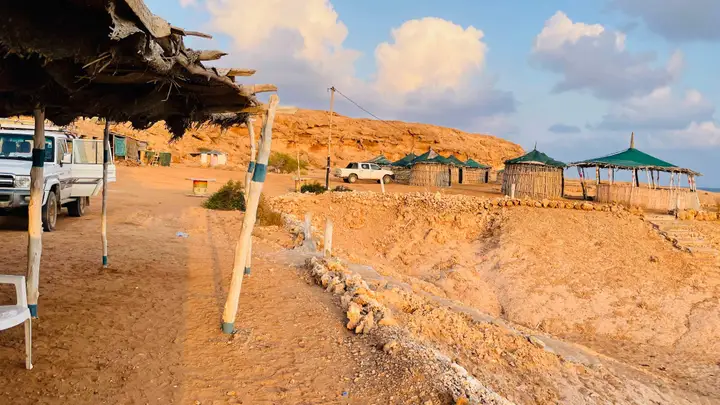
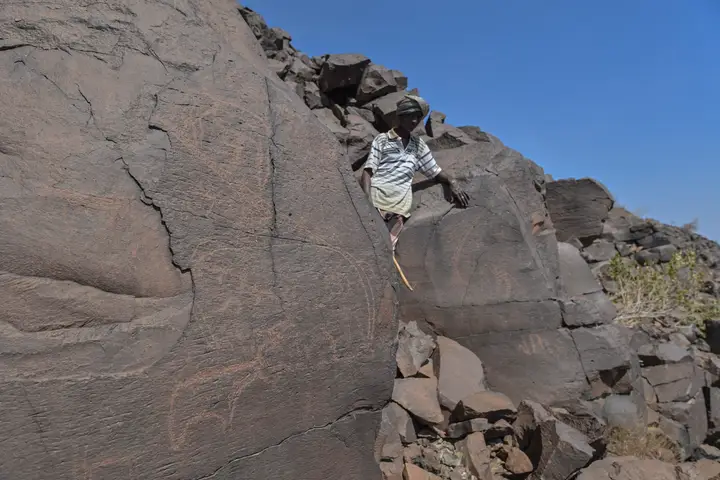
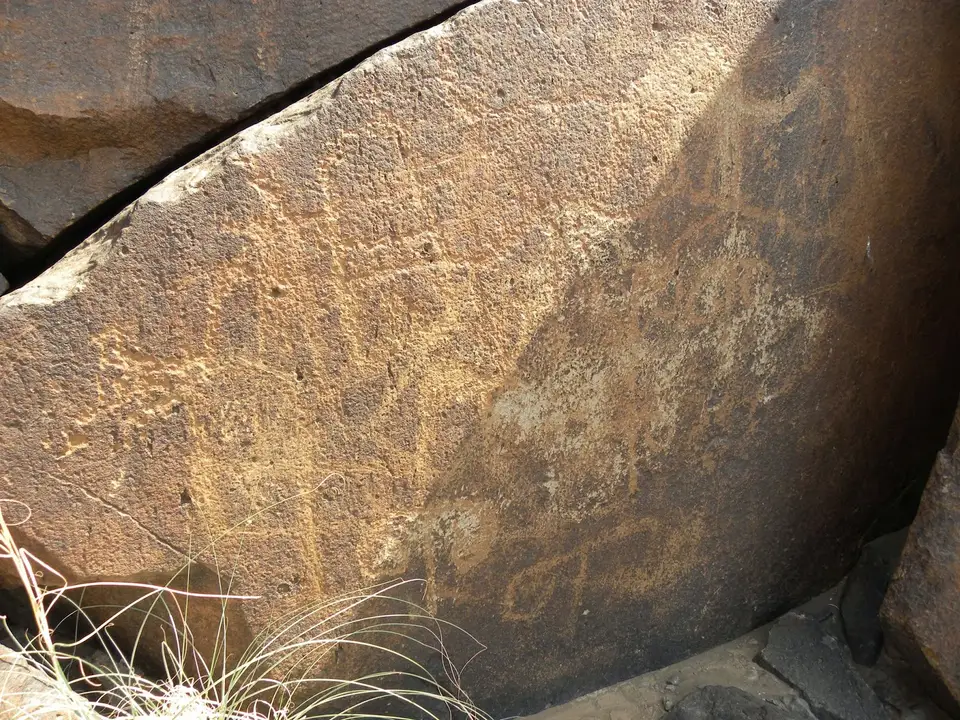
Option B — the south. It is for anyone who prefers wildlife and rock art to the sea. Assamo lies about 120 kilometres from Djibouti City, in a protected area sheltering the beira antelope, and the ecotourism camp there is set far from any road. The Grand Bara offers its rock engravings dated 3000 to 2000 BCE and a land-sailing ground. The Holl-Holl viaduct, a structure of the former Djibouti-Ethiopia line inaugurated in 1900, completes the loop.
One clarification, so that nobody confuses our three days with an obligation: those four southern stages in fact spread over a single day of road from Djibouti City, if only a short stop is given to each, and the rock art of the Grand Bara alone requires a dedicated half-day. The three days we propose here therefore correspond to a slow version: nights in a camp, visits at the right hours, and a margin the road does not allow. A traveller in a hurry can reduce that block to two days, or even one.
Option C — Ethiopia. It is the only option that leaves the country. It is prepared separately, and we deal with it on a dedicated page: Djibouti and Ethiopia. Note from now the point that matters: our sources do not document the entry conditions for Ethiopia, and we therefore publish neither visa, nor rate, nor time limit on the subject.
What do you do on the days that nothing fills?
Of the fourteen days of this assembly, six are covered by no documented service: days 9 and 10 of the ten-day assembly, and two of the last four days, since each option consumes three at most. We do not fill them.
A methodological remark is called for here. A travel page announcing “two weeks” has a structural temptation: to make the calendar full. That is precisely what this site’s structure plan forbids, and for a good reason — beyond seven days, we do not know what travellers are looking for, for lack of queries.
Those free days therefore have three documented uses, already set out on the ten-day page: rest, recovery from an outing cancelled by the sea or a track cut by rain, and revisiting a site at a better hour. Over two weeks, the recovery margin stops being a luxury: it is the only way to guarantee that an outing subject to a regulatory window — the whale sharks, from 15 October to 15 March — ends up taking place.
How much does a two-week assembly cost?
Here again, no package is published. These are the documented items the assembly and its three options use, each at its catalogue price. There is no total: a two-week stay is costed by choosing one column and one option.
| Item | Published service | Price |
|---|---|---|
| Base, organised formula | Two-day tour: city of Djibouti and Lake Assal | 35,000 Fdj per person (economical version: 15,130 Fdj) |
| Base, with the sea | Two-day tour: Lake Assal and Moucha island with snorkelling | 40,000 Fdj per person |
| Desert and north coast | 3-day tour: Lake Abbe, Lake Assal, Tadjourah and Sable Blanc | 85,000 Fdj per person |
| Same block, other operator | 3-day tour: Lake Abbe, Tadjourah and Lake Assal | 44,500 Fdj per person |
| Long base | Complete 4-day tour: Le Meilleur de Djibouti | 120,000 Fdj per person |
| Bivouac at Lake Abbe | Lake Abbeh package | 53,000 to 133,500 Fdj per person according to group size |
| Option A — crossing | Ferry Djibouti City ↔ Obock | 800 Fdj per adult, one way |
| Option A — diving | Exploration dive at Moucha, supervised outing | 10,000 to 12,000 Fdj per person |
| Option A — islands stay | Moucha and Maskali islands package, group of 1 to 10 people | 40,000 Fdj |
| Option B — camp | Assamo package, neighbouring protected area | 26,691 Fdj |
| Option B — activity | Land sailing at the Grand Bara, 1 participant | 17,850 Fdj |
| All options — vehicle | 4×4 with driver | about 44,000 Fdj per vehicle per day |
| Base of the stay | Room in a Djibouti City hotel | 7,800 to 91,492 Fdj per night |
One clarification that changes the calculation. The 4×4 rate is not a catalogue price: the offer type “vehicle hire” does not exist in the partner platform’s catalogue, and the national tourism agency publishes no hire grid. The 44,000 francs come from a commercial display and must be confirmed by a written quotation. Over a two-week stay, that item becomes the first on the bill: that is where the gap between an organised stay and a build-your-own stay is played out.
Two price gaps we do not smooth over
The catalogue contains two anomalies we cannot explain, and which we publish as they stand.
- Three days cheaper than two. The tour “Lake Abbe, Tadjourah and Lake Assal in 3 days” is 44,500 Djiboutian francs, when the 2-day tour “Lake Abbe and Lake Assal” is 55,000 francs — for a shorter programme.
- Same announced content, double the price. The tour “Djibouti city and Lake Assal in 2 days” is 15,130 Djiboutian francs, when the tour “Ville de Djibouti et lac Assal” in 2 days shows 35,000 francs.
Over two weeks, those gaps are no longer a detail: between the low and the high of two identically announced lines, the difference exceeds the price of a day of 4×4. Ask each operator for a written quotation, with the list of what is included — transport, guide, meals, night, site permits.
What does a second week really change?
It has to be said plainly: it does not add a second series of major sites. Our sources describe no others, and a page claiming otherwise would invent places.
What it does change, on the other hand, is real and measurable on four fronts.
A regional choice instead of a flyover. In one week, Obock, the south and Ethiopia are out of reach; they have to be excluded. In two weeks, one of the three becomes the heart of the trip. That is the difference between visiting a country and crossing one.
A margin that makes outings reliable. The sea, the swell and the state of the tracks cancel programmes. Over seven days, a cancellation is endured. Over fourteen, it is recovered.
A sustainable pace. Three days in a 4×4, a bivouac and two sea crossings do not chain without a pause. Spaced out, the same sites are lived differently.
The risk, too. Two weeks in Djibouti cost a lot, because everything is imported and the vehicle is paid at a daily rate. A long stay put together without a clear backbone produces a high bill for a repetitive programme. That is the strongest argument for reducing rather than extending: better ten days well assembled than fourteen days filled.
Which mistakes should you avoid over a two-week stay?
- Do not combine the three options. North, south and Ethiopia head in three opposite directions: adding them over four days is not feasible, and over fourteen it would sacrifice Lake Abbe.
- Do not stack multi-day tours. They all include Lake Assal: taking two amounts to paying twice for the same journey.
- Do not let the six free days fill by default. A long stay is judged by what it leaves empty as much as by what it contains.
- Do not set the gulf crossing at random. The ferry leaves only on certain days, runs at reduced service from mid-July to the end of August and stops on public holidays.
- Do not book late. Camps with small capacity, a limited fleet of 4×4s, whale shark season boats full several weeks ahead: over two weeks, the probability of hitting a saturated period increases.
- Do not settle a block without a written quotation, particularly when two offers announce the same programme at prices in a ratio of two to one.
- Do not treat the formalities of the two countries as a single file, if you keep the Ethiopian option: the entry conditions for Ethiopia are not documented in our sources, and are checked with the Ethiopian authorities.
- Do not set off without insurance covering medical evacuation. On a long stay, the exposure increases mechanically.
To compare accommodation formulas outside the capital, our page on camps and ecolodges details the nine documented sites and their published rates.
Frequently asked questions
What can you do in Djibouti over two weeks?
Everything a week covers, then three blocks of your choosing. A second week allows you to add either Obock and diving in the Seven Brothers marine area, or the camps of the south — Assamo, Dhaydhan, the Grand Bara — or the extension to Ethiopia by train from Nagad station. Those three tracks are competing options: combining them amounts to spending two weeks in a car.
Are two weeks in Djibouti too long?
It depends what you are looking for. For chaining sites, yes: our sources do not describe enough of them to fill fourteen full days, and we will not pretend otherwise. For travelling slowly, no: two weeks allow you to hold a pace, to recover an outing cancelled by the sea and to return to a site at the right hour.
How much does a two-week stay in Djibouti cost?
No two-week package is published. The blocks are costed separately: the two-day base runs from 15,130 to 40,000 Djiboutian francs per person, a three-day tour from 44,500 to 85,000, the complete four-day tour 120,000, a three-day islands package 34,710, and land sailing at the Grand Bara 17,850. Nights run from 7,800 to 91,492 francs.
Must you choose between the north, the south and Ethiopia?
Yes, and that is the central point of this page. Each of those three tracks consumes at least three full days, and each heads in an opposite direction. Adding them over four days is not feasible; spreading them over fourteen would mean sacrificing the coastal base and the Lake Abbe desert, which are documented. Choose one track, and keep the rest as free days.
Can you add Ethiopia to a two-week stay in Djibouti?
It is a legitimate option, provided it is prepared separately. The modern railway line leaves from Nagad station, west of Djibouti City, and our sources publish its price list and its practical conditions on a dedicated page. We document no entry rule for Ethiopia, however: that side is checked with the Ethiopian authorities before any purchase.
Sources
Itineraries
Read next
Budget in Djibouti: backpacker, mid-range, luxury
Culture and heritage: rock art and old cities in four days
Desert and lakes: salt, rift and Lake Abbe in four days
Diving in Djibouti: the three-day itinerary
Djibouti and Ethiopia: combining the two countries
Djibouti in 1 day: the rift or the beach?
Djibouti in 10 days: the assembly of three itineraries
Djibouti in 2 days: the rift, the salt and the sea