
Comparisons: choosing between two sites when time is short
A comparison is there to decide, not to describe. Eight decisions are covered here: Lake Assal or Lake Abbe, Moucha or Maskali, which season for whale sharks, which district of Djibouti City, which car rental company, which dive centre, camp or hotel, and whether you need a driver. Each page sets out the criteria that tip the choice and gives the real prices from the catalogue.
| Updated on | 16 September 2026 |
|---|
What is a comparison for on a trip to Djibouti?
A comparison answers a closed question: this one or that one? That is exactly the shape hesitation takes before a Djiboutian stay, because the country forces you to choose. Two days do not allow you to see everything, and the main expense — the 4×4 with a driver, around 44,000 Djiboutian francs per day per vehicle — rarely pays for itself on a single excursion.
This hub therefore does not describe sites: it gives the criteria that tip a decision, then points to the pages that hold the detail.
Which criteria actually tip a decision?
Four criteria are enough, and they are more operational than the usual arguments.
| Criterion | Why it decides | Where to check it |
|---|---|---|
| Travel time | It consumes the day before you even reach the site | The page for the destination concerned |
| A night on site | A bivouac site changes the whole programme | Accommodation and camps |
| Season | It sometimes rules out an option entirely | When to go |
| Vehicle type | It determines whether the site is reachable at all | Car rental |
Budget comes next, and it is often less decisive than people think: organised excursions include transport, which erases part of the gap between two options.
Lake Assal or Lake Abbe?
This is the most frequent arbitration, and it now has its own page: Lake Assal or Lake Abbe compares the two lakes item by item — effort, budget per person per day, season, and what each one really demands. The two destination pages remain the reference for the detail of a single site.
Lake Assal — Tadjourah region, about 120 kilometres from Djibouti City. The lowest point on the African continent, 155 metres below sea level, with 348 grams of salt per litre. Reached on paved road in an hour and a half, track over the last few kilometres. Visited in a day, with no night on site, and combined with Goubet al-Kharab and the Ardoukoba volcano.
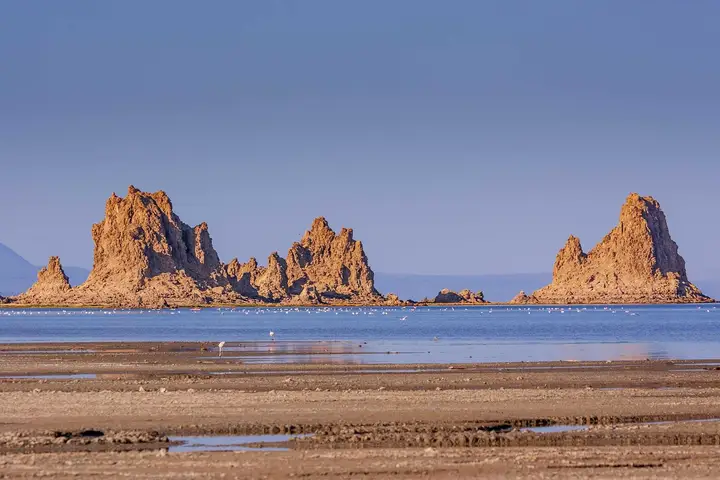
Lake Abbe — Dikhil region, straddling the Ethiopian border, at the bottom of the Gobaad depression. A salt lake no more than 8.6 metres deep, receding since the 1950s, bordered by crystallised limestone chimneys thirty to fifty metres high. Reached by 4×4 on a long track, with a bivouac on site, over one to two days.
What really separates them: one is visited from the capital in a day, the other demands an expedition. One is discovered by walking on a salt crust, the other by contemplating a landscape of mineral chimneys. The choice depends less on interest — both sites are exceptional — than on the time available and your tolerance for track.
North coast or interior?
The second arbitration sets the coast against the hinterland, and it commits the whole stay rather than a single day.
On the north coast side. Tadjourah the white city and its coral architecture, its Fiaa and Cheick Mohamed beaches and Les Sables Blancs. Obock and its Ras Bir lighthouse, the Godoria mangrove, the Seven Brothers archipelago for divers. Access is by ferry in an hour and a half, or forty-five minutes by fast boat.
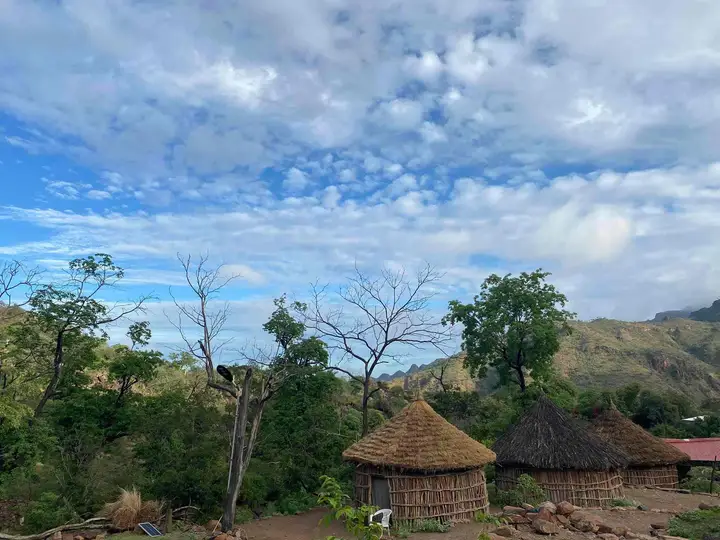
On the interior side. Arta and its relative cool at 750 metres of altitude, Grand Bara and its rock engravings, the Forêt du Day and the Dittilou cirque, not forgetting the two lakes.
The decisive criterion here is the night. The north coast is discovered by sleeping on site, at Tadjourah or in a camp. The interior is discovered by radiating from Djibouti City, except for Lake Abbe and the Forêt du Day, which involve a night in a camp.
Sea or desert: deciding by season
This is the only arbitration where the calendar decides for you.
From October to April, both options are equal: the inland basins become workable again and the sea stays warm. It is the ideal window, and it is also the one where you must book early — whale shark season, from late October to late February, fills the capital and the boats.
From June to August, the desert loses. The basins of Lake Assal and Lake Abbe concentrate the heat and go well beyond forty degrees. The sea wins then, with the Moucha and Maskali islands, diving and the north coast. The month-by-month detail is in when to go to Djibouti.
Which are the eight comparisons?
| Comparison | The decision it settles |
|---|---|
| Lake Assal or Lake Abbe | Two salt deserts: effort, budget per person per day, season |
| Moucha or Maskali | Two islands of the same trip — or should you aim further? |
| Which season for whale sharks | When to come, and why the official window is not the peak |
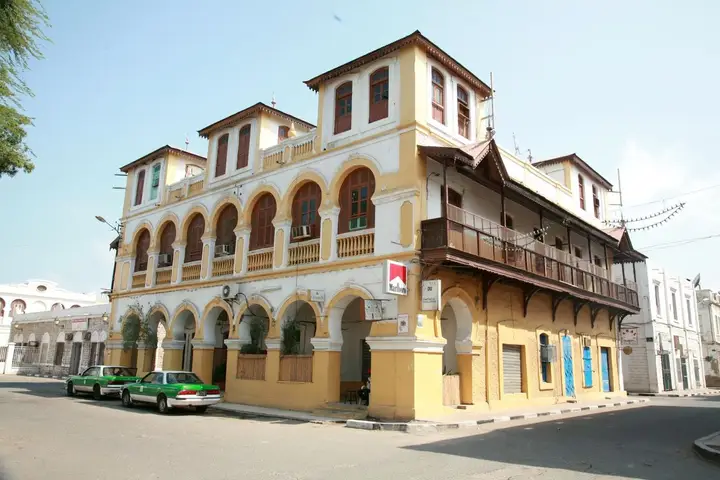
| Which district to sleep in Djibouti City | Plateau du Serpent, Héron, Marabout, Haramous or the centre |
| Which car rental company | Renting, and from whom |
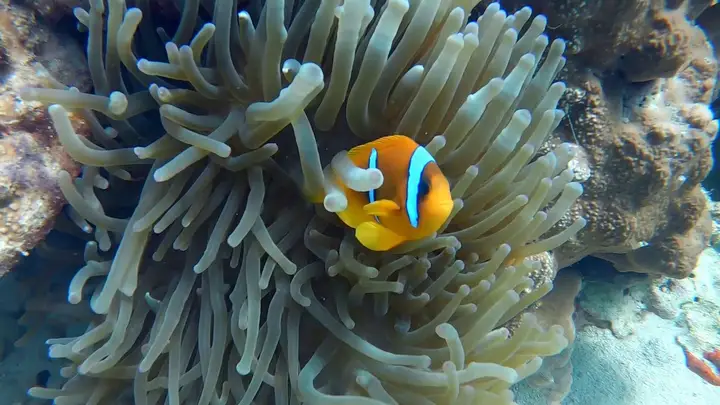
| Which dive centre | The operators actually based in the country |
| Camp or hotel | What you gain and what you give up, figures in hand |
| With or without a driver | The real mobility question, and its break-even point |
Two comparisons announced earlier do not appear in this list, and we would rather say so: “north coast or interior” largely overlapped the itineraries, and “Moucha or the Seven Brothers” compared a family trip with a technical diving destination — two things the pages Moucha and Maskali islands and Seven Brothers archipelago already treat separately. A comparison only makes sense if the two options are genuinely substitutable.
In the meantime, the destination pages cover each of those options separately, and the hub what to see in Djibouti ranks them on a single page.
How do you use this page in the meantime?
Three steps are enough. Start by fixing the length of your stay in the itineraries, which show what fits into two, four or seven days. Then read the two destination pages concerned by your hesitation. Finally check that the season of your trip matches that of the site you have chosen, by crossing when to go to Djibouti with weather and climate.
It is that method — constraints first, sites second — that will feed the comparisons, and it is also the one we apply in our pages.
Comparisons
Camp or hotel in Djibouti: what do you gain?
Car hire companies in Djibouti: eight agencies, no ranking
Dive centres in Djibouti: two operators, not ten
Lake Assal or Lake Abbé: two salt deserts, two budgets
Moucha or Maskali: two islands, one trip?
Which neighbourhood to stay in Djibouti City?
Which season for the whale shark in Djibouti?
With or without a driver in Djibouti: deciding
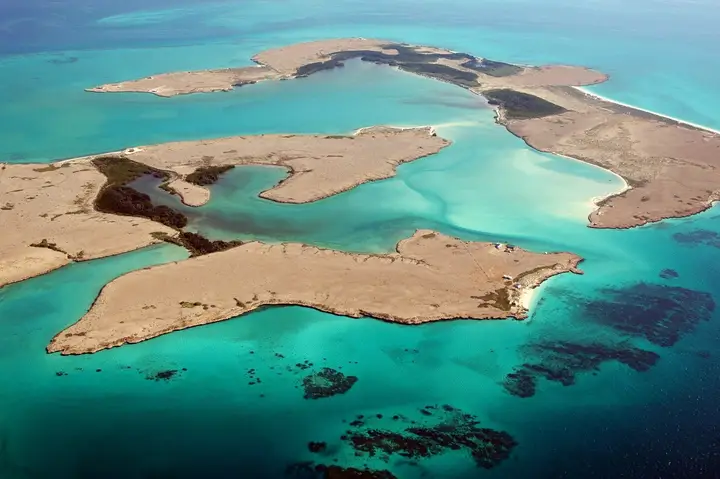
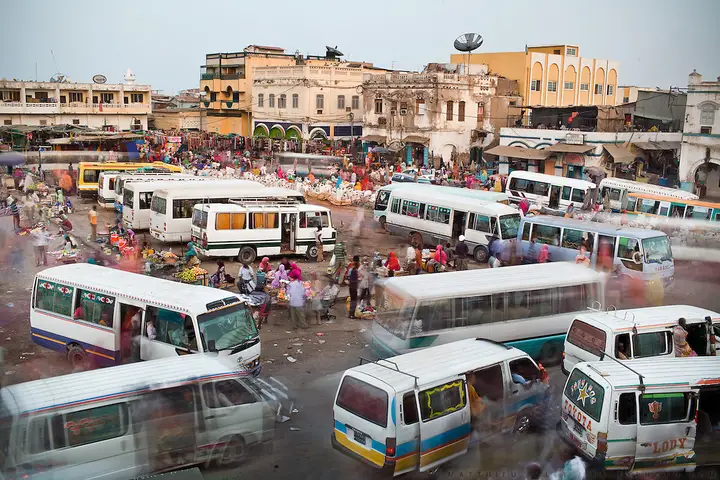
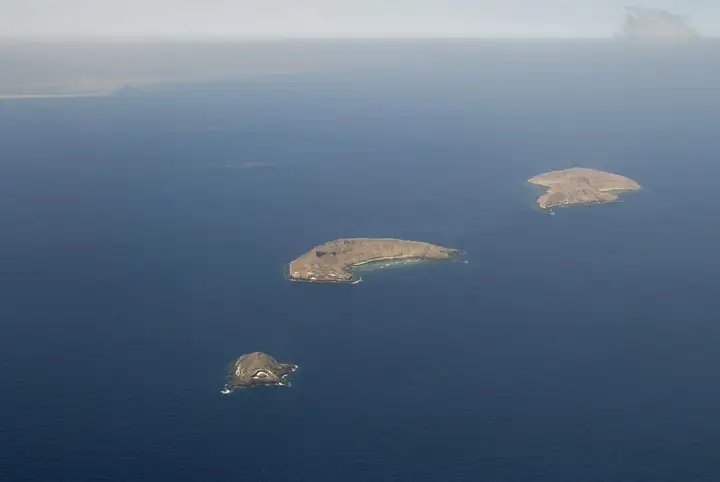
Compare trips according to the sites they includeSecure booking, verified provider.
Frequently asked questions
Lake Assal or Lake Abbe: which should you choose?
It all depends on time and on the comfort you accept. Lake Assal is visited in a day from Djibouti City, on paved road, and combines with Goubet al-Kharab: the obvious choice on a short stay. Lake Abbe requires a 4×4, a long track and a bivouac, but offers the most spectacular landscape in the country. The detailed comparison is online: [Lake Assal or Lake Abbe](/comparisons/lake-assal-or-lake-abbe/).
Should you favour the north coast or the interior of Djibouti?
The north coast, Tadjourah and Obock, suits anyone who wants to sleep by the sea, dive and head offshore: it is reached by ferry or fast boat. The interior (Lake Assal, Grand Bara, the Forêt du Day) suits anyone looking for the rift, rock engravings and mountains. The two combine over five days and more, not over two.
Sea or desert: how do you decide on a short stay?
The decisive criterion is the season. From October to April, both are equal and the desert becomes comfortable. From June to August, the inland basins go well beyond forty degrees: the sea wins, with the islands, diving and the north coast. In that case, keep land visits for the very first hours of the day.
What is a comparison on this site based on?
On three verifiable things: the real prices in the catalogue, the durations and distances already published in our pages, and dated surveys when it comes to reviews. We have tested nothing ourselves and we do not claim to have. When a decisive criterion is documented by nobody (a hotel's facilities, a rental company's cancellation terms), the page says so rather than filling the gap.