Ali-Sabieh: the south-east region, sites and camps
The Ali-Sabieh region occupies the south-east of Djibouti, along the Somali and Ethiopian borders. Its capital, Ali-Sabieh, is served by both train and road. The region gathers five catalogued destinations: the Assamo protected natural area and its beira antelope, two camps, the Grand Bara plain and its rock engravings, and the Holl Holl railway viaduct. The medieval village of Daasbiyo and its cave complete the set.
Where is the Ali-Sabieh region?
The Ali-Sabieh region occupies the south-east of Djibouti. It stretches along the border with Somalia and Ethiopia, and borders the Dikhil region to the west and the Arta region to the north. Its capital carries the same name: the town of Ali-Sabieh, which counts as the country’s second economic centre. The highest point of the region is the Arrei massif.
Two facts shape this territory, and both can still be read on the ground.
The railway. Ali-Sabieh is nicknamed “the train town”. The former Djibouti-Ethiopia line left stations and engineering structures there, including the Holl Holl viaduct; the region is in fact reached by train from Nagad station, and the old stations still dot the route.
The border. The region is a crossing point. The town grew up as a checkpoint, and defensive remains survive: at the Ambokta pass, at the entrance to Ali-Sabieh, a fortress built to fend off an Italian attack from Ethiopia during the Second World War, since rehabilitated by a local association.
What is there to see in the Ali-Sabieh region?
| Destination | What you find there | Administrative region | Page |
|---|---|---|---|
| Assamo | Protected terrestrial natural area, habitat of the beira antelope | Ali-Sabieh | Assamo page |
| Assamo camp | Ecolodge on the edge of the protected area, at Addaoua-Bouralé | Ali-Sabieh | Dalmar catalogue |
| Dhaydhan camp | Ecotourism site about ten kilometres from Ali-Sabieh | Ali-Sabieh | Dalmar catalogue |
| Grand Bara | Semi-desert plain, rock engravings and land sailing | Ali-Sabieh and Dikhil | Grand Bara page |
| Holl Holl viaduct | Structure of the former Djibouti-Ethiopia railway | Ali-Sabieh | Dalmar catalogue |
| Daasbiyo | Medieval village still inhabited, and a cave with rock paintings | Ali-Sabieh | Daasbiyo page |
The “Dalmar catalogue” links lead to the booking catalogue’s pages, which document each place separately.
The Grand Bara plain
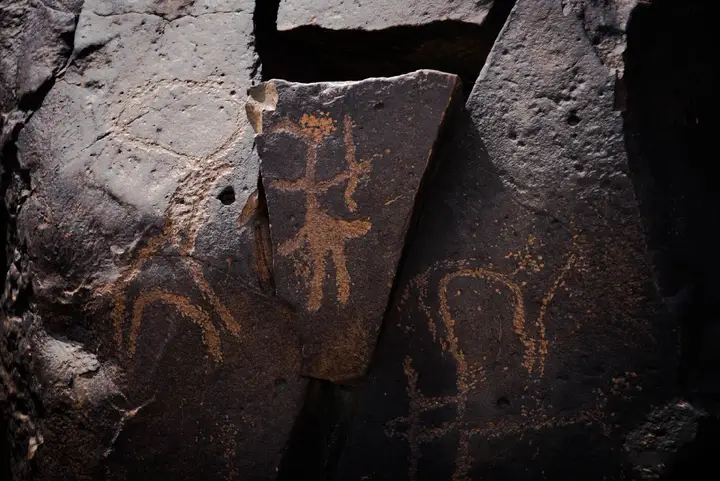
The Grand Bara is a semi-desert plain whose fame rests on a rock-art site: the basalt boulders of Bara carry engravings of elephants, oryx and giraffes, dated to 3000 to 2000 BCE. Its flat, windy surface also hosts land sailing. The plain is catalogued in the Ali-Sabieh region and in that of Dikhil, because it stretches across both sides of their administrative boundary: the catalogue therefore carries two records of it, one per region.
The medieval village of Daasbiyo
Inland, the village of Daasbiyo is presented by the National Tourism Agency as the locality where a camel-backed walk sets off every year for the capital, the town of Ali-Sabieh. The village played a part in trade between the ports of Zeila and the hinterland, and its territory holds funerary remains. Its cave, with rock paintings, can be visited on site.
The Holl Holl viaduct
Holl Holl lies on the former railway line and on the road axis that descend south. The catalogue keeps a viaduct there, an engineering structure of the former Djibouti-Ethiopia line. Worth seeing as a remnant of the old railway infrastructure, on a par with the abandoned stations along the route.
What does the Assamo natural area protect?
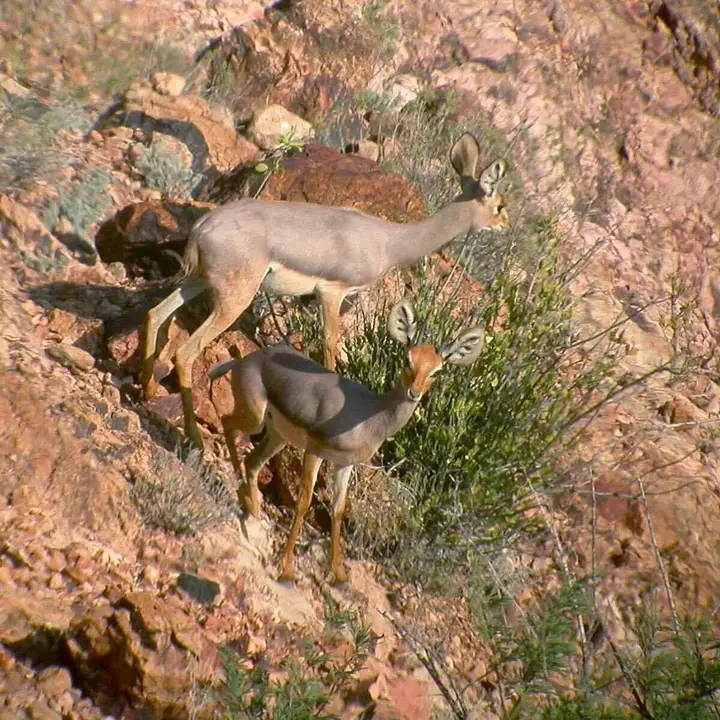
The Assamo protected terrestrial natural area exists for one reason: the beira. This small antelope, Dorcatragus megalotis, measures 80 to 86 centimetres, carries large leaf-shaped ears, and only the males have horns. It lives only in the arid, mountainous relief of the Horn of Africa — Djibouti, Somalia, Ethiopia — and its numbers are fragmented.
The species was rediscovered in the area in 1993, when it was thought to be extinct. An ecotourism camp was then built at Addaoua-Bouralé, on the edge of the protected area, with local labour and solar lighting; it was inaugurated on 10 January 2016 and its revenue funds the protection of the sites. The village of Assamo takes its name from the colour of its mountains, an Afar word meaning “red hair”.
In practice, a visit to Assamo is made with a guide: beiras are shy, the tracks are not marked and the area is protected.
How do you get to the Ali-Sabieh region?
| Means | What the ANT publishes | Note |
|---|---|---|
| Train | Ali-Sabieh ticket at 400 Fdj (Djiboutians) and 3,200 Fdj (foreign visitors) | Departs on even days at 8 am, be at Nagad two hours before |
| Bus | 600 Fdj a seat | Daily service from Djibouti City |
| Car | National highway 1 | The most flexible option for stringing sites together |
The train is the most singular option: the line crosses engineering structures and serves stations that shaped the settlement of the south. Remember to buy your ticket the day before. For details of the rail services, see the page on travel by train towards Ethiopia.
By car, national highway 1 runs south and serves Ali-Sabieh, Daasbiyo and the Grand Bara. Once off the tarmac, everything is done on track: access to the Assamo protected area and to the camps requires a suitable vehicle and a driver who knows the area. For outings off the main routes, see 4×4 hire with a driver.
Where to stay in the Ali-Sabieh region?
The offer is small, and that is the main limiting factor for a stay in the region. Three families of accommodation emerge from the sources consulted:
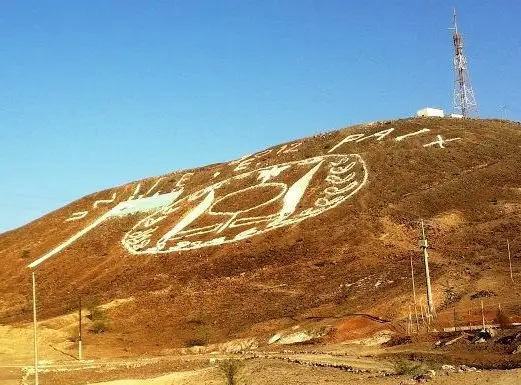
- The hotels of Ali-Sabieh. The National Tourism Agency lists four in the town, including the Palmeraie guesthouse, presented as the oldest, at the foot of Mount Drapeau.
- The Assamo camp. Five rooms, six barbecue hearths and three showers, for twenty-eight people in all, at Addaoua-Bouralé, far from any road.
- The Dhaydhan site. Traditional toukouls fitted with mosquito-netted beds, about ten kilometres from Ali-Sabieh, with meals by prior order.
The booking catalogue documents the camps, but urban accommodation in the region is thinly represented there: make your arrangements before leaving rather than on arrival.
When to go to the south-east?
| Period | What it implies on the ground |
|---|---|
| November – February | The most comfortable period for outdoor sites |
| March – April | Still workable, with days that warm up |
| May – September | To be avoided for walking and for sites without shade |
| October – November | A gradual return, a good window |
The region is inland, without the sea breeze of the coast: the sites are visited early in the morning and late in the afternoon. None of the places described here offers natural shade — the Grand Bara plain even less than the others. So plan your visit around the cool season, and keep outdoor sites for the first hours of the day.
What should you know before setting off?
- Take cash. Banks and exchange offices are mostly in the capital; the camps and small shops work in cash.
- Carry your water for the day. The sites are isolated, with no shop nearby, and the walking is done without shade.
- Book your nights and your guides. Capacities are small: a camp of twenty-eight places fills up quickly, especially in the cool season.
- Stay on your guide’s tracks around Assamo: the area is protected, and beiras take disturbance badly.
- Ask before photographing. The region is rural; the inhabitants, the camps and the herds are not scenery.
- Check your visa formalities before leaving if you extend your itinerary towards Ethiopia.
The region works as a two-day excursion from Djibouti City, or as a stage on an itinerary heading south. It combines naturally with the Dikhil region and Lake Abbe, and with a day in Djibouti City before or after the journey.
Frequently asked questions
What is there to see in the Ali-Sabieh region?
Five sites are catalogued. The Assamo protected natural area, which shelters the beira antelope, a threatened species of the Horn of Africa. The Assamo ecotourism camp, on the edge of that area, and the Dhaydhan camp, about ten kilometres from Ali-Sabieh. The Grand Bara plain, its rock engravings and its land-sailing ground. The Holl Holl viaduct, a structure of the former Djibouti-Ethiopia railway.
How do you get to Ali-Sabieh from Djibouti City?
Three ways. By train on the former Djibouti-Ethiopia line: the National Tourism Agency publishes a ticket at 400 Djiboutian francs (Fdj) for Djiboutians and 3,200 Fdj for foreign visitors, departing on even days at 8 am, with arrival at Nagad two hours before. By bus, at 600 Fdj a seat. Or by road, on national highway 1, by car.
What is the beira antelope?
The beira, Dorcatragus megalotis, is a small antelope measuring 80 to 86 centimetres, with large leaf-shaped ears. Only the males carry horns. The species lives only in the arid, mountainous relief of the Horn of Africa: Djibouti, Somalia and Ethiopia. The Assamo protected natural area, in the Ali-Sabieh region, is one of its rare preserved habitats.
Can you stay overnight in the Ali-Sabieh region?
Options exist but remain limited, and it is better to book before arriving. The National Tourism Agency lists four hotels in Ali-Sabieh, including the Palmeraie guesthouse, presented as the oldest, at the foot of Mount Drapeau. Remote from the town, the Assamo camp has five rooms, six barbecue hearths and three showers, for twenty-eight people in all. The Dhaydhan site offers traditional toukouls and meals on request.
Is the Grand Bara in the Ali-Sabieh region?
The Grand Bara plain is catalogued both in the Ali-Sabieh region and in that of Dikhil, because it stretches across both sides of their administrative boundary. The Dalmar catalogue therefore carries two records of the same place, one per region. In practice, the engraving site is reached from Ali-Sabieh as from Dikhil, and the plain is crossed by the road linking the south of the country.
Sources
- Djibouti National Tourism Agency — useful information (regional buses, train, fares)
- Djibouti National Tourism Agency — the Ali-Sabieh region and the Dhaydhan camp
- Djibouti National Tourism Agency — the Da'asbiyo cave
- Wikipedia — Ali-Sabieh region (French)
- Wikipedia — Ali Sabieh Region (administrative boundaries)
- World Bank — Galafi-Nagad power corridor impact study (heritage, archaeological sites)
Destinations
Read next
Abourma: the rock engravings of the Makarrassou massif
Allols depression: salt, hot springs and caravans
Ardoukoba: the most recent volcano in Djibouti
Arta: the cool of the interior and whale sharks
Assamo: the protected area of the beira antelope
Balho: rock art and the northern border post
Bankoualé: the oasis at the foot of the Goda massif
Daasbiyo cave: rock paintings and burial mounds