Accessibility in Djibouti: what a demanding trip implies
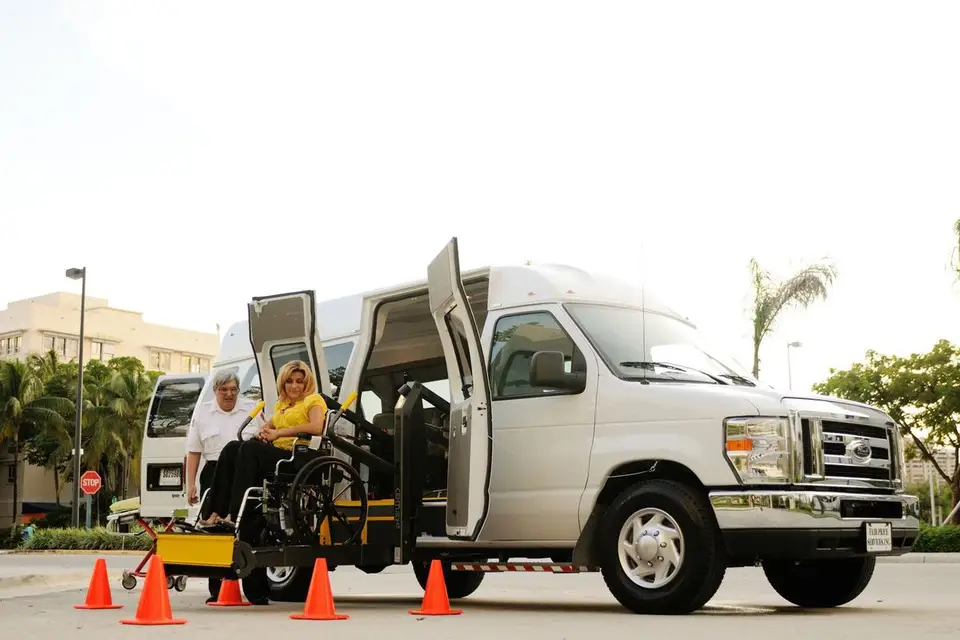
We found no official data on the accessibility of sites and accommodation in Djibouti: no inventory of adapted establishments, no published standard. Preparation therefore rests on direct verification, operator by operator. Three constraints recur: heat, boarding vehicles and boats, and salt or basalt ground. Nothing should be booked without a conversation beforehand.
A note on method. This page does not claim to answer a documented need: no keyword research carried out for this site found any demand around accessibility in Djibouti. It exists because a traveller concerned needs an honest answer, and the only honest answer today is this one: no official data is published. We therefore describe the constraints that follow from facts, and how to check them — without ever promising a facility we have not seen for ourselves.
Is there official data on accessibility in Djibouti?
No, not in a form usable for planning a trip. Our accessibility searches for Djibouti lead to Djiboutian community organisations and to academic work, but not to a register of adapted establishments published by an authority, nor to an accessibility standard binding on accommodation providers and sites.
The consequence is direct, and it has to be accepted: we can publish no list of adapted hotels, no label and no accessibility rating per site. Any page claiming to do so in our place should be read with suspicion, because no source would back it up.
| What would be needed to plan | Available in our sources? |
|---|---|
| Inventory of adapted accommodation | Not published |
| Accessibility standard for tourist sites | Not published |
| Adapted vehicles identified and bookable | Not published |
| Accessibility of natural sites (track, ground) | Not documented |
| Accessibility of boats to the islands | Not documented |
| Local community contacts | Djiboutian community resources |
What are the main obstacles on the ground?
Lacking data, we can at least name the constraints that follow from established facts — and that will remain true whatever facilities exist. They fall into four families.
Heat. According to the Open-Meteo ERA5 reanalysis normals (2015-2024, CC-BY-4.0 licence), Djibouti City reaches a mean maximum of 40.8 °C in July, and Lake Assal 44.7 °C in June. Thermoregulation is harder for some people, and heat adds to the effort of moving manually. That argues for short days, early in the morning, with an air-conditioned vehicle kept nearby.
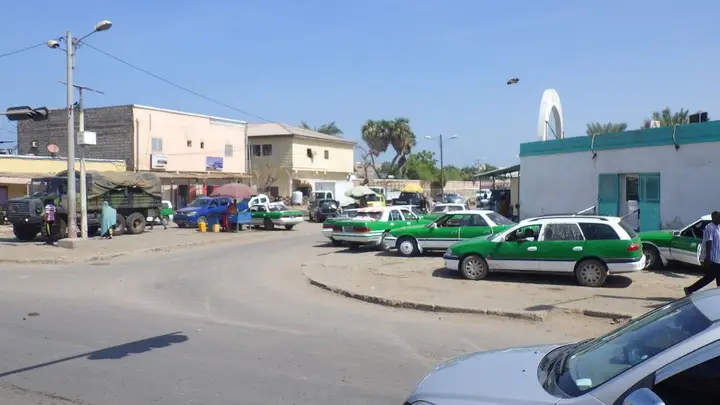
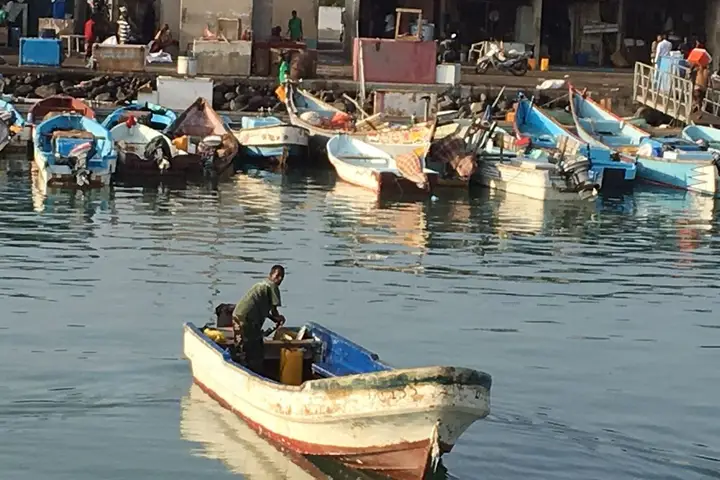
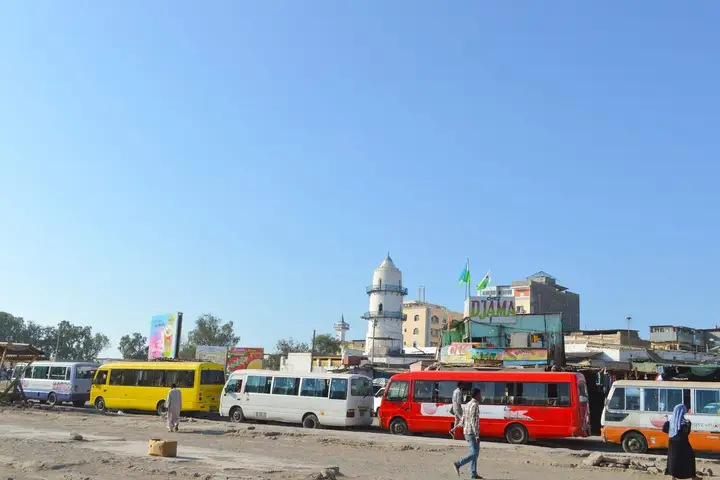
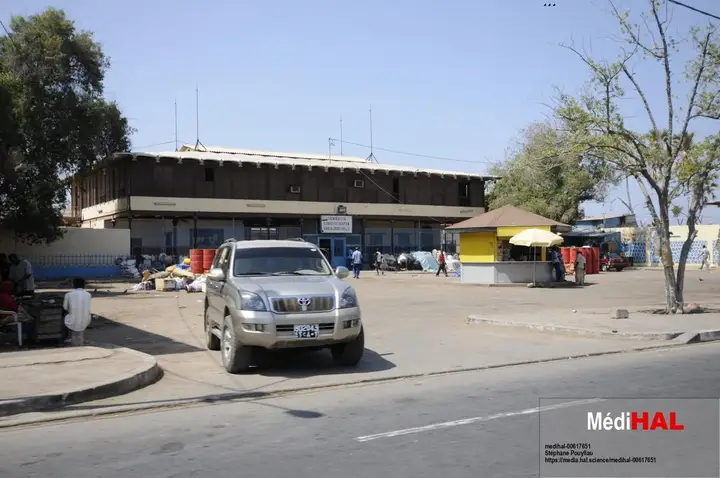
Boarding. Public transport in the capital leaves when full, with no fixed timetable: getting into a packed minibus is not negotiable. Boats to the islands are taken from the beach, with a landing that is often wet. In practice these two points are the most limiting in the country.
Surfaces. Salt in the Lake Assal basin, basalt on the lava fields, sand on the northern beaches: none of those grounds is a stabilised surface, and none is workable in a wheelchair or with a walker over long distances.
Distances. The interior of the country is visited at the cost of long hours on track in a 4×4. The vehicle itself is the main obstacle: access height, interior space, no adapted suspension.
How do you get around Djibouti City?
The capital concentrates the services, and that is where the stay is decided. Three principles apply, in the absence of guaranteed facilities.
- A private door-to-door transfer replaces the street taxi and the minibus. It is an extra cost to budget for, but it removes the most uncertain part of the journey.
- The number of steps at the entrance is the first question to ask. It is concrete, easy for a receptionist to check, and it eliminates half the unpleasant surprises on its own.
- Air conditioning is not an accessory comfort here: it determines how long an outing during the day can last.
For the price of a private transfer, our page on bus and taxis gives the published reference amounts — and recalls that the price of a ride is agreed before getting in.
Which sites are conceivable and which should be ruled out?
Without an accessibility survey, we do not rank the sites: that would be invention. The nature of each site, however, is documented, and that is enough to rank the effort required.
| Type of site | Structural constraint | What to ask |
|---|---|---|
| Beaches near the capital | Sand, gentle slope, little shade | Vehicle access to the water’s edge, shade available |
| Islands (Moucha, Maskali, Seven Brothers) | Boarding from the beach, wet landing | Type of boat, help with boarding, life jacket |
| Lake Assal | Salt ground, extreme heat, no shade at all | Vehicle access to the viewpoint |
| Lake Abbé and Abourma | Long track, walking on basalt | Whether a circuit without walking is feasible |
| Forêt du Day and Dittilou | Altitude, uneven trails, slippery ground | A short route from the track |
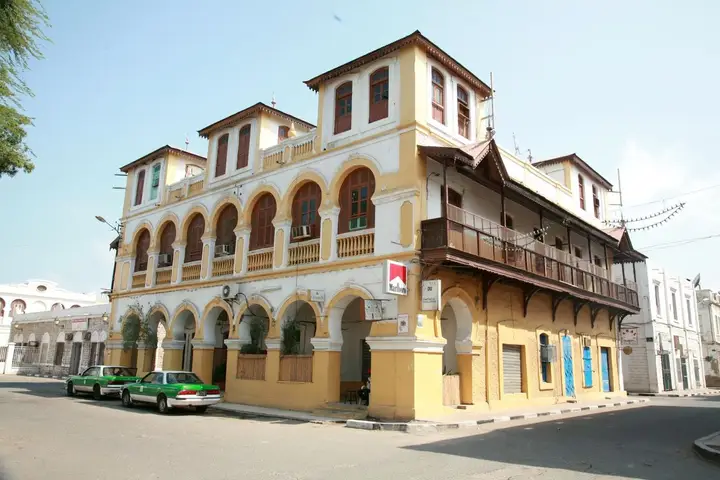
| Djibouti City | Uneven pavements, dense traffic | The real distance between vehicle and entrance |
The rule that emerges from that table is simple: the closer the site is to the capital, the easier it is to make something of it. Sites in the interior require explicit negotiation with the operator, and sometimes accepting that part of the programme has to be given up.
Should you tell your accommodation and the operator in advance?
Yes, and it is the heart of this page. State the real need, not a category. A request such as “accessible room” only makes sense if a standard exists to define it; here, none does. So ask closed questions, whose answer cannot be approximate.
- How many steps are there between the street and reception?
- Does the bathroom door let a wheelchair through?
- Is the shower step-free, or do you have to climb over a bathtub?
- Can the vehicle take a wheelchair, or does it have to be dismantled?
- Does the boat board from the beach or from a quay?
- What distance separates the vehicle stop from the site entrance?
Ask for a photograph of the access and the bathroom. An establishment that cannot send a photo cannot guarantee access, and it is better to discover that before paying than on arrival.
How do you prepare the trip in advance?
Three preparations are worth more than an optimistic booking.
Have it confirmed in writing. An email describing precisely what is guaranteed — steps, doors, vehicle, assistance — is worth more than a marketing section. Keep it: it will serve you if there is a disagreement on the spot.
Plan for your own equipment. In the absence of data on what is available on the spot, prudence lies in bringing what you depend on. Our page on what to pack details the real temperatures month by month, and therefore what the heat requires you to bring.
Check your insurance. The FCDO insists on a point that matters particularly here: make sure your cover funds local treatment and any medical evacuation. Local facilities are limited, and it is the insurer, not the consulate, that organises what follows.
Is Djibouti safe?
On public safety, the official British FCDO advice reports a risk of petty crime and recommends not walking alone late in the evening and keeping valuables out of sight — passports and cameras in particular. The document also mentions a terrorist threat targeting transport hubs in particular, and places frequented by foreigners.
Those recommendations weigh more heavily when you travel with reduced mobility, a visible device or a companion. Travelling accompanied, planning a door-to-door transfer and avoiding walks at night therefore amount, here, to a safety measure as much as a comfort.
What is the current situation in Djibouti?
For accessibility, the documented situation comes down to an absence: in the sources we consulted, there is no official inventory of adapted sites, accommodation or vehicles. That does not mean there is nothing on the spot — it means that the information is not published in a verifiable way.
The practical consequence is a rule we accept: no booking should be committed to without direct confirmation from the operator. This page does not replace that conversation, it serves to prepare it.
What is life like in Djibouti?
Daily life there is marked by heat and by uneven urban infrastructure. Djibouti City concentrates the services, the interior is poorly equipped and journeys there are long. For a traveller with reduced mobility that shifts the difficulty: it is not the welcome that is a problem, it is the continuous chain between the vehicle, the entrance and the room.
Every link in that chain therefore has to be confirmed separately. It is less exhilarating than a list of sites, but it is what decides whether the trip holds together. For the rest of the practical context, see the page on language and practical culture.
Frequently asked questions
Is Djibouti safe?
The official British advice reports a risk of petty crime and recommends not walking alone late in the evening, and keeping passports and cameras out of sight. Those precautions are harder to apply when you travel with reduced mobility or a visible device. Travelling accompanied, and planning a door-to-door transfer rather than a walk, reduces that exposure.
What is the current situation in Djibouti?
On accessibility, the documented situation is simple: in the sources we consulted, there is no official inventory of adapted sites, accommodation or vehicles. That does not mean there is nothing: it means the information is not published in a verifiable way. The practical consequence is that no booking should be made without written confirmation from the operator.
What is life like in Djibouti?
Daily life there is marked by heat and by uneven urban infrastructure: Djibouti City concentrates the services, the interior is poorly equipped and journeys are long. For a traveller with reduced mobility that shifts the difficulty: it is not the welcome that is a problem, it is the continuous chain between the vehicle, the entrance and the room. Every link must be confirmed.
Is there official data on accessibility in Djibouti?
We found none. Accessibility searches for Djibouti lead to Djiboutian community organisations and to university studies, but not to a register of adapted establishments published by an authority. We therefore publish no list, no label and no figure. The only reliable route remains the question put directly to the accommodation and the operator, with a written answer.
Should you tell your accommodation and the operator in advance?
Yes, and in writing. State the real need rather than a category: the number of steps at the entrance, the width of the doors, whether the shower is step-free, whether it is possible to get into the vehicle. Ask for a photograph of the access and the bathroom. Accommodation that cannot answer precisely cannot guarantee access, and it is better to know that before paying.
Sources
Practical
Read next
4×4 with a driver in Djibouti: prices and itineraries
Boat hire in Djibouti: trips out to sea
Budget in Djibouti: what does a trip cost on the spot?
Buses and taxis in Djibouti: fares by zone and route
Car hire in Djibouti: 4×4, saloon or driver?
Connectivity and SIM cards in Djibouti: internet and mobile
Djibouti airport transfer: taxi, fares and arrival
Djibouti–Addis Ababa train: line, tickets and station