Djibouti and Ethiopia: combining the two countries
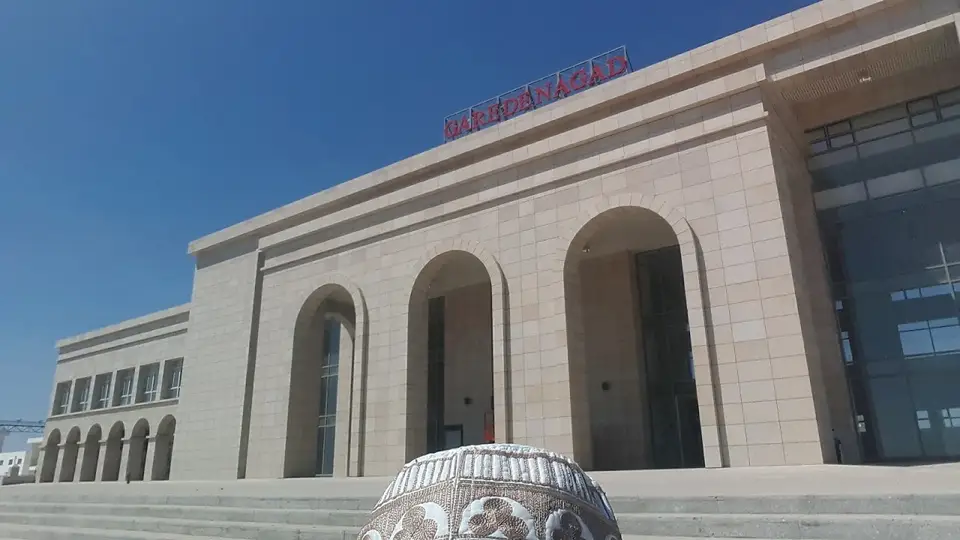
Combining Djibouti and Ethiopia rests on a single documented link: the modern railway line that leaves from Nagad station, west of Djibouti City, and has been running since 2016. The Djiboutian side is prepared over 2 or 3 days, the recommended time for Lake Abbe, a cross-border lake. We document no entry rule for Ethiopia, however: that side is checked with the Ethiopian authorities.
Two warnings before reading this page. First, it describes a regional extension: nothing here is necessary for a stay in Djibouti alone. Second, it is deliberately incomplete on one point — the entry conditions for Ethiopia. None of our sources documents them, and we therefore publish neither visa, nor rate, nor delay, nor portal link on the subject. An invented figure about a border formality costs a trip.
Can you combine Djibouti and Ethiopia in a single trip?
Yes, and the logic is geographical before it is touristic. Ethiopia is a landlocked country: it has no sea frontage, and Djibouti, with its port, is its natural outlet. The modern railway line materialises that link, and it has been running since 2016. That long-standing relationship is also what explains the country’s economic geography.
Two practical consequences follow, and they run in opposite directions.
The combined trip is possible. A land link exists, it is documented, and it joins two countries that can be visited one after the other. If your plan is a multi-week itinerary with Addis Ababa on the programme, the railway is a legitimate option, and it offers a landscape the road does not.
But the train is not a gateway. To arrive in Djibouti from Europe, the plane remains the only practical route. The line is not for entering the country: it is for leaving it, or for reaching it from Ethiopia. A first stay in Djibouti does not go through the rail.
What the catalogue publishes, and what it does not. The catalogue’s multi-day offers organise the Djiboutian side: Lake Abbe, Lake Assal, Tadjourah, the islands of the gulf. No published offer crosses the Ethiopian border. The combined trip is therefore built à la carte, from two separate files: the Djiboutian stay on one side, the crossing and the Ethiopian stay on the other.
Where do you cross the border between the two countries?
Two land routes are documented in our sources, and they do not address the same traveller.
| Route | What our sources document | For whom |
|---|---|---|
| Railway line | The modern electrified line links Addis Ababa to Nagad station, on the Djiboutian side, over about 756 kilometres, in service since 2016 | Travellers heading for Addis Ababa who accept an infrequent service |
| Road corridor | National highway 1 links Djibouti City to Galafi, at the Ethiopian border, and serves Dikhil on the way; the corridor leading to Dire Dawa then Addis Ababa is used by lorries | Travellers who want the freedom to stop, and groups with a vehicle |
What we do not publish about that border. Neither the crossing duration, nor distances on the Ethiopian side, nor road conditions beyond the post. None of our sources gives them, and an invented border-crossing duration is precisely the kind of figure that ruins an itinerary. The border post is prepared for with the safety margin the itinerary can bear, not with a theoretical time.
One published marker, and only one, on the proximity of the border. The Dikhil region lies about ten kilometres from Ethiopia, and national highway 1 crossing it is the structuring axis towards Galafi. That is what makes Dikhil the natural stage of an itinerary descending south before crossing the border.
A word on safety. The official British advice, updated on 27 July 2026, advises against all travel towards the border between Djibouti and Eritrea, in the north of the country. That advice does not concern the line to Ethiopia, but it illustrates a general rule in the region: border areas are treated with caution, and the itinerary is checked before departure, not on the way.
What should you know about the train, and where should you read it?
We do not rewrite the line’s practical data here, because they are published, dated and verifiable on a dedicated page: Djibouti–Addis Ababa train. That is where the departure days and times, the ticket cut-off the day before, the check-in margin requested at Nagad, the two purchase channels and the fare grid, which distinguishes a Djiboutian fare from a foreign one, are found.
Three pieces of context, on the other hand, deserve to be set out here, because they change how the line is approached.
It is first of all a freight axis. Carrying goods is its main function; the passenger service is a complement. That does not mean it cannot be taken — it means it should not be approached like a European railway link, with frequent departures and a booking in three clicks. A passenger service backed onto a freight line obeys another logic.
Missing the departure can be expensive. On an infrequent service, missing the train is not an hour’s setback: it is a day or two lost. Checking at the station the day before, when the ticket is cut, is therefore not overzealousness.
Nagad is not a city-centre station. It lies west of Djibouti City, and no dedicated shuttle service is documented. The journey to the station is made by taxi or hire vehicle, with a margin.
What entry formalities for Ethiopia, and what do we publish?
This is the most important section of this page, and the shortest. We publish nothing about the entry conditions for Ethiopia, and it is not an omission but a rule.
What our sources document, country by country:
| Side | What our sources document | What we publish |
|---|---|---|
| Entry to Djibouti | Complete procedure: official e-Visa portal, passport validity, yellow fever certificate according to origin | Yes, in detail: see visa and formalities |
| Entry to Ethiopia | Nothing. Neither the Djiboutian portal, nor the official British advice for Djibouti, nor the national tourism agency deals with Ethiopian rules | No: neither visa, nor rate, nor delay, nor portal link |
Why we do not even give a link. Publishing an address for an official Ethiopian portal “from memory” would be exactly the mistake this site refuses elsewhere: an unverified link, about a blocking formality, consulted from a telephone abroad. None of the sources we have read provides that address, and we will not reconstruct it.
The method to apply. It is the same as for any diplomatic representation, and it is detailed in embassies and consulates: start from the official directory of your ministry of foreign affairs, then work down to the Ethiopian representation competent for your country of residence. Be wary of intermediaries presenting themselves as official relays: they are not.
Two preparation principles, on the other hand, are solid.
- Treat the two files separately, and before buying the slightest non-refundable ticket. A ticket resting on an unsettled formality is a dead loss.
- Check your passport, not only its apparent expiry date: the six-month rule after arrival published for Djibouti is also verified on the Ethiopian side with the competent authorities.
What itinerary should you build on the Djiboutian side before leaving?
If crossing the border is the climax, the Djiboutian side is built in the reverse order: from north to south, to finish near the border.
| Stage | What it brings | Documented marker |
|---|---|---|
| Djibouti City | The logistical base, the airport, the hotels, Nagad station to the west | Airport about seven kilometres from the centre |
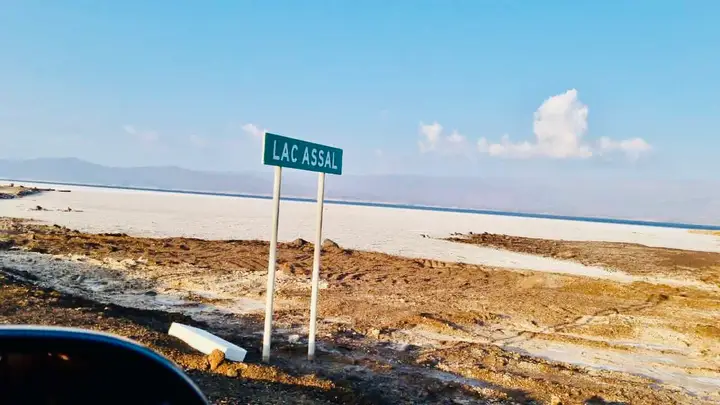
| Rift and salt | Arta, Lake Assal, the Goubbet al-Kharab viewpoint | Arta at 42 kilometres, Lake Assal at about 120 kilometres |
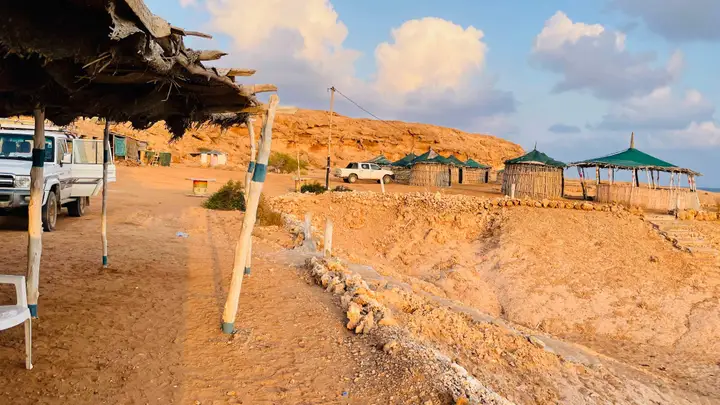
| The south before the border | Lake Abbe and its night on site, in the Dikhil region | Chimneys of 30 to 50 metres, protected area, cross-border lake |
| The road to Galafi | National highway 1, structuring axis towards the Ethiopian border | Dikhil about ten kilometres from Ethiopia |
Two organisational options, according to the time available.
For a short Djiboutian side — one to two days before the crossing — keep Djibouti City and the rift: that is what the “Djibouti in 2 days” itinerary published in this same section covers, and it leaves the eve of departure free to collect the ticket.
For a long Djiboutian side, place Lake Abbe last. The site is cross-border, it is visited from the Djiboutian shore, and it naturally occupies the two or three days preceding a departure south. That logic is that of the assembly in Djibouti in 2 weeks, whose Ethiopian option is precisely the third track.
What does not fit. The Seven Brothers archipelago and Obock, in the north, are at the opposite end from the southern corridor: inserting them before a departure for Ethiopia amounts to crossing the country twice. Do them at the start of the stay, or not at all.
How much does a trip combining the two countries cost?
No package covers the two countries: the items are costed separately, and the Ethiopian side escapes our documentation entirely. Here, then, is what is published on the Djiboutian side.
| Item | What is published | Amount |
|---|---|---|
| Train ticket to Ethiopia | Fare grid with distinct Djiboutian and foreign fares | Published on the Djibouti–Addis Ababa train page, to be confirmed at the counter |
| Journey Djibouti City → Nagad station | No rate published for that precise journey | Taxi to be negotiated before getting in |
| Night in Djibouti City before departure | Room in a hotel | 7,800 to 91,492 Fdj per night |
| One-day excursion to Lake Assal | One-day excursion to Lake Assal | 18,000 Fdj per person |
| Two-day tour: Lake Abbe and Lake Assal | Tour published in the catalogue | 55,000 Fdj per person |
| Lake Abbeh package, with bivouac | Package published in the catalogue | 53,000 to 133,500 Fdj per person according to group size |
| Three-day tour: desert, Lake Abbe and Lake Assal | Tour published in the catalogue | 24,030 Fdj per person |
| Complete four-day tour: Le Meilleur de Djibouti | Tour published in the catalogue | 120,000 Fdj per person |
| Night in a camp, outside the capital | According to the formula and the size of the group | 7,800 to 17,000 Fdj per person |
| Ethiopian side — visa, accommodation, transport | Not documented in our sources | We publish no amount |
The dominant item is not the ticket. It is the vehicle and its driver: on the southern tracks, the cost is shared the better the larger the group. The rate of a 4×4 with a driver, as commercially displayed, sits around 44,000 Djiboutian francs per day per vehicle — an amount that is neither a catalogue price nor an official rate, and which requires a written quotation.
Two price gaps we do not smooth over
The catalogue contains two anomalies we cannot explain, and which we publish as they stand.
- Three days cheaper than two. The tour “Lake Abbe, Tadjourah and Lake Assal in 3 days” is 44,500 Djiboutian francs, when the 2-day tour “Lake Abbe and Lake Assal” is 55,000 francs — for a shorter programme.
- Same announced content, double the price. The tour “Djibouti city and Lake Assal in 2 days” is 15,130 Djiboutian francs, when the tour “Ville de Djibouti et lac Assal” in 2 days shows 35,000 francs.
Those gaps matter all the more here because the trip combines two countries: every franc badly committed on the Djiboutian side is a franc missing on the Ethiopian side. Ask for a written quotation, having what is included specified — transport, guide, meals, night, site permits.
Which traps should you avoid before crossing the border?
- Do not buy a non-refundable ticket before settling both files. A ticket resting on an undecided formality is a dead loss, and we cannot help you on the Ethiopian side.
- Do not treat the formalities of the two countries as a single file. They are two administrations, two procedures and two calendars.
- Do not count on a high departure frequency. The line is first of all a freight axis, and missing a departure can mean waiting several days.
- Do not turn up on the morning of departure without a ticket. The purchase and cut-off arrangements appear on the train page: read them before fixing your date.
- Do not arrive at Nagad at departure time. The requested margin is published, and it is not decorative: the line crosses a border, and the journey to the station is added to it.
- Do not head from the north of the country towards the Eritrean border. The official British advice advises against all travel in that sector, which has nothing to do with the line to Ethiopia.
- Do not improvise a border crossing on an itinerary with a fixed date. Keep a day of margin before any return flight: it is the only protection against a setback we cannot document.
- Do not forget insurance. Check that it covers both countries and medical evacuation, before departure.
Frequently asked questions
Can you travel to Ethiopia from Djibouti?
Yes. Two land routes are documented in our sources: the modern railway line, whose departure station on the Djiboutian side is at Nagad, west of Djibouti City, and the road corridor linking Djibouti to Dire Dawa then Addis Ababa, used in particular by lorries. For a tourist stay in Djibouti alone, the line has no function at all: your time is better spent on the country's sites.
What visa do you need to enter Ethiopia from Djibouti?
We do not publish it, and it is not an oversight: none of the sources we have read documents the entry conditions for Ethiopia. We therefore give neither visa type, nor rate, nor processing time, nor official portal address. Those elements are checked with the competent Ethiopian authorities, starting from the official directory of your ministry of foreign affairs.
Where do you catch the train to Ethiopia, and what do you publish about it?
The departure station on the Djiboutian side is at Nagad, west of Djibouti City: it is not a city-centre station, and no dedicated shuttle service is documented. Departure days and times, ticket cut-off, the check-in margin at Nagad and the fare grid — which distinguishes a Djiboutian fare from a foreign one — are published on our dedicated Djibouti–Addis Ababa train page.
How long does the journey between Djibouti and Addis Ababa take?
We publish no journey time, because none of our sources gives one. What our pages document is the length of the modern line — about 756 kilometres — and its entry into service in 2016. The line is first of all a freight axis, with the passenger service as a complement: that is precisely what makes a theoretical duration unreliable, and an arrival time something to check on site.
Does Lake Abbe let you see Ethiopia without crossing the border?
Lake Abbe is a cross-border lake, straddling the Ethiopian frontier, at the bottom of the Gobaad depression in the Dikhil region. The visit is made from the Djiboutian shore, and the site is a protected terrestrial area: you move around with a guide and access permits are requested locally. You therefore run along the border without crossing it, which exempts you from no formality for the rest of the trip.
Sources
Itineraries
Read next
Budget in Djibouti: backpacker, mid-range, luxury
Culture and heritage: rock art and old cities in four days
Desert and lakes: salt, rift and Lake Abbe in four days
Diving in Djibouti: the three-day itinerary
Djibouti in 1 day: the rift or the beach?
Djibouti in 10 days: the assembly of three itineraries
Djibouti in 2 days: the rift, the salt and the sea
Djibouti in 2 weeks: what the second week adds