Tadjourah: the white city and its beaches
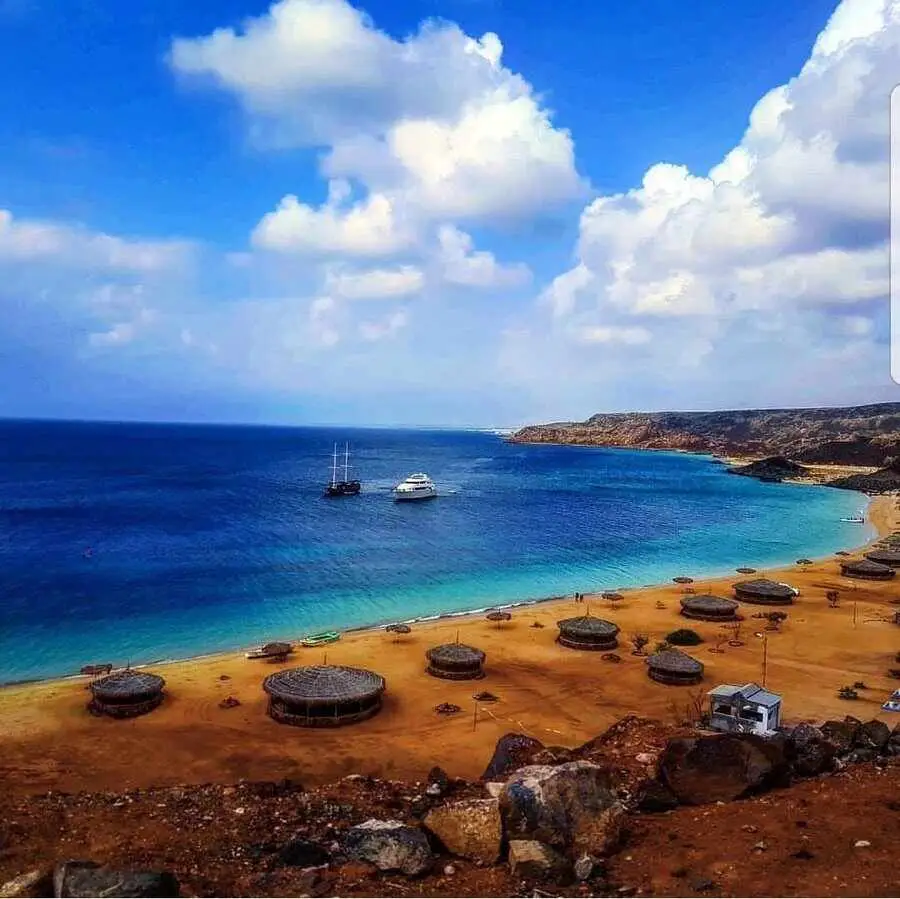
Tadjourah is a historic town in northern Djibouti, on the Red Sea coast, nicknamed the white city for its coral stone buildings. It is reached in about 45 minutes by fast boat, an hour and a half by ferry, or 180 kilometres by road. The town is surrounded by mountains and overlooks the gulf. Its beaches — Fiaa, Cheick Mohamed and Les Sables Blancs — are the main reason to stay.
Where is Tadjourah?
Tadjourah occupies the northern shore of the gulf that bears its name, in northern Djibouti, on the Red Sea coast. The town is surrounded by mountains and overlooks the sea: the site was chosen for that position, which offers both a harbour shelter and an opening onto the gulf.
It is nicknamed the white city, for its traditional architecture in coral stone. The pale facades, the light reflected off the sea and the dark curtain of the Goda mountains behind compose an immediately recognisable contrast — it is probably the most photogenic town in the country.
It is also a town of history: its architecture bears witness to a long tradition of exchange between the coast, the Ethiopian highlands and the Arabian peninsula.
Key facts
| Reference | Data |
|---|---|
| Administrative region | Tadjourah |
| Approximate coordinates | 11.786 N — 42.882 E |
| Nickname | The white city |
| Architecture | Coral stone, pale facades |
| Distance from Djibouti City | 180 km by road |
| Fast boat time | about 45 min |
| Ferry time | about 1 h 30 |
| Setting | A town ringed by mountains, open to the gulf |
| Best season | October to April |
| Recommended duration | 2 to 3 days |
How do you get to Tadjourah?
| Means | Duration | Advantage | Limit |
|---|---|---|---|
| Fast boat | about 45 min | The quickest, a spectacular approach to the town | Limited places, depends on the sea |
| Ferry | about 1 h 30 | Comfortable, allows you to carry volume | Fixed timetable |
| Road | 180 km | Freedom to stop, discovery of the interior | Long journey |
Arriving by sea is a moment in itself: the white city appears gradually between the mountains and the gulf. If you can only choose one direction, take the boat on the way out.
Arriving by road has another interest: it crosses the interior of the country and lets you combine the journey with a geological or mountain stop. It is the logical option if you are coming from Lake Assal or continuing towards Obock.
What is there to see in the white city?
Tadjourah is not visited like a site with monuments: it is walked. Three elements structure the discovery.
Coral architecture. Buildings in white coral stone give the town its visual unity: door surrounds, mashrabiya screens, simple volumes designed to ventilate and to bounce the light.
The face-to-face with the mountains. The town is framed by the relief, and that proximity creates remarkable light effects at the end of the day, when the sun drops behind the massif.
The town beaches. The districts run down to the water, and the beaches serve as living places before being tourist ones.
The beaches around Tadjourah
Fiaa beach
In the district of the same name, Fiaa is the most popular beach in the town: a meeting place for children during school holidays, it is family-friendly, lively and easy to reach.
For snorkellers the interest is real: the preserved coral reef starts a few fin-kicks from the shore. You see sea turtles and sea urchins, soft coral and plenty of colourful fish, without needing a boat.
Cheick Mohamed beach
East of the town, Cheick Mohamed is shallow and little exposed to currents: it is the safest beach for a family swim, with coral floors of surgeonfish, parrotfish and rays.
Offshore, the space is open enough for kitesurfing: the beach therefore combines two uses, quiet swimming at the shore and board sports further out.
Les Sables Blancs
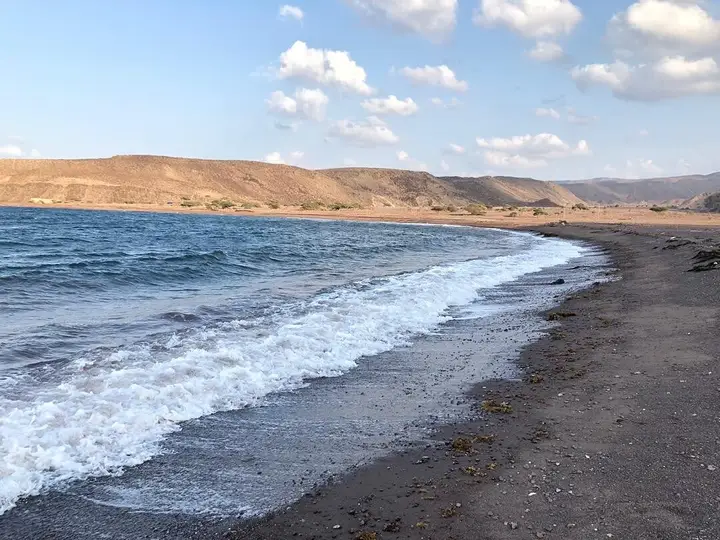
Five kilometres from Tadjourah, below a black rock cliff, Les Sables Blancs counts among the finest beaches in the country: after a pleasant track, emerald water borders immaculate white sand, in a mineral cirque.
The site is equipped: a holiday village offers hotel-side or paillote-side accommodation. The shallows are accessible with a simple mask and snorkel, and the dive site steps down from 5 to 30 metres: brain corals, green and hawksbill turtles, crocodilefish and morays, with excellent visibility and a weak current. Sunset over mount Goda completes the case for the journey.
Rayali bay
A few kilometres from Tadjourah, at the mouth of Rayali bay, a camp occupies one of the most beautiful sites on the coast: mineral scenery lifted with turquoise blue. The corals are a few metres from the beach and sea turtles are frequent at mask and snorkel. On site: paillotes, washrooms, fresh fish cooking, snorkelling, night fishing and kayaking.
Comparing the beaches
| Beach | Distance from town | Profile | Activities | Who for |
|---|---|---|---|---|
| Fiaa | In the town | District, lively | Swimming, snorkelling | Families, easy snorkelling |
| Cheick Mohamed | To the east | Shallow, few currents | Swimming, snorkelling, kitesurfing | Families, board sports |
| Les Sables Blancs | 5 km | Cliff, white sand, equipped | Swimming, snorkelling, diving | Stays of several days |
| Rayali | A few kilometres | Bay, camp | Snorkelling, kayaking, night fishing | A quiet stay |
What can you visit in the hinterland?
The region is not limited to the coast: three complementary destinations justify staying two or three days.
The Forêt du Day and the Goda mountains
The Forêt du Day is a protected natural area and the country’s only national park. It currently covers about thirty square kilometres, west of the Gulf of Tadjourah, and occupies the Goda massif, which peaks at 1,799 metres at Bara’barré, near Day.
It is the largest area of dense vegetation in the country. There you find East African juniper, African olive, boxwood and tarchonanthus; below 950 metres other species appear, including several acacias. The forest shelters the Djibouti francolin, a species gravely threatened by pressure on its habitat.
In practice the forest can be visited all year, and the Bankoualé waterfall, which flows continuously, is a popular stop. Guesthouses have been built for visitors.
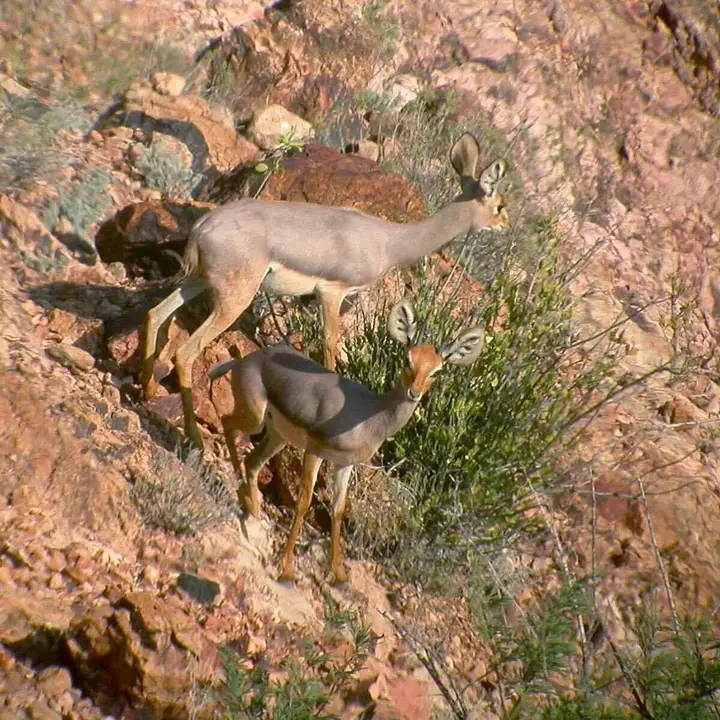
The Goda mountains form the general setting: more than twenty peaks above 1,000 metres, a name meaning “twisted” or “devoured” in Afar, and hiking trails suited to several levels. The Dittilou camp, tucked into a mountain cirque, serves as a starting base: green monkeys, baboons, klipspringers, francolins and Verreaux’s eagle are part of the neighbourhood.
The Abourma rock art site
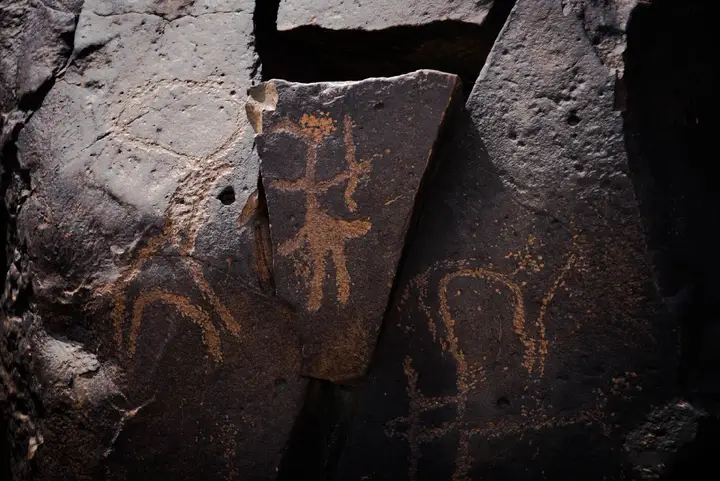
On the Makarrassou massif, to the north, the Abourma site is the most important group of rock engravings in the country: almost three kilometres of engraved basalt boulders, thousands of scenes showing human figures, wild and domestic animals. The variety of themes reflects the behaviour and organisation of a pastoral life that has now disappeared. The cool season, from October to February, is the best period, and the visit is made with a guide.
The salt Allols and the Korili springs
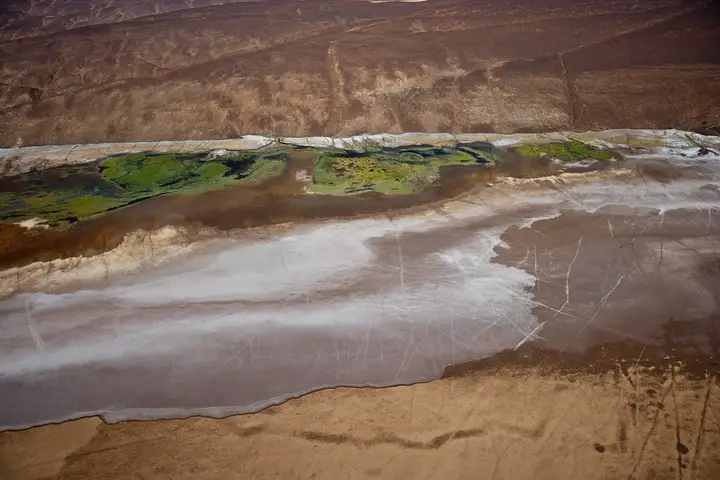
North of Lake Assal, the salt Allols depression offers a landscape of salt fields, black rocks and ancient lava deposits, punctuated by hot water springs and patches of green. The area was the theatre of a caravan trade going back to Antiquity, linking lakes Assal and Allol to the Ethiopian highlands: salt, carried in slabs on camel back by Afar nomads, travelled several hundred kilometres, and served as currency across much of the Horn of Africa in the 19th century.
Further south, the Korili hot springs deposit travertine chimneys. We publish no temperature for those springs: the figures in circulation are attached to no consultable measurement, and the readings we found concern the stream that flows out, not the springs themselves. The page Korili details what can actually be observed there.
How much does a day in Tadjourah cost?
| Service | Indicative price | Detail |
|---|---|---|
| Beach day at Les Sables Blancs | from 3,000 Fdj | Rate decreasing with group size |
| Seaside camping pitch | 10,000 Fdj | At Les Sables Blancs |
| Full-board camping | from 10,000 Fdj | Per person, decreasing from 1 to 10 |
| Open-air night | 8,000 Fdj | Bivouac package |
| Deluxe double room | 25,000 Fdj | At Les Sables Blancs |
| Family suite with sea view | 34,500 Fdj | At Les Sables Blancs |
| Stay with boat transport | from 22,000 Fdj | Per person, decreasing |
| Forêt du Day package | from 35,600 Fdj | Per person, depending on group size |
| Three-day Lake Abbe, Lake Assal, Tadjourah tour | 85,000 Fdj | Flat rate per person |
The logic is constant: the larger the group, the lower the price per person, the boat and the vehicle making up most of the cost.
When to go to Tadjourah?
| Period | Heat | Sea | Visitor numbers | Recommendation |
|---|---|---|---|---|
| October – November | Falling | Calm | Moderate | Excellent window |
| December – February | The mildest | Calm | High | Ideal window |
| March – April | Rising | Calm to moderate | Moderate | Good window |
| May – September | Very strong | Variable | Low | To be avoided |
| Late September | Falling | Variable | Low | Gradual recovery |
The town being backed onto the mountain, it benefits from a relief effect that softens the evenings. In summer the hinterland remains more bearable than the coast, but boat trips are limited to the early morning.
What should you know before setting off?
- Book the boat early. Places are limited and demand is strong in the cool season.
- Carry cash: card payments are rare outside tourist establishments.
- Bring good shoes for the Forêt du Day or Abourma: the trails are stony.
- Protect yourself from sun and wind on the beaches, where shade is scarce.
- Respect local dress in town: keep shorts and swimwear for the beach.
How do you visit Tadjourah responsibly?
The region combines three fragilities: coral reefs reachable by swimming, a threatened relict forest and open-air archaeological sites.
- Do not touch the coral, do not stand on it and take nothing — no shell, no coral fragment, no white sand.
- Do not chase the turtles with fins and keep your distance.
- In the Forêt du Day, do not trample the vegetation and pull nothing up: the Djibouti francolin depends directly on that habitat.
- Do not touch the Abourma engravings and do not wet them: the basalt crumbles.
- Favour local accommodation and guides: tourism is one of the few sources of income in the region, and its value depends on the state of the sites.
Tadjourah works well as a base for two or three days: one day for the town and Fiaa, one day at Les Sables Blancs, one day in the hinterland.
Preparing your trip
Set your dates on the cool season, book the sea crossing before fixing your accommodation, and check your entry formalities on the official visa portal. If you combine Tadjourah with Lake Assal or Obock, order the stages according to boat departures: that is the most constraining factor in an itinerary in the north.
Frequently asked questions
How do you get to Tadjourah from Djibouti City?
Three possibilities. By fast boat, in about 45 minutes. By ferry, in an hour and a half. Or by road, over 180 kilometres. The sea route is the most direct and the pleasantest; the road crosses the interior of the country and allows stops on the way. Book early in high season, as boat places are limited.
Which beaches should you see around Tadjourah?
Fiaa beach, in the district of the same name, is where families gather: the water is crystal clear and the reef starts a few fin-kicks from the shore. East of the town, Cheick Mohamed beach is shallow with few currents, which makes it safe for swimming. Finally Les Sables Blancs, five kilometres away, is one of the finest beaches in the country.
What can you visit in the hinterland of Tadjourah?
The Forêt du Day, the country's only national park, covers about thirty square kilometres on the Goda massif, whose summit reaches 1,799 metres at Bara'barré. The Goda mountains group more than twenty peaks above 1,000 metres. Further north, the Abourma site lines up rock engravings over almost three kilometres of basalt boulders, best visited from October to February.
Where can you stay in Tadjourah and at Les Sables Blancs?
Several options exist. In town, hotels within walking distance of Fiaa beach. At Les Sables Blancs, a holiday village offers rooms or paillotes, with nights from around 10,000 Djiboutian francs for a camping pitch up to 34,500 francs for a family suite with a sea view.
Sources
Location
Lat. 11.78560Lng. 42.88220
Destinations
Read next
Abourma: the rock engravings of the Makarrassou massif
Ali-Sabieh: the south-east region, sites and camps
Allols depression: salt, hot springs and caravans
Ardoukoba: the most recent volcano in Djibouti
Arta: the cool of the interior and whale sharks
Assamo: the protected area of the beira antelope
Balho: rock art and the northern border post
Bankoualé: the oasis at the foot of the Goda massif