Travelling in Djibouti with children: what to plan for
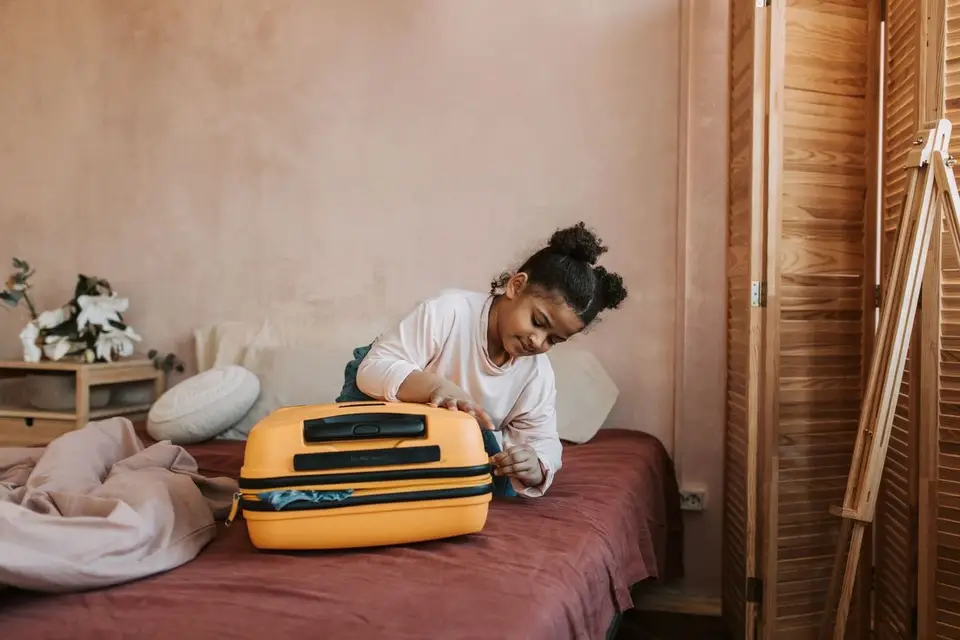
Djibouti works with children, provided you choose the season and give up long days. Djibouti City reaches a mean maximum of 40.8 °C in July, against 27.5 °C in January: the cool season changes everything. The sea offers the easiest activities, beaches and boat trips. By contrast, the sites of the interior, the long tracks and the heat of the basins suit a young child badly.
A note on method. No keyword research carried out for this site found any demand around family travel to Djibouti. This page therefore does not claim to answer a documented need: it gathers what is verifiable, and explicitly flags what is not. The temperatures quoted are Open-Meteo ERA5 normals (2015-2024). Age rules, child fares and “family” activities are published by no authority: there, we refer you to the operator.
Is Djibouti a destination suited to children?
Yes, for part of the country and at certain periods. No, for the other part. The distinction is simple and it decides everything: the sea adapts, the interior does not.
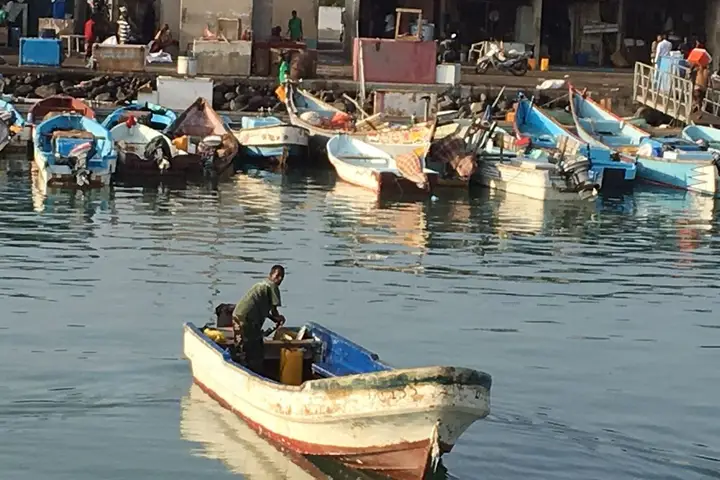
The sea first. The Gulf of Tadjourah and the Moucha-Maskali archipelago offer short outings, from the coast, with swimming and snorkelling in calm water. The boat journey lasts less than an hour, which stays within a child’s limits. Beaches near the capital allow half a day with no long journey.
The interior next. Lake Assal, Lake Abbé and Abourma are visited at the cost of long hours on track, with no shade, on salt or basalt surfaces. On top of that come altitude and heat. They are splendid destinations, but they are paid for in hours in the car and in discomfort, two currencies a young child spends fast.
What is the best time to travel to Djibouti?
From October to April, without hesitation. The table below gives the monthly normals for Djibouti City: it is the month of January, not the month of July, that makes the trip possible with children.
| Month | Mean max. | Mean min. | What that implies with children |
|---|---|---|---|
| January | 27.5 °C | 22.6 °C | The best window of the year, whole days outdoors |
| February | 27.8 °C | 23.2 °C | Equivalent to January, warm sea |
| March | 29.3 °C | 24.7 °C | Still comfortable, plan for wind |
| April | 30.9 °C | 26.4 °C | The capital’s wettest month, 41.8 mm |
| May | 34.1 °C | 28.5 °C | The limit: morning outings only |
| June | 38.8 °C | 30.7 °C | Rule out for a first family trip |
| July | 40.8 °C | 31.8 °C | Hottest month of the year, days indoors |
| August | 39.5 °C | 30.9 °C | Same constraint, only the sea is workable |
| September | 37.4 °C | 30.4 °C | Heat still settled in |
| October | 32.4 °C | 27.0 °C | Coming down, full days possible again |
| November | 29.7 °C | 24.8 °C | Excellent, brief showers possible |
| December | 28.2 °C | 23.1 °C | Equivalent to January |
November to February therefore combines both advantages: moderate temperatures and a warm sea. It is also the most in-demand period — book early. For the season-by-season analysis, see when to go to Djibouti.
Which sites and activities work best with children?
We publish no official ranking — none exists. This table is an appreciation, based on the nature of the sites and journey times, to be confirmed with the operator.
| Site or activity | What works in its favour | What works against it |
|---|---|---|
| Moucha and Maskali islands | Short boat trip, calm water, snorkelling from the beach | Boarding from the beach, wet landing |
| Beaches near the capital | Half a day, return possible at any time | Heat in the middle of the day, little shade |
| Forêt du Day and Dittilou | Altitude, relative cool, a short walk possible | Uneven trails, slippery ground after rain |
| Lake Assal | Spectacular landscape, accessible by vehicle | 44.7 °C average in June, no shade at all, aggressive salt |
| Lake Abbé and Abourma | Unique scenery, bivouac possible | Very long track, walking on basalt |
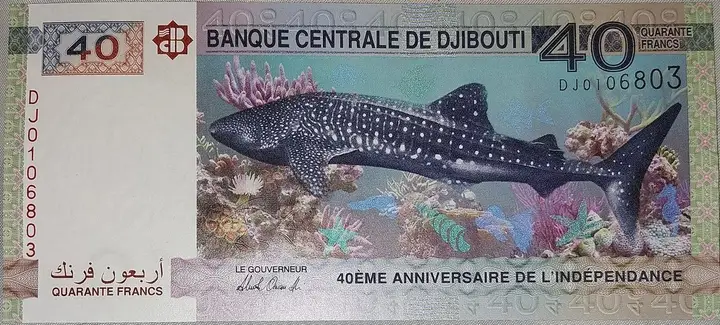
| Diving and whale shark trips | Supervision by operators | Age conditions not published, to be checked case by case |
The boat trips that work best are those that leave early in the morning and return before midday. On the ferry to Tadjourah, the National Tourism Agency’s grid (January 2021) sets the ticket at 700 Fdj per person, and at 350 Fdj for a child aged 2 to 12 — half the fare. To Obock, allow 800 Fdj, and 400 Fdj for a child aged 2 to 12. Children under two do not appear in that grid: no free travel is provided there, whatever the age band — to be confirmed at the counter before boarding. Detail and reservations in our page on the Tadjourah and Obock ferry.
How do you manage the heat with children?
Heat is the limiting factor, more than safety or logistics. Three simple rules follow from the real temperatures.
Shift the day. Go out at dawn, come back before eleven, go out again late in the afternoon. That split applies to every visit between May and September, and stays comfortable the rest of the year.
Hydrate continuously. On the sites of the interior, no supply point exists: carry water for the whole day, not one bottle per person. An insulated bottle keeps water drinkable despite the ambient heat.
Cover up rather than strip off. Light long sleeves and a hat protect better than bare shoulders, especially on pale ground that throws the light back. Our page on what to pack details clothing month by month.
Watch for signs of exhaustion: headaches, nausea, a child who stops sweating. Those are emergencies, not passing tiredness.
Which journeys are really workable?
Distances are the second limiting factor. Three arrangements work, and one alone should be avoided.
- A stay based in the capital and its beaches. The simplest: no long journey, returns possible at any time, nap preserved.
- Day trips from Djibouti City. The islands and nearby beaches are done in a day. The evening return is a decisive advantage, because it avoids the bivouac.
- Sleeping on the spot rather than driving at night. For Tadjourah or Les Sables Blancs, sleeping there is worth more than stringing together four hours of road in the day.
To avoid: multi-day circuits into the interior with a very young child. Not because of danger, but because most of the time is spent in a vehicle, on track, in the heat.
What health precautions should you take with a child?
The FCDO recommends reviewing things at least eight weeks before departure: some vaccinations require several spaced injections, and that lead time cannot be compressed.
The same document lists, among the health risks present in Djibouti, dengue, Zika and schistosomiasis. The first two are transmitted by mosquitoes — hence the repellent, long sleeves in the evening and mosquito nets if your accommodation has them. The third is caught through contact with fresh water: avoid swimming in rivers or stagnant water.
Finally, check that your insurance covers children and funds a medical evacuation. The FCDO insists on this point, and it matters particularly here: local facilities are limited, and two ambulance numbers are published by the FCDO, which we reproduce on the page on embassies and consulates.
From what age can a child travel to Djibouti?
No authority publishes an age rule for entering the country: so we invent none. One documented threshold does exist on health grounds — the certificate of vaccination against yellow fever is required for travellers aged one or over who arrive from a country classified at risk of transmission.
Beyond the rules, the useful question is tolerance of heat. A child who copes badly with a heatwave, or who needs a nap in a cool environment, will impose a shorter programme: it is the trip that has to be adapted, not the child.
Is the cost of living high in Djibouti?
Third-party comparison sites estimate the budget on the spot at about 127 euros per person per day, excluding the international flight, and the cost of living about thirty per cent above that of France. Those are comparison-site estimates, not official data.
For a family, two items behave differently. Accommodation is paid per room, so it is shared across several people. The vehicle with driver, essential as soon as you leave the capital, is paid per vehicle and not per person: one excursion therefore costs almost the same for two as for four. See our page on bus and taxis for the published reference fares.
Is Djibouti safe?
The official British advice reports a risk of petty crime and recommends not walking alone late in the evening, and keeping passports and cameras out of sight. The document also mentions a terrorist threat targeting transport hubs, hotels, restaurants and shopping areas in particular.
With children, those recommendations translate into three habits: travel by vehicle rather than on foot in the evening, do not leave documents in a visible bag, and give a copy of the passports to a second adult. They are no reason to give up the trip, but they steer the programme towards days that end early.
Frequently asked questions
Is Djibouti safe?
The official British advice reports a risk of petty crime and recommends not walking alone late in the evening and keeping valuables out of sight, passports included. It also mentions a terrorist threat targeting transport hubs, hotels and places frequented by foreigners. With children that argues for organised travel and days that end early.
What is the best time to travel to Djibouti?
From October to April, and January in particular, the mildest month: a mean maximum of 27.5 °C in Djibouti City against 40.8 °C in July. Over that period, boat trips and days in town remain bearable for children. June to August should be ruled out for a first family trip: the heat makes almost any activity during the day impossible.
Is the cost of living high in Djibouti?
Third-party comparison sites estimate the budget on the spot at about 127 euros per person per day, excluding the international flight, and the cost of living about thirty per cent above that of France. Those are estimates, not official data. For a family, two items matter: accommodation, charged per room, and the vehicle with driver, charged per vehicle and not per person.
From what age can a child travel to Djibouti?
No authority publishes an age rule for entering the country. One documented threshold does exist on health grounds: the certificate of vaccination against yellow fever is required for travellers aged one or over who arrive from a country classified at risk of transmission. Beyond the rule, the real question is a young child's tolerance of the heat.
What health precautions should you take with a child?
The FCDO recommends reviewing vaccinations at least eight weeks before departure, and lists dengue, Zika and schistosomiasis among the risks present in Djibouti. The first two are transmitted by mosquitoes, the third through contact with fresh water. Also check that your insurance covers local treatment and medical evacuation, children included.
Sources
Practical
Read next
4×4 with a driver in Djibouti: prices and itineraries
Accessibility in Djibouti: what a demanding trip implies
Boat hire in Djibouti: trips out to sea
Budget in Djibouti: what does a trip cost on the spot?
Buses and taxis in Djibouti: fares by zone and route
Car hire in Djibouti: 4×4, saloon or driver?
Connectivity and SIM cards in Djibouti: internet and mobile
Djibouti airport transfer: taxi, fares and arrival