Connectivity and SIM cards in Djibouti: internet and mobile
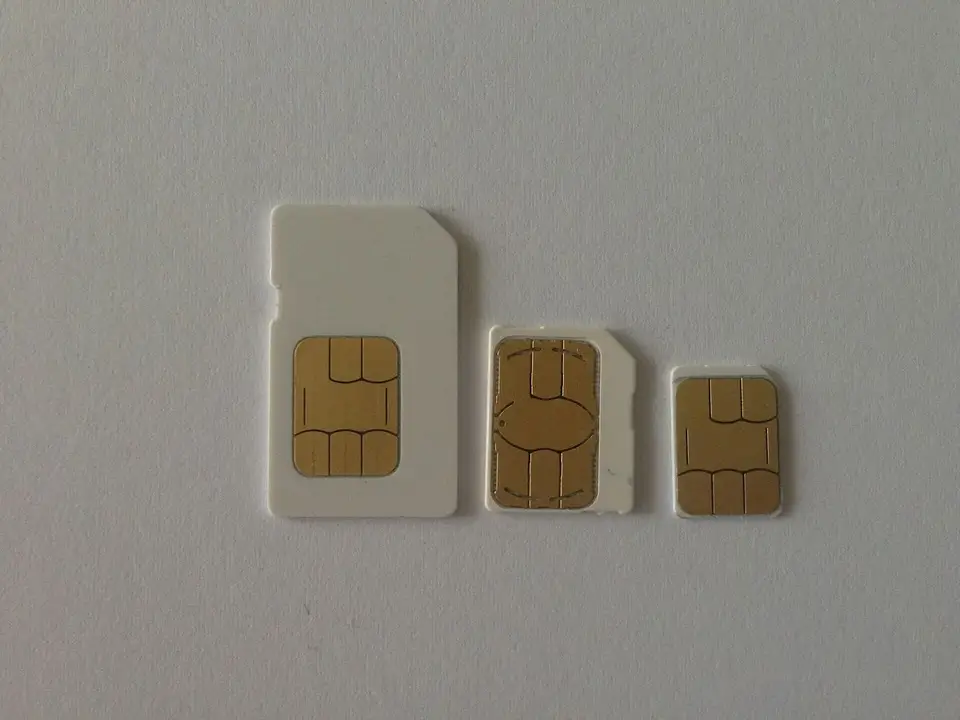
Djibouti has a single historic operator, Djibouti Telecom, and the country's dialling code is +253. To obtain a SIM card you must appear in person at an agency, with your identity card or your passport: the National Tourism Agency publishes a price of 1,000 FDJ, on its January 2021 grid, to be confirmed at the agency.
What this page publishes, and what it does not. The SIM card price is published: 1,000 FDJ on the National Tourism Agency’s grid dated 21 January 2021, available at ant.dj/infos-utiles. So is the procedure: appearing in person at a Djibouti Telecom agency, with an identity card or passport. On the other hand, data plan prices, speeds and region-by-region coverage are not published by our sources: this page says so, rather than copying fares found on undated blogs.
Which mobile operator operates in Djibouti?
Djibouti Telecom is the country’s historic operator. It provides fixed telephony, internet access and mobile telephony nationwide. The market took shape around that single operator, and to our knowledge there is no set of three or four competitors between which a visitor could compare offers on arrival.
| Element | What is established |
|---|---|
| National operator | Djibouti Telecom (fixed, internet, mobile) |
| Market structure | Single historic operator, with no documented generalised mobile competition |
| International dialling code | +253 |
| Common mobile prefix | 77 |
| Medical emergency numbers | 21 35 09 62 and 21 35 27 12 (ask for an ambulance) |
That structure has a concrete consequence for a traveller: there is no price war on arrival. You will take the prepaid offer that exists, with no possibility of playing three operators off against each other at the counter. It changes nothing about the procedure, but it explains why local prepaid fares are rarely negotiable.
What is Djibouti’s telephone code?
The country’s dialling code is +253. In practice:
- from abroad: dial your international access code — 00 from most European countries — then 253, then the local number without the leading zero;
- from Djibouti to abroad: dial 00, then the destination country’s code;
- on the spot, between two local numbers: the eight-digit number is enough, with no dialling code.
One practical point that has nothing to do with technology: save the emergency numbers in your phone before you arrive, and not only in a paper notebook. The official British advice publishes 21 35 09 62 and 21 35 27 12 as medical emergency numbers, to be called asking for an ambulance.
What is the price of a SIM card in Djibouti?
The National Tourism Agency publishes this price, and this page corrects itself: it maintained that no citable source documented prepaid fares, when it was itself citing the agency. The SIM card price is 1,000 FDJ on the grid dated 21 January 2021, published at ant.dj/infos-utiles.
The procedure appears in the same document, and it is more regulated than you might imagine: the person “will have to appear in person at one of the Djibouti Telecom agencies and be provided with their identity card or their passport”.
| Step | What the January 2021 agency grid publishes |
|---|---|
| Where to buy | At a Djibouti Telecom agency, in person |
| What to bring | Identity card or passport |
| SIM card price | 1,000 FDJ |
| Network | 4G+ available |
That amount is for the card. What the source does not publish is the price of data plans and their period of validity: those two points are asked for at the counter, with the questions below. As the grid dates from January 2021, ask for confirmation of the price at the agency before counting on it.
| Question to ask | Why it matters |
|---|---|
| Price of the SIM card alone | Check that it still matches the published 1,000 FDJ |
| Price of the data plan and its validity | A “7-day” plan does not cover a ten-day stay |
| Is the credit activated immediately? | Credit not activated at the counter is badly sorted out later |
| Is tethering allowed? | Useful if you are travelling with several devices |
| What coverage outside Djibouti City? | The decisive question if you are heading for the interior |
Buy at an official agency of the operator rather than in the street: the card anyway requires appearing in person with an identity document, and have the amount credited in front of you.
How do you get internet in Djibouti?
Three routes coexist, and they are not equivalent depending on the length of the stay.
| Solution | What is established | What to check on the spot |
|---|---|---|
| Local prepaid SIM card | 1,000 FDJ for the card (agency grid, January 2021), at an agency and on presentation of an identity document | Data plan price, duration, real coverage on your itinerary |
| Roaming on your home operator | It works on the local network, if your plan allows it | Out-of-bundle rates, often very high outside the European Union |
| eSIM bought before departure | Several international providers announce coverage of Djibouti | Partner network, real speed, refund conditions |
| Wi-Fi at your accommodation | Common in hotels, including outside the capital | Variable quality; ask before booking |
| Internet cafés | Present on rue d’Éthiopie, in Djibouti City | Opening hours, hourly rate, availability of a terminal |
Wi-Fi is not a guarantee. In camps and isolated structures in the interior, the connection may be absent, intermittent or limited to communal areas. If your stay includes nights in a camp or on a boat, treat the connection as a bonus, not as a given — and prepare your itinerary to work without it.
The internet cafés on rue d’Éthiopie remain a fallback solution in the capital: they do not replace a SIM card for getting around, but they let you deal with a file or send photos from a desktop machine.
Should you buy a local SIM card or use roaming?
It depends on three factors: the length of the stay, your real need for mobile data, and your tolerance for the risk of being cut off.
- Short stay, two or three days: an eSIM bought before departure avoids the procedure on the spot and makes you reachable from arrival.
- A week or more: the local prepaid card is generally the most economical solution, provided you accept the time spent buying and activating it.
- A travelling stay, with nights in camps: do not count on either option continuously. Download what you need in advance.
- A business trip: check that your operator really covers Djibouti in your plan, and not merely that it “offers” a world option.
And if you stay on your original card, note that roaming outside the European Union is often charged by usage, with some of the highest data rates on the market. Turn off automatic updates and photo backup before departure. If your operator is European, Djibouti sits outside its free-roaming area: the rate is set by your own plan, not by the local network.
What coverage should you expect outside Djibouti City?
The agency confirms that 4G+ is available, but our sources say no more than that: no quantified speed, no region-by-region coverage. An invented coverage map would be more harmful than useful. What can be said without being wrong:
- the capital concentrates the infrastructure: that is where the connection is densest and most reliable;
- the main road axes are generally better covered than the tracks;
- isolated sites — Lake Abbé, Abourma, the Moussa Ali massif, desert zones — are precisely where the absence of a network is most likely;
- at sea, between the Moucha and Maskali islands or in the Gulf of Tadjourah, coverage depends on the distance from the coast.
The right question to ask is therefore not “is there a network in Djibouti?” but “will there be a network where I am going, on the day I go there?”.
How do you manage without a reliable connection?
| Need | Fallback, without a network |
|---|---|
| Finding your way | Download the map of the area offline before departure |
| Paying | Carry cash: cards are little accepted, and a terminal without a network does not work |
| Calling in an emergency | Write the numbers on paper, as well as in the phone |
| Proving your booking | Capture confirmations and the ticket as images, in your gallery |
| Staying in contact | Agree a written meeting point with your guide or your accommodation |
| Recharging | Carry a power bank and a spare cable |
What data does this page not publish?
The SIM card price is published: 1,000 FDJ, agency grid of January 2021, at an agency and on presentation of an identity document. On the other hand, this page gives no data plan price, no quantified speed, no plan name and no regional coverage map, and it does not present the 2021 figure as a rate for the current year.
Those reservations are not a matter of principle: our sources publish 4G+ as available, without detailing any speed, and do not document network quality by region. Copying those elements from undated pages would amount to misleading you on points you will observe on the spot. The elements published here come from the national operator, from the official British advice and from the agency’s fare grid.
Frequently asked questions
Which mobile operator operates in Djibouti?
Djibouti Telecom is the country's historic operator. It provides fixed telephony, internet access and mobile telephony nationwide, in a market that remained organised around that single operator for a long time. This market structure has a practical consequence: the prepaid offer for a visitor is that operator's, and there is no set of three or four competitors to compare fares between on arrival.
What is the price of a SIM card in Djibouti?
The National Tourism Agency publishes a price of 1,000 FDJ for the SIM card, on its January 2021 grid, to be confirmed at the agency. The procedure is regulated: you must appear in person at a Djibouti Telecom agency, with your identity card or your passport. That amount covers the card; the data plan and its duration are asked for at the counter.
How do you get internet in Djibouti?
Three routes exist: the national operator's mobile network with a local prepaid card, roaming on your home operator, and an eSIM bought before departure from an international provider. Hotel Wi-Fi completes the picture, with very variable quality depending on the establishment. Always check the speed and coverage announced, and plan an offline fallback.
Can you use an eSIM in Djibouti?
Several international providers offer eSIMs covering Djibouti, and it is often the simplest solution for a short stay: you activate it before departure and stay reachable from the moment you land. We cannot, however, verify the quality of the local partner network or the speeds actually obtained. Read the coverage and refund conditions, and keep your original SIM card active.
What is Djibouti's telephone code?
Djibouti's international dialling code is +253. From most European countries, dial 00 253 followed by the local eight-digit number, without the leading zero. Djiboutian mobile numbers generally begin with 77. From Djibouti to abroad, dial 00 then the destination country's code. Save the medical emergency numbers before arriving: 21 35 09 62 and 21 35 27 12.
Sources
Practical
Read next
4×4 with a driver in Djibouti: prices and itineraries
Accessibility in Djibouti: what a demanding trip implies
Boat hire in Djibouti: trips out to sea
Budget in Djibouti: what does a trip cost on the spot?
Buses and taxis in Djibouti: fares by zone and route
Car hire in Djibouti: 4×4, saloon or driver?
Djibouti airport transfer: taxi, fares and arrival
Djibouti–Addis Ababa train: line, tickets and station