What to pack for Djibouti, season by season
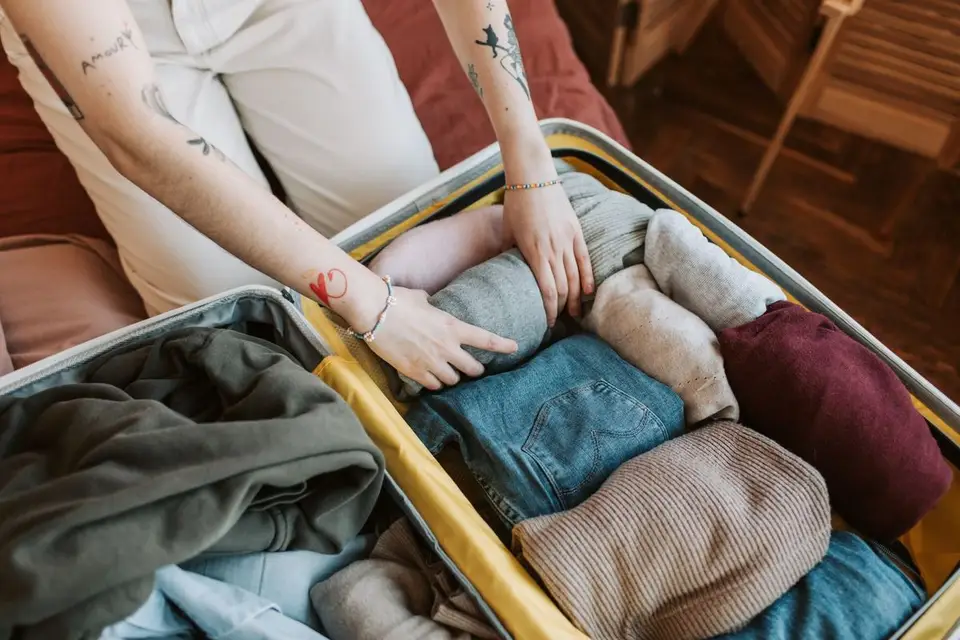
The packing list for Djibouti follows from real temperatures. Djibouti City reaches a mean maximum of 40.8 °C in July and a mean minimum of 22.6 °C in January. Lake Assal rises to a mean of 44.7 °C in June, while the Forêt du Day falls to 14.2 °C in January. So bring light covering clothes, a hat, and a fleece for the highlands.
Where the figures on this page come from. The temperatures and rainfall totals quoted are normals calculated from the Open-Meteo ERA5 reanalysis, period 2015-2024, published under the CC-BY-4.0 licence. They describe a ten-year average, not a forecast: a July day can go well beyond the average, and an isolated shower can exceed a whole month’s total. Check the weather a few days before departure.
What should you not forget to pack for Djibouti?
A suitcase for Djibouti is built from three blocks, in this order of importance: protecting yourself from the sun, covering up for the sites of the interior, and swimming. Everything else is secondary.
| Block | What to bring | Why |
|---|---|---|
| Sun | Wide-brimmed hat, filtered sunglasses, water-resistant sun cream | No shade on most sites |
| Clothing | Light long sleeves, covering trousers, spare T-shirt | Salt and dust get into everything |
| Footwear | Closed trainers, sandals, water shoes | Cutting basalt, coral, burning sand |
| Cool weather | Light fleece, windproof jacket | Forêt du Day at 1,400 metres altitude |
| Sea | Swimwear, towel, dry bag | Moucha and Maskali islands, northern beaches |
| Health | Mosquito repellent, medicines with prescription, plasters | Vector risks documented by the FCDO |
| Miscellaneous | Water bottle, head torch, adapter, cash in Fdj | Power cuts, cash payment |
How should you dress in Djibouti?
Light and covering rather than light and revealing. Counter-intuitive, but that is what real conditions dictate: on the salt and basalt sites the heat comes as much from the ground as from the sky, and there is no shade for kilometres. A long-sleeved cotton or linen shirt protects better than a tank top.
Local custom favours modest dress. We publish no precise rule, because no official source sets one: it is a social norm, to be confirmed on the spot and adapted to the place — a seaside camp is not run like a shopping district. During Ramadan, the FCDO explicitly recommends not eating, drinking, smoking or chewing in public during the day, and showing respect towards those who are fasting.
What is the hottest month in Djibouti?
In Djibouti City it is July, with a mean maximum of 40.8 °C. Three months sit close together: June, July and August, all above 38 °C mean maximum. In the basins of the interior the peak arrives earlier and climbs higher — Lake Assal reaches a mean maximum of 44.7 °C in June.
This table gives the month, the temperature and what it changes in practice for your packing. The values come from the Open-Meteo ERA5 reanalysis over the 2015-2024 period.
| Month | Mean max. Djibouti City | Mean min. | What to adjust in the suitcase |
|---|---|---|---|
| January | 27.5 °C | 22.6 °C | The coolest evenings of the year; fleece for the Forêt du Day (14.2 °C) |
| February | 27.8 °C | 23.2 °C | Same set-up as January, clear skies |
| March | 29.3 °C | 24.7 °C | Long sleeves still useful, wind picking up |
| April | 30.9 °C | 26.4 °C | The capital’s wettest month, with 41.8 mm: windproof jacket |
| May | 34.1 °C | 28.5 °C | Shift to dry heat, water bottle essential |
| June | 38.8 °C | 30.7 °C | The capital’s driest month, with 1.8 mm; Lake Assal at 44.7 °C |
| July | 40.8 °C | 31.8 °C | Hottest month; the lightest clothes, but covering |
| August | 39.5 °C | 30.9 °C | 99.6 mm in the Forêt du Day: windproof jacket and bag protection |
| September | 37.4 °C | 30.4 °C | Heat settling in, hydration first |
| October | 32.4 °C | 27.0 °C | A clear drop, evenings finally breathable |
| November | 29.7 °C | 24.8 °C | 33.9 mm: brief showers possible |
| December | 28.2 °C | 23.1 °C | Like January, without the wind |
What should you plan for Lake Assal and the basins of the interior?
Lake Assal is the lowest point in Africa, at 155 metres below sea level, and the most exposed. Its mean maximum reaches 44.7 °C in June, and the basin never falls below a mean minimum of 22.9 °C, even in January. Salt makes everything worse: it reflects the light, burns the eyes and hardens the ground.
Four items make the difference on that excursion: closed shoes (crystallised salt cuts), covering sunglasses, a bandana or scarf for the face, and at least three litres of water per person. No supply point exists on the spot. Rinse with fresh water after any swim: the lake’s salinity reaches 348 grams per litre.
What should you plan for the Forêt du Day and the highlands?
It is the country’s counter-example. The Forêt du Day lies at about 1,400 metres altitude, and its mean minimum falls to 14.2 °C in January: eight degrees less than Djibouti City in the same month. In August it receives 99.6 mm of rain, roughly four and a half times what Djibouti City receives in the same month (22.3 mm): it is its wettest month of the year. Over twelve months it totals 447 mm against 240 mm for the capital.
So bring a light fleece, a waterproof windproof jacket and something to protect bags and devices. The nights there are cool, the humidity persistent, and walking the trails of the Dittilou cirque is done on ground that can stay slippery for several days after a storm.
Should you bring medicines?
Yes, a simple personal kit: painkiller, anti-diarrhoeal, oral rehydration sachets, plasters, disinfectant, and your usual treatments in sufficient quantity for the whole stay. The FCDO recalls that the legal status of certain medicines differs from one country to another: keep your prescriptions with the boxes, in your hand luggage.
The same document lists, among the health risks present in Djibouti, dengue, Zika and schistosomiasis. The first two are transmitted by mosquitoes — hence the repellent and long sleeves in the evening. The third is caught through contact with fresh water: avoid swimming in rivers or stagnant reservoirs, even when the temptation is strong after a long track.
Which vaccinations are compulsory in Djibouti?
Only one is administratively required: yellow fever, and only if you are arriving from a country classified at risk of transmission. The certificate is asked for on entry. The other vaccinations — hepatitis, typhoid, tetanus, rabies depending on the programme — are a recommendation, not an obligation.
Review the question with a vaccination centre at least eight weeks before departure: some courses require several spaced injections. Also check your insurance cover, medical evacuation in particular: the FCDO insists on this point, and it is justified.
What should you know about water and food?
International institutions describe access to drinking water in Djibouti as a major challenge, because of very limited natural resources. For a short stay, the rule is simple: sealed bottled water, including for brushing your teeth, and ice cubes avoided in drinks served outside.
Bring an insulated bottle rather than buying small bottles all day: on the sites of the interior the water heats up quickly, and a bottle keeps a drink cool for several hours. On organised excursions water is generally provided: check that when booking so you do not carry too much weight.
What can you buy on the spot?
Little of the list above, once you are there, apart from the supermarkets of the capital. The tourist areas of the interior have no shops at all, and camps sell no equipment.
Three local purchases, however, deserve a place in your suitcase on the way home: salt from Lake Assal, woven craftwork and whale-shark-related objects. They are light purchases, weigh nothing and travel without particular care.
One last recommendation, the most useful of all: travel with a lighter bag than planned. The heat means you wear little, and the space gained serves you on the way home. To decide on the season before closing the suitcase, see when to go to Djibouti and our page on weather and climate. On the spot, questions of language and custom are covered in the page on language and practical culture.
Frequently asked questions
What should you not forget to pack for Djibouti?
A wide-brimmed hat, sunglasses, light long sleeves, covering trousers for the lava sites, closed shoes and a water bottle. Add a light fleece and a windproof jacket for the Forêt du Day, swimwear and water shoes for the islands, a mosquito repellent and your medicines with their prescription.
How should you dress in Djibouti?
Light and covering rather than light and revealing. Long sleeves in cotton or linen protect better from the sun than bare shoulders, and prevent sunburn on the salt and basalt sites where there is no shade at all. Local custom favours modest dress: that is a norm to confirm on the spot, not a written rule.
What is the hottest month in Djibouti?
In Djibouti City it is July, with a mean maximum of 40.8 °C over the 2015-2024 period. In the basins of the interior the peak arrives earlier and harder: Lake Assal reaches a mean maximum of 44.7 °C in June, at 155 metres below sea level. June, July and August are much of a muchness.
What is the best protection against the sun?
Clothing first: long sleeves, a wide-brimmed hat, filtered sunglasses. Sun cream comes as a complement, not a replacement, and is reapplied after every swim in Lake Assal or in the sea. Bring a water-resistant product and avoid the central hours of the day, when the ground throws the heat back.
Which vaccinations are compulsory in Djibouti?
Only one vaccine is administratively required on entry: yellow fever, and only if you are arriving from a country classified at risk of transmission. The certificate must be shown on arrival. The other vaccinations are a recommendation, not an obligation. Review the question with a vaccination centre at least eight weeks before departure.
Sources
Practical
Read next
4×4 with a driver in Djibouti: prices and itineraries
Accessibility in Djibouti: what a demanding trip implies
Boat hire in Djibouti: trips out to sea
Budget in Djibouti: what does a trip cost on the spot?
Buses and taxis in Djibouti: fares by zone and route
Car hire in Djibouti: 4×4, saloon or driver?
Connectivity and SIM cards in Djibouti: internet and mobile
Djibouti airport transfer: taxi, fares and arrival