How to get to Djibouti: flight, connection and arrival
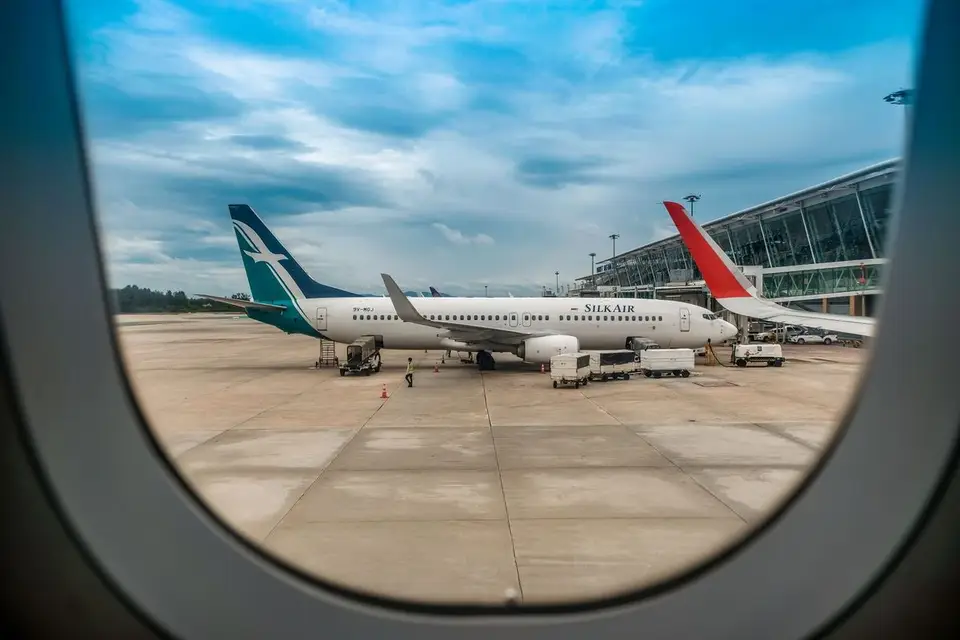
You reach Djibouti by plane, through Ambouli international airport, about seven kilometres from the city centre. From Europe, the journey involves a connection: the time that matters is the total time, stopover included, not the flight time shown on its own. Djibouti is on UTC+3 all year, so two hours ahead of Paris in winter and one hour ahead in summer. The road and the train from Ethiopia are the only land alternatives.
How do you get to Djibouti?
By plane. That is the answer for almost every traveller coming from Europe, and it is not a convenience: it is a geographical constraint. Djibouti has no documented international passenger sea link, and its only really workable land border connects it to Ethiopia.
| Route of access | Feasible for a tourist stay? | What to know |
|---|---|---|
| Plane — Ambouli international airport (JIB) | Yes, it is the normal route | About seven kilometres from the city centre, a ten-minute drive |
| Road from Ethiopia | Yes, but it needs preparing | Land corridor towards Dire Dawa and Addis Ababa, used mainly by freight |
| Train from Ethiopia, Nagad station | Yes, in theory | Modern line of about 756 km, in service since 2016 |
| Sea | Not documented | No international passenger sea link in the sources consulted |
What that changes for your preparation. A first stay in Djibouti is built around a flight, and therefore around a connection: the useful question is not “which is the best flight” but “which total itinerary will have me”. A morning departure with a comfortable stopover beats an evening departure with a forty-minute connection.
How long does it take to fly to Djibouti?
We publish no duration, and that abstention is deliberate. No official source we consulted gives a reliable, dated flight time for the route. Publishing a figure we cannot document would be exactly the flaw we criticise in competing pages.
The method of calculation, however, is perfectly reliable. The time that matters is never the flight time: it is the total door-to-door time, which breaks down as follows.
- The flight time between take-off and landing, shown by the airline on the flight plan.
- The length of the stopover, that is the time spent on the ground between the two segments, plus the connection time — luggage, checks, sometimes a terminal change.
- The time to reach the airports, both at home and in Djibouti. On arrival, add the ten minutes or so between Ambouli and the city centre.
Two rules of reading follow.
Always compare total time, not flight time. Two itineraries can show similar flight times and very different journey lengths depending on the stopover. It is the first source of buying mistakes.
Be wary of very short stopovers. A tight connection on a long flight, with a terminal change, regularly turns into an airport night. A two-hour stopover is often faster, in practice, than a fifty-minute one.
What is the time difference between Djibouti and Paris?
It is the simplest question of the lot, and the best documented, because it depends on no commercial hazard: Djibouti sits at UTC+3 all year and does not observe daylight saving. The country therefore never changes its clocks. France, for its part, switches to UTC+2 from late March to late October.
| Period | Paris | Djibouti | Difference |
|---|---|---|---|
| French winter time | UTC+1 | UTC+3 | Djibouti is 2 hours ahead |
| French summer time | UTC+2 | UTC+3 | Djibouti is 1 hour ahead |
What that means in practice. An evening flight landing at Ambouli after midnight, local time, matches late evening in France: the first wake-up is therefore less brutal than it looks, provided you sleep on the plane. In the other direction, the return home “gains” one or two hours on the clock, which rarely shifts fatigue.
For business calls, a one- to two-hour gap translates into a very wide overlap window with Europe: the Djiboutian morning matches the European morning, without the constraints of a shift towards Asia or America. Against UTC the rule is simple: add three hours all year to Djiboutian local time.
What does a flight to Djibouti cost?
Same logic as for the duration: we publish no air fare. Flight prices move daily, no official source distributes them, and an amount frozen on a dated page becomes wrong in the weeks after publication. A flight price is also personal data: it depends on the date of purchase, the class, the number of bags and the traveller’s profile.
What is stable, on the other hand, are the variables that determine the price. Knowing them is worth more than an out-of-date figure.
- The departure period. The peak runs from November to January: it is whale shark season in the Gulf of Tadjourah, and it coincides with European holidays. That is the window where seats run out fastest.
- How early you book. The lowest fares go several months ahead, on the least in-demand dates.
- The number of stopovers. A two-stop itinerary often costs less than a one-stop itinerary, at the price of a longer journey. That is the central trade-off for this destination.
- Baggage. On a trip with diving or camping gear, the baggage allowance sometimes weighs more heavily than the fare difference between two airlines.
What is the best time to buy your flight?
The calendar question can be read in the real climate data. Here are the Djibouti City normals over the 2015–2024 period (Open-Meteo ERA5, CC-BY-4.0), reduced to four seasons.
| Month | Mean maximum temperature | Mean minimum temperature | Rain |
|---|---|---|---|
| January | 27.5 °C | 22.6 °C | 14.7 mm |
| April | 30.9 °C | 26.4 °C | 41.8 mm |
| July | 40.8 °C | 31.8 °C | 9.7 mm |
| October | 32.4 °C | 27.0 °C | 25.1 mm |
Three lessons for choosing your dates.
July is the hottest month of the year on the coast, with a mean maximum of 40.8 °C. It is not the period to favour for a first stay, nor for the sites of the interior, where the basins climb even higher.
Annual rainfall is low — 240 millimetres in Djibouti City — and it does not concentrate into a clear rainy season. There is therefore no rainy “bad season” to avoid at all costs.
The comfortable window runs from October to April. It is also the most in demand, and therefore the one where you should book your flight earliest. The month-by-month, site-by-site detail is in when to go to Djibouti and in weather and climate.
Can you reach Djibouti by road or by train?
Yes, but that is a matter of itinerary choice, not a default transport solution.
By road, from Ethiopia. The land corridor links Djibouti to Dire Dawa and then to Addis Ababa. It is an intense freight axis: it requires serious preparation, a suitable vehicle and border management that cannot be improvised. For a first stay in Djibouti, it makes no sense.
By train. The railway between the two countries comprises a modern, electrified link, in service since 2016, about 756 kilometres long, as well as an older historic line. On the Djiboutian side, the departure station is at Nagad, west of the capital. The timetables published by the agency (departure on even days at 8:00 am), the fares by nationality and the border crossing are covered on the dedicated page: Djibouti–Addis train.
By sea, no international passenger link is documented. The boat remains an internal mode of travel, towards Tadjourah and Obock or towards the islands.
What formalities before boarding?
Three checks, in this order, and they are done before buying the ticket rather than after.
The passport. The official British advice requires an expiry date at least six months after the date of arrival. A passport expiring in four months can lead to refused entry: renew it first, book afterwards.
The visa. It is required on entry. The e-Visa is obtained online on the government’s official portal, in three steps — create an account, complete the application and pay by Mastercard, Visa or American Express, then download the document as a PDF. The fare is displayed during entry, once nationality and duration have been filled in. The page on visa and entry formalities details each step.
Proof of onward travel. The official British advice requires proof of onward travel: keep your return ticket, or that of your continuation, accessible at boarding and on arrival.
A word on vaccines, since the question always comes up at the moment of purchase: a certificate of vaccination against yellow fever is required if you are arriving from a country classified at risk of transmission. The official advice also recommends checking vaccination recommendations at least eight weeks before departure — in practice, before you even book.
What should you do on arrival at Ambouli?
Landing takes place at Ambouli international airport, about seven kilometres from the city centre of Djibouti, a ten-minute drive outside peak hours. The airport has a bureau de change, an information desk and car hire desks. Taxis provide the link with the city.
Four reflexes for the first hour:
- Change a small amount at the airport. The first journey is settled in cash, in Djiboutian francs. On that transfer, the National Tourism Agency publishes a single value: “allow about 1,500 DJF” (January 2021 grid, reproduced at ant.dj/infos-utiles). The 1,000 Fdj floor circulating in several guides is not published by the agency, and is therefore not attributed to it here.
- Fix the taxi price before getting in. Meters are not used: the ride is negotiated, as everywhere in the country.
- Keep the visa PDF on your phone, as well as a paper copy. A document in an inbox you cannot reach offline is useless at the counter.
- Do not look for a public shuttle. There is no regular shuttle service between Ambouli and the city centre.
In a medical emergency on arrival, the official British advice publishes two numbers to call for an ambulance: 21 35 09 62 and 21 35 27 12. Then tell your insurer if you are referred to a medical facility.
The detail of fares, options and pitfalls of the first journey is covered on the airport transfer page. Once you are there, the organisation of travel is set out in the transport in Djibouti hub.
Frequently asked questions
How do you get to Djibouti?
By plane, through Ambouli international airport, about seven kilometres from the city centre of Djibouti. From Europe, the trip involves a connection: total time is calculated by adding the flight time and the length of the stopover. Two land routes exist from Ethiopia, by the Dire Dawa corridor road and by the train, whose Djiboutian station is at Nagad.
How long does it take to fly to Djibouti?
We publish no duration, because no official source we consulted gives a reliable, dated flight time for this route. The figure that matters is not the flight time in any case, but the total journey time: add the length of the stopover, which can account for a large part of the trip. So compare itineraries on total door-to-door time, never on the flight alone.
What is the time difference between Djibouti and Paris?
Djibouti sits at UTC+3 all year and does not observe daylight saving. France, for its part, switches to UTC+2 in summer. The difference is therefore two hours ahead of Paris in winter, and only one hour in summer. A practical consequence: an evening flight landing after midnight local time matches a still-young evening in France, which helps with the first wake-up.
What does a flight to Djibouti cost?
We publish no air fare, because prices move too fast for a dated amount to stay useful, and no official source distributes them. The factors that determine the price, on the other hand, are stable: how early you book, the departure period and the number of stopovers. Book early for November to January, when whale shark season coincides with European holidays.
What is the current situation in Djibouti?
The country is stable, and the usual tourist areas are frequented without major incident. The official British advice, updated on 27 July 2026, nevertheless reports a real terrorist threat and recommends vigilance in places frequented by foreigners. The same notice advises against all travel to the border with Eritrea. In a medical emergency, dial 21 35 09 62 or 21 35 27 12.
Sources
Practical
Read next
4×4 with a driver in Djibouti: prices and itineraries
Accessibility in Djibouti: what a demanding trip implies
Boat hire in Djibouti: trips out to sea
Budget in Djibouti: what does a trip cost on the spot?
Buses and taxis in Djibouti: fares by zone and route
Car hire in Djibouti: 4×4, saloon or driver?
Connectivity and SIM cards in Djibouti: internet and mobile
Djibouti airport transfer: taxi, fares and arrival