
What to see in Djibouti: the 10 sites not to miss
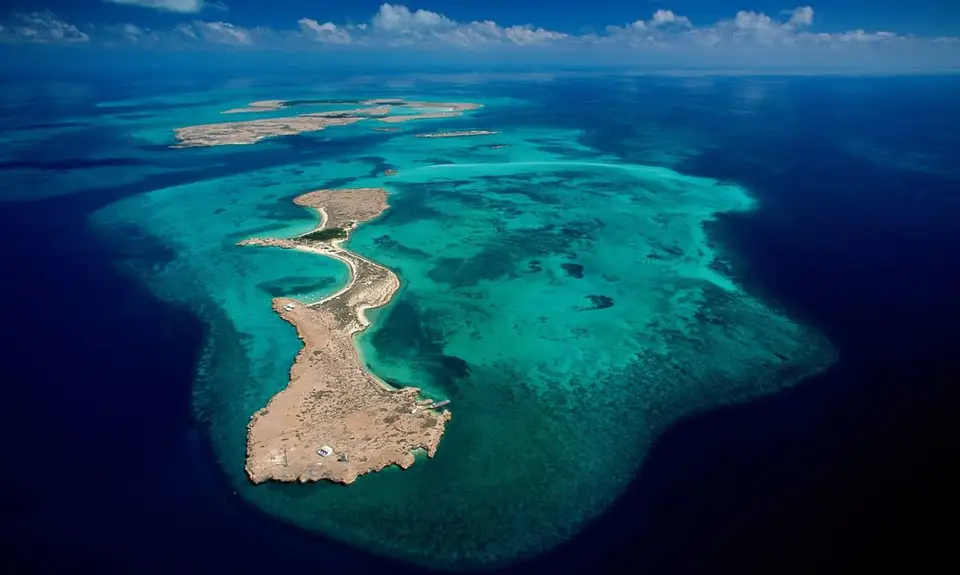
Djibouti packs into a territory the size of a small European region ten sites that, elsewhere, would require several countries: Lake Assal and its 155 metres below sea level, Lake Abbé and its limestone chimneys, Goubbet al-Kharab, the Ardoukoba volcano, the Forêt du Day, the Moucha and Maskali islands, the Seven Brothers archipelago, the Abourma engravings, Tadjourah and its Sables Blancs, and Djibouti City.
| Region | Djibouti City |
|---|---|
| Updated on | 16 September 2026 |
What should you see in Djibouti first?
Djibouti fits into 23,200 km², yet it lines up three phenomena rarely found together: the junction of three tectonic plates, the lowest point of the African continent, and a gulf where the largest fish in the world come up every winter.
That density changes how you prepare a trip. You do not cross the country for hours to link two sites: you change worlds in an hour and a half of road. Lake Assal, Goubbet al-Kharab, the lava fields and the Ardoukoba volcano therefore fit into a single day of excursion.
It is also what makes the question “what to see in Djibouti” hard to settle: everything seems accessible, and you end up skimming. The table below gives the order of magnitude missing everywhere else — real time on the spot, favourable season and level of difficulty — to help you decide.
What are the 10 must-see sites in Djibouti?
| Site | Region | Time needed | Best season | Difficulty |
|---|---|---|---|---|
| Lake Assal | Tadjourah | 1 day from the capital | October – April | Easy, final track |
| Lake Abbé and its fumeroles | Dikhil | 1 to 2 days, night on the spot | November – March | Difficult, long track |
| Goubbet al-Kharab and the Devil’s islands | Tadjourah | Half a day | October – April | Easy, road access |
| Ardoukoba volcano and lava fields | Tadjourah | Half a day | November – March | Moderate, 4×4 advisable |
| Forêt du Day and the Dittilou cirque | Tadjourah | 1 to 2 days | All year round | Moderate, hiking |
| Moucha and Maskali islands | Djibouti | 1 day | All year round | Easy, boat trip |
| Seven Brothers archipelago | Obock | 1 to 2 days | October – May | Difficult, navigation |
| Abourma rock engravings | Tadjourah | 1 day | October – February | Moderate, track and walking |
| Tadjourah and Les Sables Blancs | Tadjourah | 1 to 2 days | October – April | Easy |
| Djibouti City: market, old town, Eega memorial | Djibouti | Half a day | All year round | Easy, on foot |
The difficulties noted here concern access, not the interest of the site. Lake Abbé is the most spectacular on the list and also the most demanding: the track is long and the site is far from any help.
Which sites should you choose according to the length of your stay?
Two days. Lake Assal on an organised excursion, combined with Goubbet al-Kharab and the Ardoukoba volcano. The next day, the Moucha and Maskali islands. Between November and January, replace the sea trip with swimming with whale sharks: it is the window of the year.
Three to four days. Add Tadjourah and Les Sables Blancs beach, or the Grand Bara and its rock engravings. A return ferry trip to the northern coast is well justified over that length.
Five to seven days. Lake Abbé becomes possible with a night on the spot, as do the Forêt du Day, the Dittilou cirque and the Seven Brothers archipelago. Beyond that, you can go down to Assamo and the Djalélo protected area for the endemic wildlife.
What is there to see in the Tadjourah region?
It is the densest region in the country. Lake Assal occupies the floor of a collapsed basin 155 metres below sea level, with a mineral salt concentration of about 348 grams per litre. A few kilometres away, Goubbet al-Kharab forms an inlet with steep cliffs, closed by the two Devil’s islands. Between the two, the Ardoukoba volcano, born in November 1978 in a single week, and the black lava fields that extend it.
To the north, the Goda mountains carry the Forêt du Day, the country’s only national park, and the Dittilou cirque, a starting point for hikes. Further on, the Abourma rock engraving site unfolds over nearly three kilometres of pastoral and hunting scenes carved into the basalt. The favourable period there is the cool season, from October to February.
On the coast, white Tadjourah lines up its coral houses, and Les Sables Blancs beach nestles at the foot of a cliff five kilometres from the town. The detailed page on Lake Assal gives the rates and the access site by site.
What is there to see in the Obock region?
The north-east is the domain of divers and mangrove lovers. The Seven Brothers islands, or Sawabi, form a string of volcanic islets at the entrance to the Bab el-Mandeb strait, with deep drop-offs and a natural aquarium in shallow water on the eastern island. The Ras Bir lighthouse, sixty metres high, dominates the cape a few kilometres north of Obock.
On land, the Godoria mangrove is the country’s largest wetland and a major staging point for migratory birds of the Red Sea. The Mabla mountains, further west, preserve a remnant of primary forest.
To reach Obock from Djibouti City, the ferry to Tadjourah and Obock saves the 240 kilometres of road, and the road remains workable in a saloon car in dry weather.
What is there to see in the south: Dikhil and Ali-Sabieh?
Lake Abbé, straddling the Ethiopian border, is the great site of the south. The lake is shallow — about eight and a half metres — and in spectacular decline since the 1950s. That retreat has laid bare crystallised mineral chimneys, the fumeroles, which reach thirty to fifty metres high and compose a landscape often compared to that of another planet.
Around it, the Gobaad depression shelters the Handoga archaeological site, occupied from the Middle Ages to the pre-Islamic era, and the pre-Islamic village overlooking the wadi. In the Ali-Sabieh region, the Grand Bara displays rock paintings dated from 3000 to 2000 BCE, representing elephants, oryx and giraffes — evidence of a much more humid climate at the time. The Holl Holl viaduct, inaugurated in 1900 on the Djibouti–Addis Ababa railway line, completes the heritage circuit.
What is there to see in Djibouti City?
The capital is visited in half a day. The central market concentrates spices, incense and fabrics. The old town, around the Al-Hamoudi mosque built in 1906, keeps houses with wooden balconies. The Eega memorial, on national road 1, commemorates the electrified barrage that cut the city between 1967 and 1977: it opens from Monday to Friday from 9 am to 5.30 pm, and on Saturday morning.
On the sea side, Héron beach is the only genuinely swimmable urban beach, and the Moucha and Maskali islands are reached in forty-five minutes by boat.
How should you organise visiting the sites?
Our site pages, for the detail of access, prices and seasons:
- Lake Assal: the lowest point in Africa — complete page, access, prices and swimming.
- Lake Abbé and its limestone chimneys — the long southern track, the bivouac and the best period.
- Moucha and Maskali islands — sea trip, snorkelling and diving from the capital.
- Grand Bara — rock paintings, crossing the plateau and land sailing.
- Djibouti City — central market, old town, Eega memorial and Héron beach.
Our practical pages, to fit the trip around those visits:
- When to go to Djibouti — month by month, whale shark season and visitor numbers.
- Weather and climate in Djibouti — coast against highlands, and how to protect yourself from the heat.
- Car hire in Djibouti — 4×4 or saloon, with or without a driver, and where the track takes over.
- Tadjourah and Obock ferry — timetables, fares and the crossing.
- Where to stay in Djibouti — districts of the capital, camps and accommodation in Tadjourah.
- Visa and entry formalities — e-Visa, documents and arrival at Ambouli.
What precautions should you take at the sites?
None of those sites is a managed park. There is no water point, no organised rescue and no shade outside the camps. Three rules hold everywhere: carry at least three litres of water per person per day, leave early in the morning, and never leave the marked track without a guide.
Two sites are protected areas subject to regulation: Lake Assal and Lake Abbé. Artisanal salt collection there is authorised but regulated, and hunting is strictly forbidden. Taking salt, gypsum or crystals in quantity is an offence.
Finally, access to Lake Abbé, Abourma and the Seven Brothers archipelago is negotiated with the local authorities or the camps. Plan that step before departure: it is not settled on the spot in an hour.
What budget should you plan to see the sites?
Transport weighs more heavily than entrance fees, which are often symbolic. A 4×4 with driver for a full day costs around 44,000 Djiboutian francs per vehicle, which becomes worthwhile from four people. Organised day excursions, transport and guide included, come to around 18,000 Djiboutian francs per person for Lake Assal.
The accommodation budget and the ranges by district are detailed on the page where to stay in Djibouti. To settle your dates, cross the season for each site with the month-by-month table in when to go to Djibouti.
Book the day excursion to Lake AssalSecure booking, verified provider.
Frequently asked questions
How many days do you need to see the main sites of Djibouti?
Three days cover the essentials: a day at Lake Assal and Goubbet al-Kharab, a day at sea towards the Moucha and Maskali islands, a day at Tadjourah or the Grand Bara. Five days allow Lake Abbé to be added with a night on the spot. Seven days leave time to include the Forêt du Day, Obock and the Seven Brothers archipelago. Below three days, the travelling eats the stay.
Which sites should you see in Djibouti if you only have two days?
Lake Assal first: the lowest point in Africa, it is visited in a day from the capital and combines with Goubbet al-Kharab and the Ardoukoba volcano. On the second day, head to sea towards the Moucha and Maskali islands, forty-five minutes by boat. If you are travelling between November and January, replace the sea trip with swimming with whale sharks.
Is Lake Abbé really worth the journey?
Yes, but you have to accept the road: Lake Abbé lies in the Dikhil region, on the Ethiopian border, and access is by track over a long distance. The site is a landscape of limestone chimneys thirty to fifty metres high, left by former springs that are now dry. Allow one to two days, with a night on the spot. The best period runs from November to March.
What is there to see in Djibouti away from the coast?
The interior of the country concentrates the most spectacular sites: Lake Assal and its 155 metres below sea level, Lake Abbé, the lava fields of the rift, the Forêt du Day and the Goda mountains, the Abourma rock engravings and the Grand Bara. Those sites are visited by 4×4, generally with a local guide, and some demand good physical condition.
Do you need a guide to visit the sites of Djibouti?
For Lake Assal, Goubbet or the Moucha islands, a driver is enough and the organised excursion often costs less than a hire. For Lake Abbé, Abourma, the Forêt du Day and the Seven Brothers archipelago, a local guide is strongly recommended: off-track navigation, no waymarking, protected areas subject to permits. Ecotourism camps provide trained guides.