Health and vaccines in Djibouti: what to prepare
Only one vaccination certificate is required to enter Djibouti: that of yellow fever, and only for travellers arriving from a country classified at risk of transmission. Personal recommendations are discussed with a doctor at least eight weeks before departure. On the spot, the medical emergency number is 21 35 09 62 or 21 35 27 12, asking for an ambulance.
What this page is, and what it is not. It gathers the verifiable elements of preparing for a trip to Djibouti: the certificate required on entry, the risks named by the official British advice in its version of 27 July 2026, still in force on 11 September 2026, the emergency number and the preparation lead time. It prescribes no vaccine and no prophylaxis: those decisions belong to a doctor.
Which vaccinations are compulsory in Djibouti?
Only one vaccine is required on entry, and conditionally. The official British advice states that a certificate of vaccination against yellow fever is asked of travellers arriving from a country classified at risk of transmission. In other words:
- if you are arriving directly from Europe, that requirement generally does not apply;
- if you are arriving from a country where yellow fever circulates, the certificate is required;
- the rule is administrative: it concerns your itinerary, not your state of health.
What we do not publish. We were unable to verify an official list of vaccines recommended for Djibouti — the ones that are not required but advised according to the traveller’s profile. Rather than copy a list found on a commercial site and present it as medical advice, we refer you to the source that carries authority: the official advice itself refers to the Djibouti profile of TravelHealthPro, maintained by the British health authorities, and to your own doctor.
When should you seek advice before departure?
The official British advice gives a precise lead time: at least eight weeks before the trip. That delay is not arbitrary — it matches the time needed to complete a vaccination schedule requiring several injections, and to check what is covered and what is not.
| Lead time before departure | What should be done |
|---|---|
| 8 weeks or more | Consult an international vaccination centre; review routine vaccinations and boosters |
| 6 weeks | Check your insurance cover, medical evacuation in particular |
| 4 weeks | Put together a medicine kit suited to your usual treatment, with the prescription |
| 1 week | Check that your medicines are permitted in Djibouti and keep their prescription |
| On arrival | Save the medical emergency numbers and your insurer’s contact details in your phone |
What is the risk of dengue and Zika in Djibouti?
The official British advice explicitly names three health risks for Djibouti:
| Risk named | Mode of transmission | What that implies |
|---|---|---|
| Dengue | Mosquito vector, active mainly during the day | Protection against bites, including in daylight |
| Zika virus | Mosquito vector | A subject to discuss with a doctor in case of pregnancy or planned pregnancy |
| Schistosomiasis | Skin contact with contaminated fresh water | Avoid swimming in stagnant fresh water |
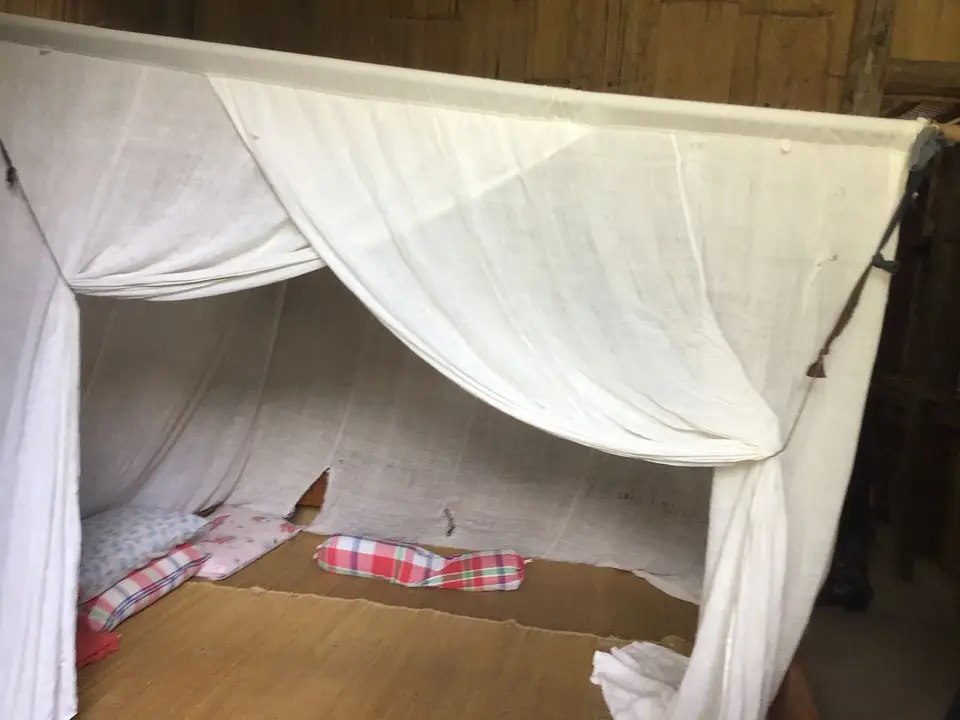
Protection against mosquito bites is therefore the most useful preventive step, and the least costly: repellent, long sleeves in the evening, a mosquito net where the accommodation provides one. In camps in the interior, a net is often supplied — that is a point to check before booking.
What is the malaria risk in Djibouti?
This question is widely asked, and we cannot answer it in a sourced way. The health page of the official British advice that we consulted does not mention malaria: it names dengue, Zika virus and schistosomiasis, then refers to TravelHealthPro for the full list of risks.
We will not fill that gap with an estimate. The right approach is to put the question to a doctor or an international vaccination centre, who hold the up-to-date recommendations and know your precise itinerary. The answer depends in fact on the region visited, the season and the length of the stay.
How do you get medical care in Djibouti if something goes wrong?
| Situation | What to do |
|---|---|
| Medical emergency | Call 21 35 09 62 or 21 35 27 12 and ask for an ambulance |
| Referral to a medical facility | Inform your insurance company immediately |
| A chronic health condition | Check before departure that the care you need exists on the spot |
| Pregnancy | Have the trip approved by a doctor: the official advice flags this case as a priority |
The official British advice asks you to check before departure that the destination can provide the care you might need and to hold insurance covering local treatment as well as medical evacuation. That double check matters above all for travellers with a chronic illness and for pregnant women.
Which medicines can you take to Djibouti?
The official advice recalls that the legal status and regulation of certain medicines differ from one country to another. An entirely ordinary treatment in Europe may be regulated, or even unavailable, in Djibouti. Three precautions:
- carry your prescription, legible, with the name of the active substance and not only the brand name;
- keep the medicines in their original packaging, in your cabin bag;
- plan for the full length of the stay, plus a margin: an unexpected stop should not leave you short.
Can you drink tap water in Djibouti?
Water is a structural constraint in the country: Djibouti has extremely limited natural resources and depends largely on desalinated production and imports. We publish no verdict establishment by establishment on tap water, for want of a health record we can cite.
The useful precaution for a short stay is simple and cheap:
- drink sealed bottled water, including for brushing your teeth if you are sensitive;
- be wary of ice cubes whose origin you do not know;
- in camps, water is often brought in and stored in jerricans: ask where it comes from before filling your bottle;
- carry your own supply before setting off on the tracks: between Lake Assal, Lake Abbé and Abourma, no reliable supply point lines the route.
In this climate, allow several litres of water per person per day of excursion. Dehydration remains by far the most common health problem among travellers in Djibouti.
How do you avoid health problems linked to the climate?
Djibouti is one of the hottest countries in the world. That climatic constraint weighs more heavily on a traveller’s health than most infectious risks. The Open-Meteo ERA5 reanalysis normals (2015-2024, CC-BY-4.0 licence) give Djibouti City a mean daily maximum of 40.8 °C in July and an annual rainfall total of only about 240 mm.
Three simple rules follow:
- drink before you feel thirsty, and more than usual;
- shift your efforts to early morning or late in the day: between June and September, the heat of the interior becomes dangerous in the middle of the day;
- cover up rather than strip off: a hat, long sleeves and sunglasses protect better than a wet T-shirt, which speeds up dehydration.
What does this page not publish?
In all honesty, we publish no list of recommended vaccines, no antimalarial prophylaxis recommendation, no name of a medical facility, and no assessment of the quality of the local hospital system. No official source we can cite allows us to settle those points on the date of 11 September 2026. Check them with a doctor, with the British health page and with TravelHealthPro.
Frequently asked questions
Which vaccinations are compulsory in Djibouti?
Only one is required on entry: the certificate of vaccination against yellow fever, and only for travellers arriving from a country classified at risk of transmission. No other vaccine is imposed by the Djiboutian authorities on entry. We deliberately publish no list of recommended vaccines: that decision belongs to a doctor, who will take account of your state of health and your itinerary.
What is the malaria risk in Djibouti?
We publish no assessment of malaria in Djibouti, for want of an official source we can cite on that precise point. The British advice's health page names three health risks — dengue, Zika virus and schistosomiasis — and refers for the rest to the TravelHealthPro country profile. It is that profile, updated by the British health authorities, that should be consulted before departure.
Are vaccinations compulsory to travel?
It depends entirely on your itinerary and your country of departure, not on your destination alone. In Djibouti, the only administrative requirement concerns yellow fever and travellers coming from a transmission zone. Some neighbouring countries apply stricter rules. The useful rule is therefore to consult an international vaccination centre at least eight weeks before departure, rather than to look for a general answer.
How do you reach an ambulance in Djibouti?
The official British advice publishes two medical emergency numbers: 21 35 09 62 and 21 35 27 12. Call either one and ask for an ambulance. Save those numbers in your phone before arrival, and also note your insurer's contact details: the official advice recommends informing your insurance company as soon as you are referred to a medical facility.
Do you need health insurance to travel to Djibouti?
Yes, and the official British advice makes it a precondition for departure: it asks you to check that your destination can provide the care you might need, and to hold insurance covering local treatment as well as medical evacuation. That recommendation is reinforced for travellers with a chronic illness and for pregnant women. Our insurance page sets out the cover to check.
Sources
Practical
Read next
4×4 with a driver in Djibouti: prices and itineraries
Accessibility in Djibouti: what a demanding trip implies
Boat hire in Djibouti: trips out to sea
Budget in Djibouti: what does a trip cost on the spot?
Buses and taxis in Djibouti: fares by zone and route
Car hire in Djibouti: 4×4, saloon or driver?
Connectivity and SIM cards in Djibouti: internet and mobile
Djibouti airport transfer: taxi, fares and arrival